 My Shroud of Turin name index, `M', for persons associated with the Shroud whose surnames begin with `M'.
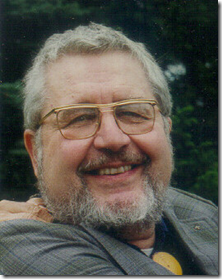
[Right: Dr. Walter C. McCrone, Jr., McCrone Research Institute, 11 October 2015.]
See also main name index A-Z for more details.
Walter C. McCrone, Jr. (1916-2002). Pioneer light microscopist. Leading Shroud sceptic. Was original member of STURP but never personally examined the Shroud. Claimed that just by visual microscope examination of particles taken from the Shroud by STURP in 1978, that there was no blood on the Shroud and that the image was a painting. He made these claims in the public media, being a beneficiary of lucrative publicity. McCrone's claims were refuted in every particular by exhaustive, wide-ranging, chemical, physical, xray and visual tests by STURP scientists, one of whom, Dr. Alan Adler, was a world authority in blood chemistry. McCrone breached his signed agreement with STURP that no articles would be published until all the findings could be discussed by STURP members and then they would be published in peer-reviewed journals. Unlike STURP's, McCrone's scientific papers on the Shroud were not submitted to external peer review but were published in his own journal The Microscope and in the public media. McCrone declined to defend his claims at scientific conferences to which he was invited, and in peer- reviewed journals. His unscientific prejudice against the authenticity of the Shroud was evident in his 1981 claim that, "I believe the shroud is a fake, but I cannot prove it." However, even fellow anti-authenticity critics, the late Prof. Edward Hall , Dr Michael Tite, Joe Nickell, Steven Schafersman and Picknett and Prince, regard McCrone's claim that the Shroud is a painting to be wrong. McCrone's credibility was seriously dented when his 1974 claim that the Vinland Map was a fake, turned out to be wrong. McCrone took scientific criticisms of this claim as a personal attack and refused to admit he was wrong. Prof. Harry Gove thinks McCrone was motivated by a dream of being "history's greatest iconoclast," he lacked objectivity and his testing was unsophisticated. McCrone's claim of old maps and paintings brought to his laboratory for authentication, that "very seldom do we find them to be authentic," indicates his negative mindset. His shroud papers include: McCrone, W.C. & Skirius, C., 1980, "Light Microscopical Study of the Turin `Shroud,' I," Microscope, Vol. 28, pp.105-113; McCrone, W.C., 1980, "Light Microscopical Study of the Turin `Shroud,' II;' Microscope, Vol. 28, pp.115-128; and McCrone, W.C., 1981, "Light Microscopical Study of the Turin `Shroud,' III," Microscope, Vol. 29, pp.19-38. His shroud book: McCrone, W.C., "Judgment Day for the Turin Shroud," Microscope Publications: Chicago IL, 1997. About: McCrone Research Institute, The Shroud Report, Wikipedia. Obituaries: New York Times; Shroud.com.
PS: The `tagline' quotes below are about each person, in alphabetic order of surname (in bold), and then date order (most recent uppermost). As I add more names to this page, I will delete some of these quotes about the same person.
Posted 24 February 2008. Updated 8 March 2025.
Walter McCrone:
"Recently, the most vocal advocate of the painting theory, and perhaps the best known among modern Shroud sceptics, is microscopist Walter McCrone. After examining fibril samples from the Shroud, McCrone announced his opinion that an artist had painted the body image by using an iron oxide (Fe2O3) pigment (called red iron earth pigment or jeweler's rouge) suspended in a gelatin binding medium. He further asserted that mercuric sulfide pigment, usually called red vermilion, was added to the blood mark areas. [McCrone, W.C. & Skirius, C., 1980, "Light Microscopical Study of the Turin `Shroud,' I," Microscope, Vol. 28, pp.105-113; McCrone, W.C., 1980, "Light Microscopical Study of the Turin `Shroud,' II;' Microscope, Vol. 28, pp.115-128; and McCrone, W.C., 1981, "Light Microscopical Study of the Turin `Shroud,' III," Microscope, Vol. 29, pp.19-38] This or any other painting theory, however, is not supported by the data gathered through STURP's rigorous testing. ... In fact, the theory that any painting medium or technique could be responsible for the extraordinary images contained on the Shroud seems impossible." (Antonacci, M. , 2000, "Resurrection of the Shroud: New Scientific, Medical, and Archeological Evidence," M. Evans & Co: New York NY, pp.47-48).
"Finally, there is no clear evidence of any pigment on the Shroud, although here there is some disagreement. The STURP team, using microscopic, chemical laser microprobes, concluded that the Shroud shows no trace of `any of the expected dyes, stains, pigments, or painting media.' [Schwalbe, L.A. & Rogers, R.N., "Physics and Chemistry of the Shroud of Turin, A Summary of the 1978 Investigation," Analytica Chimica Acta, Vol. 135, 1982, pp.3-49, p.14] A sometime member of the team, however, concluded otherwise. Walter C. McCrone, who is one of America's most respected forensic microanalysts, reported finding submicrometer-sized particles of iron oxide throughout the image area, but not on the clear area of the Shroud. [Nickell, J., 1983, "Inquest on the Shroud of Turin," Prometheus Books: Buffalo NY, pp.119-125] This ferric oxide, McCrone concluded, was residue of a rouge, similar to today's Venetian Red, that was used by ancient and medieval painters. Two other investigators, John Heller and A. D. Adler, conceded the presence of iron on the Shroud, but flatly disagreed with McCrone's analysis. According to Heller and Adler, a microspectrophotometer showed that most of the iron was blood porphyrin. A small percentage of the iron occurred in iron oxide, they reported, but the iron oxide was not a pigment: it occurred throughout the Shroud on the periphery of water stains, and must have resulted from the 1532 fire at Chambery. [Heller, J.H. & Adler, A.D., 1981, "A Chemical Investigation of the Shroud of Turin," Canadian Society of Forensic Science Journal, Vol. 14, pp.81-103] However the iron oxide particles are to be explained, it is agreed that they did not `produce' the image. In his recently published Inquest on the Shroud of Turin, Joe Nickell emphasizes the iron oxide, and upon it builds his case that the Shroud was forged in the fourteenth century by an artist who used a printing procedure. Nickell's observations deserve to be taken seriously, even though they rest on rather limited experiments. ... It is therefore noteworthy that even Nickell excludes the possibility that the image was painted, and concedes that `ferric oxide contributes less than about 10 percent to the overall image intensity." [Nickell, 1983, p.133]" (Drews, R., 1984, "In Search of the Shroud of Turin: New Light on Its History and Origins," Rowman & Littlefield: Lanham MD, pp.16-17).
"By coincidence, on the same day I replied to Sox I got a call from Walter McCrone. ... He told me, in a rather secretive manner ... that he had an important piece of cloth whose age he was eager to know. In particular he said he would like to know whether it was 2000 years old. Presumably he thought I couldn't guess to what cloth he was alluding. ... In his letter, McCrone remained coy about the source of the cloth he said he was interested in dating. ... and, for some unstated reason, he needed the results before the end of the year. ... I suppose he wanted the results before the next shroud exposition scheduled for early fall of the following year. ... I did not reveal that I knew what the samples were. ... . I sometimes think that McCrone dreamed of becoming history's greatest iconoclast. Having, in his view, demolished the authenticity of the Vinland Map he saw the chance to do the same to the Turin Shroud!" (Gove, H.E., 1996, "Relic, Icon or Hoax?: Carbon Dating the Turin Shroud," Institute of Physics Publishing: Bristol UK, pp.18-19).
"When a series of tests were carried out on the shroud in the fall of 1978, McCrone determined that there were traces of iron oxide powder on the shroud image. He immediately announced that he `had some good news and some bad news. The bad news is that the shroud is a fake. The good news is that no one is going to believe me.' It remained, however, for others to settle the question and to do so with somewhat greater objectivity and with a great deal more credibility." (Gove, 1996, pp.19-20).
"On 10 May [1987] an article appeared in the New York Times concerning the Vinland Map. A friend of mine at the University of California at Davis, Tom Cahill, Director of the Crocker Nuclear Laboratory at that institution, had employed the cyclotron in his laboratory to analyse the trace element composition of the map using a non-destructive technique called PIXE (particle induced X-ray emission). He concluded that the ink on the map contained only extremely small traces of titanium, amounts that were quite consistent with it being a genuine medieval document. In 1974, Walter McCrone had concluded that the white ink on the map had been made from the pigment anatase (titanium oxide). Such white pigment was invented in 1917 and to Walter this proved the map a fraud. McCrone hotly contested Cahill's findings and fired off an angry letter to him stating, in effect, that war was declared. In an interview the New York Times conducted with him, McCrone also branded as fraudulent the Shroud of Turin. He was clearly trying to re-burnish his image as the world's leading iconoclast. As far as the Vinland Map is concerned, I would put my money on Cahill and PIXE. .... The problem McCrone has is that his scientific techniques are unsophisticated compared to AMS and PIXE." (Gove, 1996, p.190).
"A LEADING skeptic of the Shroud's authenticity is Dr. Walter McCrone, a microanalyst from Chicago. McCrone gained international notoriety in 1974 for his study of the Vinland Map kept at Yale University. Briefly, the map was said to have been drawn by a monk from the Upper Rhine in the fifteenth century. The map indicated that it pre-dated Columbus' voyage. McCrone tested twenty-nine microparticles from the document and concluded that while the parchment was from the Middle Ages, the map was fraudulent because the ink consisted of anatase (titanium oxide, a synthetic pigment) which was not developed until the early twentieth century. In 1987, his conclusion was challenged by a group of scientists led by Dr. Thomas Cahill at the Crocker Nuclear Laboratory at the University of California at Davis. Employing a nondestructive technique called PIXE (particle induced X-ray emission), Cahill concluded that the ink of the Vinland Map contains only slight traces of titanium, which can be found in other genuine medieval documents. In fact, an authentic Gutenberg Bible (15th century) actually showed greater amounts of titanium than the Vinland Map. At a symposium held at Yale University Press on February 10, 1996 which was devoted to a discussion of the expanded version of the original book on the map, The Vinland Map and the Tartar Relation, Dr. Cahill said: `There is nothing about the chemistry or morphology of the Vinland Map that in any way makes it stand out from any of the parchments of that period that we have analyzed.' [Wilford, J.N., "Disputed Medieval Map Called Genuine After All," The New York Times, February 13, 1996] Dr. Wilcomb E. Washburn, the Director of American Studies at the Smithsonian Institution in Washington, who wrote the introduction to the new book, concurred: `I think the evidence is clearly on the side of authenticity.' [Ibid]" (Guerrera, V., 2000, "The Shroud of Turin: A Case for Authenticity," TAN: Rockford IL, pp.66-67. Emphasis original).
"Although Dr. McCrone was not part of the STURP team that examined the Shroud in Italy, Ray Rogers, the chemist from Los Alamos, provided McCrone with thirty-two sticky tape samples that he had taken from the surface of the Shroud during its examination in 1978. McCrone began to study the tape samples on Christmas Day 1978. He discovered a small quantity (not more than 10 milligrams) of iron oxide. The mixture was a combination of red and yellow pigment particles. Since this was found only on the blood areas of the Shroud, McCrone concluded that it was red pigment used by an artist. He postulated that the discoloration of the fibers could have been caused by the aging of that paint medium. [McCrone, W.C., "Judgment Day for the Turin Shroud," Microscope Publications: Chicago IL, 1997, p.100] He then demonstrated how the paint could have been applied to the cloth without leaving any traces of brush strokes. Dipping his finger in powdered jeweler's rouge, he applied it to a piece of paper until there was little left on his finger; then he transferred that to a piece of linen. [Hoare, R., "The Turin Shroud Is Genuine,"Barnes & Noble Books: New York, 1995, p.48] The STURP team did not accept McCrone's conclusions, because he did not take their findings into consideration, for example, that iron oxide is basically rust, which can be found in many forms of dust. Dr. Jackson made note that it was not surprising to find iron oxide in the blood areas of the Shroud because iron is a component of blood. Furthermore, the particles could have spread to other areas of the Shroud by the repeated folding and unfolding of the cloth throughout the centuries." (Guerrera, 2000, pp.68-69).
"In 1981, STURP held a meeting at Connecticut College in New London. McCrone, who had resigned from STURP in 1980, was invited to attend, but declined to participate. He later remarked: `I believe the shroud is a fake, but I cannot prove it.' [ McCrone, W.C., in Murphy, C., "Shreds of Evidence," Harper's Magazine, November, 1981, pp.42-65, pp.54-55] During the presentation, Dr. Adler was asked to comment on McCrone's claim that there was no blood on the Shroud. Adler referred to a chart of the blood tests that he and Dr. Heller had performed and remarked: `That means that the red stuff on the Shroud is emphatically, and without any reservation, nothing else but B-L-O-O-D!' [Heller, J.H., "Report on the Shroud of Turin," Houghton Mifflin Co: Boston MA, 1983, p.216] McCrone's theory was dismissed by the use of X-ray fluorescence and visible light examination of the Shroud as well as microchemical tests. These studies showed that there was not a sufficient amount of iron oxide on the cloth to account for the least enhancement of the image. [Morris, R.A., Schwalbe, L.A. & London, J.R. "X-Ray Fluorescence Investigation of the Shroud of Turin," X-ray Spectrometry, Vol. 9, No. 2, 1980, p.40] The STURP team concluded that the iron oxide evidence was `irrelevant to the image formation process.'" [Schwalbe L.A. & Rogers, R. N., "Physics and Chemistry of the Shroud of Turin," Analytica Chimica Acta, Vol. 135, 1982, , pp.3-49, p.39]" (Guerrera, 2000, p.69. Emphasis original).
"Jackson and jumper presented their appraisal of the status of research on the Shroud. When they finished with their precis, Sam Pellicori said that as far as he was concerned, McCrone's hypothesis about iron oxide being the source of the images was just wrong. He had done a simple and elegant little experiment. He had taken some filter paper, which is white and flat, and placed on it an amount of iron oxide in the concentration that McCrone claimed existed in the images on the Shroud. Using a reflectance spectrum the Gilberts had obtained from the bloodstains on the Shroud, he had compared it to the iron oxide. The spectra did not match. Larry Schwalbe had done something similar. He had put iron oxide into a watery solution, shaken it, and let the larger and heavier particles precipitate out. He took the suspended particles and determined the limit of resolution of the specific X-ray fluorescence equipment that was used in Turin. The minimum amount of iron oxide that could be seen by the human eye was the same amount that could be accurately determined by X-ray fluorescence. Clearly, it would be absurd for an artist to use a pigment in an amount so dilute that one could not see it with the naked eye; that was tantamount to painting in invisible ink. Schwalbe used jeweler's rouge simply because it was a convenient form of iron oxide, but he also tested other forms of the compound, and came up with the same results." (Heller, J.H., 1983, "Report on the Shroud of Turin," Houghton Mifflin Co: Boston MA, pp.155-156).
"Everyone was extremely impatient to find out whether McCrone was right or wrong. If it was determined that his claims did not hold up on a preliminary basis, then the others would be willing to go on to other questions. The next thing on our agenda was to find out if iron oxide was present on image fibers. X-ray fluorescence had found none, X radiographs had seen none, and Pellicori's iron-oxide spectrum was significantly different from the Gilberts' spectrum of the actual Shroud images. At the Santa Barbara meeting, when Jackson had asked McCrone how he explained the fact that X-ray fluorescence had seen no iron increase in an image area, McCrone had dismissed the issue by stating that the X-ray data must have been in error or were not sensitive enough. That morning, Jumper announced that he had been looking at slides and that in at least a third of the image fibrils, there were no red particles at all. `How,' he demanded, `could iron-oxide pigment be the cause of the images if it's not present in at least thirty-three percent of the image fibers?' Others in the group checked his observations and confirmed them." (Heller, 1983, p.164).
"Dr. Walter McCrone, a noted microanalyst with his own research laboratory, Walter C. McCrone Associates, Inc. in Chicago, Illinois noted the presence of some flecks of iron oxide on the Shroud and reached the conclusion that this was some sort of paint. McCrone had an international reputation from his discovery of the Vinland Map forgery. In 1957, an American book dealer found a map apparently dating from the fifteenth century and copied from an earlier Viking map, showing parts of North America. Speculation arose that the Vikings beat Columbus to North America by some 500 years. Walter McCrone received the map for Yale University and studied it, only to discover in 1974 that the ink contained anatase (titanium dioxide), which had only been invented in the 1920's. He declared the map a forgery. However, as is pointed out by Picknett and Prince [Picknett, L. & Prince, C., "Turin Shroud: In Whose Image?" HarperCollins: New York NY, 1994, pp.52-56], McCrone's findings have been called into question. In 1987, physicists at the University of California examined the map using a method of particle induced X-ray emission and found only minute amounts titanium - more than 1,000 times less than that claimed by McCrone, which, as they point out, one would expect to find in medieval ink. Perhaps the Vinland Map is genuine after all." (Iannone, J.C., 1998, "The Mystery of the Shroud of Turin: New Scientific Evidence," St Pauls: Staten Island NY, p.179).
"More importantly, McCrone's judgment regarding the Shroud was further called into question. McCrone had not been with the team that examined the Shroud first hand, and he claimed that the pigment Venetian red, made by grinding iron oxide into a powder, was solely responsible for the Shroud image. However, the S.T.U.R.P. scientists who examined the cloth directly reported that, while there were some isolated flecks on parts of the cloth, these flecks had nothing to do with the formation of the images. It was pointed out that often in the long history of the Shroud other paintings would be laid over the Shroud to somehow sanctify such paintings and that this process left an occasional microscopic trace of paint or pigment on the cloth. In addition, chemists noted that some flecks could have been from the blood. With the folding and rolling up of the Shroud over the years, some flecks of iron oxide from the blood could easily have fallen on other parts of the Shroud. Other specialists noted that iron oxide is involved in the manufacture of the linen itself, specifically in the retting process or soaking in water containing iron." (Iannone, 1998, pp.179-180. Emphasis original).
"McCrone and others contend that I have ignored strong arguments for human artifice, but suggestions that the image might be a painting, rubbing, or print have been thoroughly disproved by the recent analyses. It is established that the visible body image does not reside in a pigment, ink, or other coloring agent and that it has distinctly different characteristics from the bloodstains. My dismissal of McCrone's claims is more than amply justified by the battery of Commission and STURP tests. Even Mueller, Nickell, and Schafersman now accept the STURP interpretation of the image as a cellulose degradation product, but McCrone still insists that it is a water-color painting with a layer of pigment. Not only are the iron oxide and other possible pigment particles present only in trace levels far below the visible range, but their identification, origin, and distribution pattern are disputed. Heller and Adler (1981:93) identify three types of iron compounds on the Shroud - cellulosic and heme-bound iron and Fe2O3, the latter concentrated in the water stain margins and possibly derived from either of the former, from airborne dust, or from contact with jewellers' rouge on glass. Further, Riggi (cited in Heller and Adler 1981:97) found no evidence under electron microprobe of the mineralogical contaminants (Mn, Co, Ni, Al) invariably associated with iron-earth pigments of medieval artists, nor did Heller and Adler find such impurities in microchemical testing. The few isolated examples of undisputed paint particles, e.g. cinnabar, are completely consistent with dust deposition. Indeed, among the millions of particles on the Shroud surface, it would be surprising not to find traces of pigment, as the Shroud has been copied at least 60 times." (Meacham, W. , 2005, "The Rape of the Turin Shroud: How Christianity's Most Precious Relic was Wrongly Condemned and Violated," Lulu Press: Morrisville NC, p.45).
"Even if one ignored the very compelling evidence to the contrary and granted McCrone's interpretation of the iron particles and protein, all one could conclude would be that minute traces of a solution or ointment containing pure haematite are present in the body imprint. This is of course a far cry from proving the image to be a painting. As STURP responded to McCrone's first pronouncements, `microscopic observations do not exist in a vacuum' (quoted in Sox 1981:61). McCrone is somewhat like Mearns's little man who `wasn't there again today.' He declined at least two invitations to discuss his findings in the multidisciplinary framework of STURP; he has declined invitations to present his work at scientific congresses. He did not follow the STURP `covenant,' which he signed, to publish in peer-reviewed scientific literature. And, as he admits, he has not responded in print to the arguments of Heller and Adler, Pellicori, Riggi, and Schwalbe and Rogers on the physics and chemistry of the image. He has abandoned his earlier claims of a synthetic iron oxide (post-1800) in the image and of a pigment enhancement of the genuine image." (Meacham, 2005, pp.45-46).
"The [Vinland] map had been purchased in 1957 by Laurence Witten, a rare book dealer in New Haven, Connecticut who had obtained it from an Italian bookseller living in Barcelona. Yale purchased it from Witten and after some questioning by historians of the university it was decided to have the British Museum carry out nondestructive tests on the map. The only negative feature of the museum laboratory's analysis was that the Vinland Map was not quenching the vellum fluorescence under ultraviolet light as did the other two documents. Infrared analysis later indicated there was no iron in the ink of the map as well. A recommendation was made for more detailed scientific testing and Yale employed McCrone Associates. Minute samples of ink particles were removed by an extremely fine point needle which had a small ball of rubber cement near the tip. As McCrone explained, `To avoid damaging the vellum, the needle was held below 20 degrees to the map surface and drawn backward rather than pushed toward the point'. The total weight of all the samples McCrone removed was much less than a microgram. Following the basic microscopic analysis of single parchment fibres, McCrone turned to the Transmission Electron Microscope which indicated the presence of anatase pigment particles - and this had not been synthesised until the 1920s. That clinched matters for most experts and McCrone got a great deal of lucrative publicity from his discovery. When the verdict was given, Witten was reluctant to accept it. `Either the map was genuine, as I believe, or someone with an extraordinary confluence of talents which really pass the belief of all of us forged it, and for God knows what reason." [The Observer, 27 January 1974]" (Sox, H.D. , 1981, "The Image on the Shroud: Is the Turin Shroud a Forgery?," Unwin: London, p.20).
"McCrone sometimes wonders why people continue to bring maps and paintings to his laboratory for authentication, since `our record is not very good ... very seldom do we find them to be authentic.' Most of McCrone's day to day work is less exciting. Although his company has been employed by art galleries around the world and you can see a supposed Rembrandt in his office, the bulk of the activity at the South Michigan Avenue laboratory is for business. Detecting asbestos in talcum powder, discovering the cause of contaminated mayonnaise and printing ink creating green specks on white dinnerware is the normal fare. McCrone promotes his `think small' concept as a way of saving industry thousands of dollars. After receiving a doctor of philosophy degree from Cornell University, McCrone worked at the Illinois Institute of Technology for twelve years. He started his own research company, McCrone Associates, in 1956. In the early 1960s, McCrone became increasingly interested in teaching the methods of microscopy and ultramicroanalysis, and today devotes most of his time to classes in America and England. " (Sox, 1981, p.20).
"The New Mexico [STURP] conference of 1977 placed carbon dating at the top of priority tests it recommended and the proposals were presented in Turin months later. McCrone had been seen at New Mexico as the best person to oversee the carbon dating situation, and he was to be supported in this pursuit by Vatican sindonologist, Msgr Giulio Ricci and his secretary. Unknown to the Turin authorities the three met secretly with King Umberto in Geneva the day following the presentation of proposals. Ricci had hoped that the King's known willingness to have carbon dating performed would persuade Turin to release the samples. It didn't and McCrone's association with this attempt `tainted' him in the eyes of those preparing future tests on the relic. This marked the beginning of a continuing disassociation of McCrone from the eventual testing of the Shroud. Unfortunately, McCrone could not have known that Ricci's effort was a personal affair with no blessings from Turin, and the authorities had no intention of carbon dating the Shroud. The reaction was bad - some suggested that McCrone's interest in the Shroud was far from being `selflessly scientific' and one Turin newspaper went so far as stating that his Chicago lab `stood to gain millions of dollars from his involvement of analysing the Shroud.'" (Sox, 1981, p.22).
"During these studies, a number of published reports appeared which detailed the work of Walter McCrone, a former STURP member. A world-renowned micro-analyst, McCrone announced that he had discovered red ocher (iron oxide and vermilion) and gelatin or collagen tempera on the Shroud, which he believed indicated that the Shroud's image was either painted or at least touched up by this substance. [Angier, N. , 1982, "Unraveling the Shroud of Turin," Discover, October, pp.54-60, p.60; McCrone, W.C. & Skirius, C. , 1980, "Light Microscopical Studies of the Turin 'Shroud'," The Microscope, Vol. 28, March-April, pp.105-105] His claim directly opposed the findings and stand of STURP and other reports such as Heller's above. Consequently, one report challenged Heller and Adler to publish their findings in response to McCrone. [Schafersman, S.D. ,1982, "Science, the Public, and the Shroud of Turin," Skeptical Inquirer, Spring, Vol. 6, No. 3, pp.37-56, p.49] So although STURP scientists found no pigments, paints, dyes, or stains on the Shroud, [Press Release, 1981, The Shroud of Turin Research Project, 8 October; Murphy, C., 1981, "Shreds of Evidence," Harper's, November, pp.42-65, p.56] several of them began work on McCrone's specific challenge. Heller and Adler, who did some of the main work, reported that "There was not enough iron oxide or vermilion to account for one painted drop of blood, let alone all the gore on the Shroud." [Heller, 1983, p.194] STURP scientists tested and rejected McCrone's claims. The stage was set for a debate, and one was planned for the 1981 meeting of the Canadian Society of Forensic Sciences. McCrone, Heller, and Adler were invited and hoped that the issue would be resolved. But McCrone did not go, so the confrontation did not occur. [Heller, 1983, pp.205, 213]. Later McCrone was quoted as saying, "I believe the shroud is a fake, but I cannot prove it." [McCrone, W.C., in Murphy, 1981, pp.54-55]." (Stevenson, K.E. & Habermas, G.R. , 1990, "The Shroud and the Controversy," Thomas Nelson: Nashville TN, pp.120-121).
"Subsequently, a critic who was not a participant at Turin, Dr. Walter McCrone of Chicago, made some microscopic evaluations of surface material samples from the Shroud and, largely utilizing the public press, claimed to find paint traces on the Shroud and labeled it a medieval fake painted by an artist. He claimed that the body image is due to an iron oxide earth pigment bound with an age-yellowed animal protein binder that had been painted onto the cloth, and that the blood marks are attributable to a mixture of iron oxide pigments and vermilion (mercuric sulfide) in this same binder. That critic's views are not consistent with the conclusions of the STURP scientists, and the Heller/Adler team has categorically disagreed with him. Spectrochemical and other tests (such as microphotography, x-ray fluorimetery, ultraviolet fluorescence photos, and direct microscopy on the Shroud at several hundred magnification) of both the Shroud and control pieces of linen by S. F. Pellicori have convinced him that this critic's claims of iron oxide as a causal factor for the Shroud's body image are unsound [Pellicori, S.E., "Spectrochemical Results of the 1978 Investigation," Sindon, XXIII/30, Centro Internazionale di Sindonologia, December 1981]. ... The claim of Walter McCrone-for the presence of `an iron oxide earth pigment bound with an age-yellowed animal protein binder' was conclusively disproven in every particular. For one thing, protein was found only in the bloodstain areas of the Shroud, and definitely is not present as a pigment binder in the body image areas. Moreover, Heller/Adler found blood residues, other than hemoglobin and protein (that is, bile pigments), in the bloodstain areas of the Shroud. Conversely, they found no significant levels of any substance that could have been the residue of organic or inorganic paint pigments, or of stains or dyes. Perhaps the most conclusive finding in their extended study relates to the presence of iron residues: The only heavy concentration of iron is in the bloodstain areas, where it should be if the stains indeed are blood. Significant concentrations of iron are in the water stain margin areas-again, where it should be expected. Throughout the entire Shroud, and for all three of the control samples of old linen, a significant but uniform deposit of `covalently bound' iron is found. Again, this is not surprising: Since antiquity, the technique in Mediterranean countries for making linen from flax included an extended period of soaking and fermenting (called `retting') while the flax is submerged in large outdoor vats of water. ...And the clincher of the Heller/Adler study of iron concentrations is the strong and clear conclusion that no iron, in any form or combination, was found in the body image areas of the Shroud except at the same levels as found in the nonimage areas, and specifically, that no iron oxide residues are found in the image areas. ... Moreover, by the use of chemical and spectroscopic testing techniques (in addition to microscopic examinations), Heller and Adler demonstrated that McCrone's specific claims for the presence of paint residue were prematurely and erroneously made with insufficient data-that no materials on the Shroud can scientifically be claimed as paint, dye, or stain residues. ... With negligible notice in the news media, Walter McCrone later accepted the refutations of the STURP scientists and in a press release dated September 20, 1980, he retracted his adversary position and acknowledged that the presence of microscopic particles of iron oxide on certain portions of the Shroud `does not prove the Shroud to be a fake.' [Holy Shroud Guild newsletter, February 1981]." (Tribbe, F.C., 2006, "Portrait of Jesus: The Illustrated Story of the Shroud of Turin," Paragon House Publishers: St. Paul MN, Second edition, pp.138-141. Emphasis original).
"Most of the experiments conducted by the STURP team were designed to detect artificial pigments-inks or dyes-on the image. The results were negative, except in the view of one member of the team, Dr. Walter McCrone. He received a good deal of publicity in the months after the testing by claiming not only that he had found and identified the paint that made up the image, but also that he had worked out the actual method used by the forger. (The qualification `that made up the image' is important: there is no dispute that there are microscopic traces of pigment on the Shroud. It is known to have been in contact with painted copies, which were often held against it to `sanctify' them.)" (Picknett, L. & Prince, C. , 2006, "The Turin Shroud: How Da Vinci Fooled History," [1994], Touchstone: New York NY, Second edition, Reprinted, 2007, p.72).
"Walter McCrone was a microanalyst with his own research company, Walter C. McCrone Associates, Inc., based in Chicago. His method of identifying substances was to study them under high magnification and sometimes to supplement that with chemical tests. He was involved in the forensic work of many criminal cases and often consulted by art dealers about the authenticity of their objects. An independent, even abrasive character, McCrone seemed to revel in controversy and publicity." (Picknett & Prince, 2006, pp.72-73).
"The case that established his international reputation and brought him to the attention of the Shroud world was his unmasking of the `Vinland Map' forgery. In Barcelona in 1957 an American antiquarian book dealer found a map, apparently dating from the fifteenth century and copied from an earlier Viking one, which showed parts of North America. For years there had been speculation that two tenth-century Norse sagas telling of the discovery and colonization of an unknown land to the west were in fact describing America. This would mean that the Vikings had beaten Columbus to it by more than five hundred years-and the Barcelona discovery seemed to be proof of this at last. At first sight it appeared to be genuine: wormholes in it matched those in two books of known fifteenth-century provenance, indicating that the map had once been bound between them (a common practice of the time). Yale University bought the map in 1965, but after some historians had expressed doubts about its authenticity, the university decided to bring in Walter McCrone. He removed particles of the ink and examined them under an electron microscope. His conclusion, announced in 1974, was that the ink contained a substance, anatase (titanium dioxide), that had been invented only in the 1920s. The map was therefore a forgery. The case brought McCrone international publicity, and it was this that led Ian Wilson to approach him about the possibility of applying his techniques to the Shroud." (Picknett & Prince, 2006, p.73).
"Ironically, serious doubts have recently been raised about McCrone's debunking of the Vinland Map. [Cahill, T.A., et al., "The Vinland Map Revisited: New Compositional Evidence on Its Inks and Parchment," Analytical Chemistry, Vol. 59, June 1987, pp.829-833] In 1987 physicists at the University of California examined the map using a well-tried technique for analyzing chemicals, particle-induced X-ray emission, and found that the ink contained only minute amounts of titanium-less than one thousandth than that claimed by McCrone-which one would expect to find in medieval ink. It appears that the Vinland Map is genuine after all, but (perhaps predictably) the finding has been almost completely ignored by the academic historical world, even though, before McCrone's announcement, archaeological discoveries in Newfoundland had proved that the Vikings had indeed discovered the New World. This case is interesting because of the insight it offers into McCrone's character. He dismissed the University of California's results as mistaken. Contrary to the detachment supposedly exhibited by scientists, he appeared to take its findings as a personal attack, writing to the California team that their work was `the first shot in a declaration of war.' [Shoemaker, M.T., "Debunking the Debunkers: The Vinland Map," Strange Magazine, No. 3, 1988, p.24]" (Picknett & Prince, 2006, pp.73-74).
"Despite his field of expertise, McCrone's interest in the Shroud initially centered on the possibility of carbon-dating it, and it was to this end that he first began to work with STURP However, in 1977 he made an independent approach to King Umberto II to try to get permission for the tests, which effectively antagonized both the custodians in Turin Cathedral and STURP itself-and as a result, he was banned from the tests when they did take place. [Sox, H.D., "The Image on the Shroud: Is the Turin Shroud a Forgery?," Unwin: London, 1981, p.22] After the 1978 STURP tests he was given access to the samples of threads that had been taken back to the United States, examining them first under a conventional microscope before turning to the more powerful electron microscope. His conclusions were extremely provocative ... he claimed he had found artificial pigment-paint-on the threads taken from the Shroud. And predictably, although challenged by all the STURP team and the Italian scientists present at the tests, McCrone received more publicity than all of them put together." (Picknett & Prince, 2006, p.74).
"His final conclusion was that the samples contained a pigment known as Venetian red, which was made by grinding iron oxide into a powder. He claimed that this alone was responsible for the Shroud image. The ground pigment would have been mixed with a liquid medium for application; his chemical tests revealed the presence of a protein, collagen, that he interpreted as being just that medium. To reinforce these observations, he got an artist, Walter Sanford, to reproduce the Shroud face using the same materials, with tolerably good results, although nowhere near the quality of the original. ... The dispute between McCrone and the rest of STURP turns on two questions: the origin of the particles of iron oxide on the threads and whether or not they were responsible for the creation of the image. Iron oxide-ordinary rust-is one of the most common substances on Earth. It is present in dust, so it is hardly surprising that it was found on the Shroud. But from ancient times it has been ground down by artists as pigment; McCrone's opinion was that the particles were of a shape and size that indicated they had been ground, and that they were present in too great a concentration to be due to accidental contamination. It was not the presence of iron oxide that was disputed by the STURP scientists (chiefly the biophysicist John Heller and the chemist Alan Adler) but rather McCrone's belief that it actually created the image that led to their disagreement. So they tested it without resort to microscopy to see if it was present in sufficient quantities to account for the image. X-ray fluorescence scans during the 1978 tests had revealed traces of iron, but there was no detectable difference in its density between the image and the nonimage areas-although there was more in the bloodstains. [Morris, R.A., Schwalbe, L.A. & London, J.R., "X-Ray Fluorescence Investigation of the Shroud of Turin," Journal of the Canadian Society of Forensic Science, Vol. 14, No. 3, 1981, pp.40-47] Several suggestions were made to account for the iron oxide; it could have come from the blood, spreading across the cloth due to years of folding and rolling. On the other hand, it could have been a byproduct of the manufacture of the linen itself (probably the most plausible explanation) [Heller, J.H. & Adler, A.D., "A Chemical Investigation of the Shroud of Turin," Canadian Society of Forensic Science Journal, Vol. 14, No. 3, 1981, pp.81-103], or it could have been due to atmospheric contamination. In view of these objections, STURP declined to include McCrone's two papers in its final report." (Picknett & Prince, 2006, pp.74-75).
"The tests that McCrone had used to detect the protein medium were criticized on the grounds that they produce false positive results when used on cellulose, a component of linen. Alternative tests were tried by Adler. They failed to find protein in the area of the body image; although, again, they did in the blood areas. [Heller, J.H. & Adler, A.D., "Blood on the Shroud of Turin," Applied Optics, Vol. 19, No. 16, August 1980, pp.2742-2744] Many harsh criticisms have been leveled at McCrone's method and conclusions. Most cynically, some have pointed out that, of all the STURP team, he was the only one to have benefited financially from the tests-due to the publicity generated for his research company. Others have noted that his papers were published only in his own journal, The Microscope, whereas other members of STURP published theirs in independent peer-reviewed journals, thus fulfilling a major criterion of scientific respectability: that all papers have to be examined and the results confirmed by a panel of experts before being accepted for publication." (Picknett & Prince, 2006, pp.75-76).
"Of all people, we admit to some fellow feeling for McCrone. ... Even so, it has to be admitted that his work is open to serious question. To start with, McCrone produced figures showing the number of particles of iron oxide present in the image areas compared to those in the nonimage areas. [McCrone, W.C. & Skirius, C., 1980, "Light Microscopical Study of the Turin `Shroud,' I," Microscope, Vol. 28, pp.105-113] They appeared to indicate that there was much more iron oxide in the image than elsewhere on the cloth, supporting the idea that it was the result of faking the image. However, he made no distinction between the particles from the body image and those from the blood, having concluded that the difference was due simply to the amount of pigment applied. However, this is an oversimplification: the blood has many other different characteristics, most of which cannot be explained in this way. When John Heller pointed out that the number of iron oxide particles quoted by McCrone, even on the image area, was so low that an image made by them would be too faint to be seen, McCrone's response was that, in that case, `there must be more' [Sox, H.D., "The Image on the Shroud," Unwin: London, 1981, p.39] Ian Wilson also challenged McCrone's published data, pointing out that they appeared to contradict the scientist's own conclusions by saying that there was less iron oxide on the blood image threads than on those of the body image. McCrone admitted that the apparently precise numbers of particles he had given previously were in fact estimates. [Wilson, I., "The Evidence of the Shroud," pp.87-88] The most reasonable conclusion is that McCrone was wrong. In any case, there are good logical reasons against the Shroud being a painting. For example, the 1532 fire would have made the paint crack, and the subsequent dousing it received would have caused water damage that could be compared to that of other paintings. History has shown that the image, unlike any known painting, is not changed by either fire or water." (Picknett & Prince, 2006, pp.75-76).
"STURP took samples of the Shroud's topmost fibers using small strips of Mylar tape which were pressed tightly against various portions of the cloth. Every part of the Shroud and every type of image was represented. Raymond Rogers proposed that these be sent to the eminent microanalyst Walter Cox McCrone. McCrone did his undergraduate work and earned his Ph.D. at Cornell University. His very long entry in the 1997 edition of Who's Who in America claims that, among his many achievements, he `proved' that the Shroud of Turin is a painting. He was sixty-two years old in 1978, the founder and director of his own research company in Chicago, Walter McCrone Associates. He edited the multi-volume The Particle Atlas, which dealt with substances as they appear under the microscope. A few years earlier he had created a stir by declaring as a modern forgery a map of Vinland (the area of America explored by the Vikings) that was alleged to date from the Middle Ages. (Since then further studies on the map have led other experts to question McCrone's conclusion. [Scavone, D.C., "The Shroud of Turin: Opposing Viewpoints," Greenhaven Press: San Diego CA, 1989, p.55])" (Ruffin, C.B. , 1999, "The Shroud of Turin: The Most Up-To-Date Analysis of All the Facts Regarding the Church's Controversial Relic," Our Sunday Visitor: Huntington IN, pp.87,89).
"Because of his experience in working with historical artifacts, McCrone was invited to work with STURP. He attended the first meeting in Albuquerque in 1977, and there he expressed his belief that the Shroud was a painting. At the time, however, most of the other scientists in attendance agreed with him, and therefore his opinion was not controversial. McCrone did not accompany the group to Italy, nor did he have, then or ever, physical contact with the Shroud. He received, however, the thirty-two samples of Shroud fibers that STURP had collected and, after studying them, said that the yellow coloring on the cloth was due to age, [Nickell, J., "Inquest on the Shroud of Turin," Prometheus Books: Buffalo NY, 1987, p.135] but that the image was colored with red ochre and vermilion paints. He said he had separated the tapes into two groups: (1) those with pigment on the fibers, and (2) those without. The areas where there was pigment were the areas on the body image and the apparent bloodstains. The blank areas of the Shroud were free of pigment particles. Elaborating, he contended: (1) the Shroud image was due to artists' pigments, because the only colored substances presented in all image areas (twenty-two tapes) and absent in the other areas (ten tapes) were pigment particles; (2) the pigments on the tapes of the image were hydrated red particles which derived from two artists' pigments, known as red ochre (iron oxide) and vermilion (mercury sulfide); (3) an artist used the two pigments to paint the Shroud: the body image was painted with red ochre, the blood images with red ochre and vermilion. [McCrone, W.C., "Microscopical Study of the Turin `Shroud,' IV," The Microscope, McCrone Research Institute: Chicago, May 1986, pp.77-96, p.84] McCrone identified the pigments by means of `polarized light microscopy.' [McCrone, 1986, p.77] Performing a test with what is known as `amido black,' he observed blue staining from fibers from the image areas, which, he said, confirmed the presence of protein, which would have been a sign of a paint binder. [Scavone, 1989, p.57] Such findings, he asserted, `prove that the Shroud is a painting probably executed in the middle fourteenth century. ` [McCrone, 1986, p.77] The painter, along with the red ochre and vermilion, also used gelatin as a collagen tempera medium.[McCrone, 1986, p.77] He said that he also tested for blood with the benzidine test used by Frache in 1973 and a test for fluorescence after treating the fibers with H2SO4, and came up with results that were `completely negative for blood.' [McCrone, W.C., 1986, "Microscopical Study of the Turin `Shroud,' IV," The Microscope, McCrone Research Institute: Chicago, May, pp.77-96, p.85]" (Ruffin, 1999, pp.89-90).
"McCrone insisted, correctly, that there were many shroudlike paintings in the fourteenth century. To create the Shroud of Turin, the painter, McCrone said, prepared a diluted watercolor paint and used a watercolor brush to apply `successive drops to build the desired intensity' of color. `He studied the New Testament of the Bible and earlier paintings of Christ. He then tried to imagine just how a shroud might look. It would not be a typical portrait based on light and shadow. He must have considered a dark tomb with a cloth in contact with the body. If he then formed the image based on contact points between the Shroud and body he would have darkened the brow, bridge of the nose, mustache, beard, cheekbones, hair, etc. Then, as an artist, he would shade the image intensities aesthetically into non-contact areas. In doing so, he, in effect, assigns image density values equivalent to cloth/body distance. This would explain the appearance of the Shroud image, and, as well, STURP's 3-D image construction. Even more important, a photographic negative of such a painted image would automatically appear to be a true positive image.' [McCrone, 1986, pp.91-92] Art historians have almost unanimously challenged McCrone's claim that there were many paintings in the fourteenth century that were similar to the Shroud. There were, in fact, reproductions of the Shroud itself, but to most art experts, those which have been described or reproduced all seemed to look like ordinary paintings. However, it was common that, after a copy of the Shroud was executed, the artist would touch the fabric of the original Shroud with the reproduction, as a sort of blessing. This would easily account for the small amount of artists' pigments, such as vermilion, that were found on the cloth. [Scavone, 1989, p.57]" (Ruffin, 1999, p.90).
"Members of STURP were angered because there had been an agreement that no articles would be published until all findings could be discussed. [Scavone, 1989, p.58] They were also concerned because McCrone's findings were not consistent with their own. Ian Wilson wrote that `variation in iron content could not be correlated to any of the variations seen in the Shroud's body image coloration. Exactly the same deduction was evident from the absence of any observation of body and blood image in the Shroud x-radiographs. Since whenever quantities of iron oxide sufficient to be visible to the human eye are daubed onto a piece of cloth, they show up under [x-ray fluoroscopy], ... the only reasonable inference is that whatever is responsible for the Shroud body and blood images cannot be iron oxide.' [Wilson, I., "The Mysterious Shroud," Doubleday: Garden City NY, 1986, p.89] McCrone was present when STURP met in California at the Brooks Institute of Photography at Santa Barbara. When he announced that the body images had been made by red iron-oxide earth pigments, Pellicori found that he could not believe him. `I've measured the spectrum of iron oxide dozens of times,' he said to a colleague. `The color's totally wrong for what he's claiming. Based on spectrophotometry and the x-ray fluorescence findings, there's no way that the Shroud images are composed of iron oxide.... He's wrong.' [Heller, J.H., "Report on the Shroud of Turin," Houghton-Mifflin: Boston, 1983, pp.139-140]" (Ruffin, 1999, pp.90-91).
"McCrone continued, arguing that the iron oxide had been applied by a finger, and that the image was a finger painting. (Later he would abandon this idea and insist that the iron oxide was suspended in a water solution of animal gelatin. [Heller, 1983, p.154]) He said he had observed `snow-fencing,' where the iron oxide had piled up on one side of the fibers. He finished by saying that the `blood' on the image was also made up of iron-oxide paint. Heller later wrote, `Slide after slide was projected on the screen, with McCrone pointing out red spots on the fibers, and stating that they were typical red iron earth pigments. I was bewildered. Here was a particle expert claiming that a) the images were the result of iron-oxide red paint and that b) the `blood' was iron oxide, too. This was completely at odds with the data presented by the x-ray fluorescence team, who saw no increase of iron signal between image and non-image areas, but only where there was blood. It was at variance with what Don Lynn had found in his image analysis, as well as the Gilberts' analysis that the images had a spectrum similar to the light scorch areas. It also left the 3-D aspect of the images unaccounted for.' [Heller, 1983, p.140]" (Ruffin, 1999, p.91).
"Asked why he was sure that the red dots he observed were iron oxide, McCrone replied, `Experience.' Asked if he had treated them chemically, his answer was, `I didn't have to.' When asked to reconcile his findings with the other studies, McCrone simply said, `They must be wrong.' To a query as to how his iron-oxide paint theory reconciled with the negative image and the 3-D information, he answered, `Oh, any competent artist could have done that.' When one of his colleagues exclaimed, `Do you mean you just looked through your microscope and, without doing specific tests for iron oxide, can proclaim it a painting?' McCrone confidently replied, `Yes.'" (Ruffin, 1999, pp.91-92).
"After that McCrone walked out of the meeting and never again attempted to defend his findings - on which he continuously insisted - before the STURP team. Most scientists publish their findings in journals that have review boards that are fully knowledgeable about the subject, but McCrone published only in his own journal, The Microscope. In it he wrote several years later, `I have been unsuccessful in my attempts to convince the STURP scientists of the above facts. I attributed this (and still do) to their lack of background in microscopy, small particle identification, pigments, and paintings. I have spent the last fifty years in just those areas. I expected the scientific world to accept my conclusions. Instead, no one has volunteered to agree with me and most writers have either ignored or contradicted my findings.' [McCrone, W.C., "Microscopical Study of the Turin `Shroud,' IV," The Microscope, McCrone Research Institute: Chicago, May 1986, pp.77-96, p.77] After `seven years of `turning the other cheek,' ` he complained, `I am now willing to trade `an eye for an eye'... because I see no sign of acceptance of the fact that the Shroud is a painting.' Noting that at least thirty other scientists had disputed his conclusions, he went on to offer that `the complete rejection of my work and my conclusions is bewildering and increasingly frustrating.' The only way he could account for its rejection was this: `As a few of the more influential of the group [of scientists] decided ... that the Shroud had to be real, the others followed blindly - a form of mob psychology. They closed ranks and assured the world that I am wrong and the Shroud is real. Even scientists who do not believe in the Shroud's authenticity dispute McCrone's findings. One writer asserted, `The difficulty with McCrone's theories is that none of the scientists with access to the samples from the Shroud itself has been able to confirm McCrone's findings by experimentation.' [Wild, R.A., "The Shroud of Turin: Probably the Work of a 14th Century Forger," Biblical Archaeology Review, Vol. IX, No. 2, March/April 1984, p.38] " [McCrone, 1986, pp. 92-93]" (Ruffin, 1999, pp.91-92).
"Near this time [April 1980], McCrone agreed to publish his results within the framework of the STURP association. Like all the examiners, he had signed an agreement with the project which included a `covenant not to disclose' - no articles or talks were to be given before October 1980 without the permission of the Review Committee, which had been set up under the chairmanship of Eric Jumper. The committee had the power to approve papers ready for publication in scientific journals. A full `Project Report' was anticipated by October 1980 which hopefully would present a cohesive appraisal. McCrone dutifully presented his two papers in April to the committee for review. They were refused the Shroud of Turin Research Project's 'seal of approval' on several grounds. The first cited was a `philosophical point'. The intention for publishing papers had been set out in the August 1979 newsletter: `... to publish technique and result papers to include hard-fact observations without extensive interpretation'. According to the committee, `Conclusions dealing with processes must wait for a summary paper which attempts to synthesise all observations into a single most probable conclusion. This conclusion, then, must be compatible with all the pertinent observations. Contrary to your apparent belief, you are part of a team; microscopic observations do not exist in a vacuum. The very tone of your papers presents your work as the last and only word on possible hypotheses of how the image on the Shroud was formed'. The committee admitted that `there is no question that there are some small (submicron) red particles everywhere on the Shroud. These appear in abundance in the blood area. They do not, however, appear in any statistically large number in body-only areas ... By statistically large numbers ... large in comparison to off-body and off-blood control samples. In fact, there are many examples of these control areas having far more red particles than the body-only areas'." (Sox, H.D., 1981, "The Image on the Shroud: Is the Turin Shroud a Forgery?," Unwin: London, p.61)
"And yet the Shroud has kept many of its mysteries. ... Walter McCrone has steadfastly maintained he has detected the composition of the image. He admits it is not a typical painting: 'There are no brushmarks and no solid film of pigment plus medium. Instead, there is a very thin film of collagen tempera with tiny iron earth (red ochre) or vermillion particles dispersed more or less individually throughout that film.'" (Sox, H.D., 1988, "The Shroud Unmasked: Uncovering the Greatest Forgery of All Time," Lamp Press: Basingstoke UK, pp.155-156)
"In 1996, McCrone, now an octogenarian, privately published Judgment Day for the Turin Shroud, in which he forcefully reiterated his belief that the Shroud is a painting and that the cloth contains no real bloodstains. Calling the members of STURP `pseudoscientists,' [McCrone, W.C., "Judgment Day for the Shroud of Turin," Microscope Publications: Chicago, 1996, p.306] he accused them of `bad research' and `in certain cases, deceit.' [McCrone, 1996, p.322] He attacked the research of the long-dead Frei by quoting the curious reasoning of Steven Schafersman, a professor of geology at Miami University of Oxford, Ohio. Schafersman insisted that the Swiss scientist's pollen data `can be most reasonably explained by human fraud because the only other possible explanations are that the Shroud of Turin is authentic, that a miracle occurred, or both. Since we are pretty certain that the Shroud is not authentic and that miracles don't occur, human deception is the only explanation remaining.' [McCrone, 1996, pp.302-303]" (Ruffin, 1999, p.92).
"All that can be said is that if the Shroud is the work of an artist, whoever he was and wherever he worked, his approach to the task was one of the most remarkable skill and inventiveness. If, for instance, as McCrone has suggested, he simply thought out the Shroud's negativity as a pattern of contact points, his subtlety and accuracy with no means of checking his work is well-nigh incredible. His differentness is quite clear from scrutiny of the artists' copies that have since been made of the Shroud, not one of which manages to look anything but the work of a human hand. A similar comparison with conventional artists' works is worthwhile in respect of the Shroud's scourge marks and blood flows. Plenty of artists have depicted Jesus being savagely scourged, his body covered with wounds. But not one has tried to think out a patterning as complex as that on the Shroud, the fanning out of the scourge's thongs, the paired fall of the pellets; not one has depicted wounds with such gravitational logic or such a convincingly trickled appearance. A further difficulty in terms of the actual execution of the Shroud is how ... the artist was able to see what he was doing when creating the Shroud image. If working up close, he would have had the greatest difficulty seeing the overall effect he was creating. If working at a distance, he would have needed something like a twelve-foot paintbrush!" (Wilson, I., 1986, "The Evidence of the Shroud," Guild Publishing: London, pp.82-83).
"The Chicago microanalyst Dr Walter McCrone, for instance, had been vigorously maintaining from the early 1980s that a mediaeval artist created the Shroud by simply painting its image onto the cloth using iron-oxide pigments in a gelatin binding medium. According to him, this artist's so successful production of the negative was just a lucky chance deriving from his deliberately painting in reverse of positive tones. In the light of the radiocarbon-dating result McCrone triumphantly declared his argument one hundred per cent vindicated." (Wilson, I., 1998, "The Blood and the Shroud: New Evidence that the World's Most Sacred Relic is Real," Simon & Schuster: New York NY, pp.9-10).
"Even so, can we at least try to conceive of an artist of some time around the 1350s who might have managed all this? One man who has certainly found no difficulty from this point of view is Dr Walter McCrone ... of Chicago who, as we have seen earlier, insists that the Shroud was painted by a mediaeval artist, essentially conventionally, using a pigment consisting of billions of minute particles of iron oxide in a medium of water and collagen. According to McCrone the way that this `talented' artist tackled his task was that he `... carefully studied the New Testament, sources of information on the crucifixion and other artists' paintings of Christ. He then thought about a shroud image in terms of a dark tomb. Instead of the usual portrait with normal light and shadow, he assumed that the image could only be produced by body contact with the cloth. He painted directly on the cloth to image the body-contact points (forehead, bridge of nose, cheekbones, moustache, beard, etc., over the entire body, front and back). This automatically creates a negative image; areas that normally catch available light and appear bright, like the bridge of the nose, would instead all be dark with a paint. However, those areas appear bright on a photographic negative. He decorated the body with bloodstains as required by the New Testament descriptions. These he rendered dark on the Shroud, hence they form a photographic positive image superimposed on the otherwise negative Shroud body image.' [McCrone, W.C., "The Shroud of Turin: Blood or Artist's Pigment?," Accounts of Chemical Research, Vol. 23, No. 3, 1990, p.82] Now if only it were as easy as McCrone makes it sound! While I readily acknowledge only the haziest understanding of microscopy, I do know at least something about how to paint a human figure, and as the professional artist Isabel Piczek has already insisted (and I can only agree with her), to create a figure accurately in reverse tones in the manner described by McCrone, particularly without any means of checking your work, is frankly impossible." (Wilson, 1998, pp.196-197).
"When in early July 1988 I visited Professor Edward Hall at the Oxford laboratory, he told me that although his recent trip to Turin had not persuaded him of the Shroud's genuineness, even so, having taken the opportunity to examine its imprint carefully with a hand lens, he thought it very unlikely to be a painting. On hearing this, I quizzed him why he did not accept McCrone's findings and he told me very candidly that he was totally unimpressed by McCrone as a scientist and thought he relied far too much on subjective visual assessments from looking through a conventional microscope. Likewise, Dr Michael Tite expressed himself unconvinced by the McCrone mediaeval-painter hypothesis, inclining instead to the view that the Shroud had been made, albeit in the fourteenth century, by someone who used a genuinely crucified human body for his purpose." (Wilson, 1998, pp.198-199).



 Posts
Posts

