Sunday, November 18, 2007

TSoT: Bibliography "A"

Here is the Bibliography "A" page for authors' surnames beginning with "A" of books

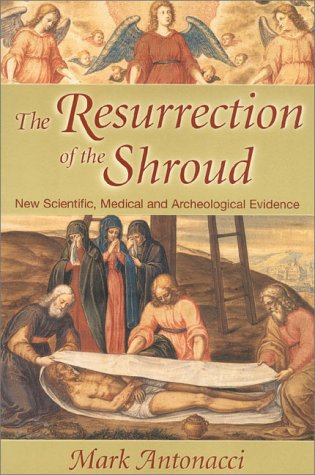
[Left: Mark Antonacci's, "The Resurrection of the Shroud" (2000), Amazon.com. See `tagline' quotes below (bold emphases mine) from this excellent book.]

that I will probably refer to in my book outline, "The Shroud of Turin: Burial Sheet of Jesus?"


THE SHROUD OF TURIN: BURIAL SHEET OF JESUS?
© Stephen E. Jones


CONTENTS

BIBLIOGRAPHY "A"

Adams, F.O., 1982, "Sindon: A Layman's Guide to the Shroud of Turin," Patrick Walsh Press: Tempe AZ.
Antonacci, M., 2000, "The Resurrection of the Shroud: New Scientific, Medical, and Archeological Evidence," M. Evans & Co: New York NY.

Stephen E. Jones, BSc. (Biology).
My other blog: CreationEvolutionDesign


"The Shroud of Turin, a large linen cloth 14 feet 3 inches long and 3 feet 7 inches wide (4.34 m x 1.10 m), takes its present name from the city where it has been kept for the last 422 years-Turin, Italy. In ancient times, burial shrouds were wrapped lengthwise around a body as shown below. Jesus would have been wrapped and buried in such a linen shroud. The Shroud of Turin purports to contain evidence of some of the most startling events in all of history: that a man who was beaten and scourged, his head pierced repeatedly about the crown; a man who was crucified, pierced in the side, a man who was dead and buried-that this man was resurrected; and, further, that he was Jesus Christ. Unlike any other burial garment, this cloth contains the front and back images of the body of a man ... Of course, we might be tempted to dismiss such claims as colorful legends from the far reaches of the past, assumptions carried forth by our own philosophical desires. But the passage of time and the expansion of our knowledge about the world around us have, surprisingly, borne out these claims to greater and greater degrees. As the greatest advances in our knowledge have come about with increasing intensity during the twentieth century, so, too, has our knowledge about the enigmatic Shroud of Turin." (Antonacci, M., 2000, "The Resurrection of the Shroud: New Scientific, Medical, and Archeological Evidence," M. Evans & Co: New York NY, pp.1,4).

"Not only are all the above tests consistent with the presence of blood, but venous blood flows can even be distinguished from arterial blood flows in some of the bloodstains on the man's forehead. In general, venous blood appears denser and darker red, and it flows more slowly than arterial blood. In large wounds or wounds that puncture a vessel and produce a large blood flow, venous blood slowly thickens as it descends because it takes a few minutes for the coagulation process to begin and a clot to form. The large epsilon-shaped clot in the middle of the man's forehead is a good example of a large venous blood flow. .... In contrast to blood from a vein, arterial blood spurts from a wound, driven by the pumping action of the heart. ... Dr. Rodante, who has made one of the most extensive studies of the forehead wounds to date, has identified the origins of many of the head wounds based on the size or coagulation pattern of blood flows on the skin. ... As examples, the epsilon-shaped forehead clot lies exactly over the frontal vein, while the arterial wound numbered AI in figure 21 precisely corresponds with the frontal branch of the superficial temple artery. According to Rodante, `The perfect correspondency of the forehead dots imprinted on the [Shroud], overlaying as they do the vein and the artery in mirror image, gives us the certainty that the linen covered the corpse of a man, who, while living, suffered the lesion of these blood vessels:' ... These examples of distinctly venous and arterial wounds indicate that the injuries evident on the man's image could have occurred only on an actual human body. Regardless of technique, no artist, especially one working in the Middle Ages, has ever represented the distinction between venous and arterial blood so accurately. .... In fact, the difference between arterial and venous blood was not even discovered until 1593 [actually 1628 - SEJ], more than 230 [265 - SEJ] years after some allege that the Shroud image was painted. The epsilon-shaped clot on the man's forehead contains another realistic detail. As the blood flow descended, it broadened and changed course twice. Physicians believe this was because forehead muscles spontaneously contract when they are injured. The forehead, temple, and scalp contain a web of nerves that is highly sensitive to pain. Thus, contracting forehead muscles would be a natural reaction to the intense pain caused by having more than thirty head wounds." (Antonacci, 2000, pp.25-26).

"Nickell Powder-Rubbing Method Joe Nickell, a former stage magician and amateur detective, has experimented with a proposed technique of image encoding. Nickell's technique involved conforming wet linen to a bas-relief while impressing all the relief's features onto the cloth. After the cloth dried, he used a cotton dauber covered with cloth to rub powdered pigment onto the impressions left on the linen. [Nickell, J., "Inquest on the Shroud of Turin," Prometheus Books, 1987] The results obtained by such a technique ... show what happened when STURP members tested Nickell's theory. As is evident in the VP-8 photograph, Nickell's powder-rubbing method does not produce a true three-dimensional image. A powdered bas-relief technique would involve the application of a substance to the Shroud. As discussed earlier, all the extensive scientific examinations of the cloth indicate that no powdered particles or foreign materials of any kind have been added to the body-image fibrils that could account for the coloring-and therefore visibility-of the image. Specifically, magnified photographs of the body image threads do not reveal any sort of applied particles or staining substance. The `natural experiment,' arising from the fire of 1532, also disproves Nickell's theory, as it did the painting theory. Nickell promulgates that the powdered pigments used were iron oxide, myrrh, or aloes. Yet if organic substances such as these had been used to encode the Shroud image, they would have been altered or decomposed during the fire, depending on their distance from the hottest areas of the cloth. However, no such alteration in the body image can be found on the Shroud when those image areas nearer the burn marks are compared to those areas farther away." (Antonacci, 2000, pp.73-74. Emphasis original).

"Nickell contends that his powder-rubbing method produces a superficial image. However, when STURP scientists reproduced his experiment using linen with a herringbone weave that simulates the Shroud's weave, large quantities of powder fell through the weave of the cloth and accumulated on the reverse side. Shroud researcher and archaeologist Paul Maloney even tried using a piece of linen with a box weave, which is the tightest linen weave known. Maloney found that powdered particles still penetrated through to the back of the cloth. Obviously, Nickell's technique fails to meet the requirement of image superficiality. Nickell's theory seems far-fetched for other reasons. The Shroud contains, conservatively, thousands of individual body-image fibrils, but each fibril is encoded with a uniform intensity of color. Someone applying powdered pigment onto a cloth with a hand-held dauber and/or rubbing powder on woven linen could never achieve this uniform intensity on all image fibrils. In fact, experiments involving powder rubbing have shown that a uniform application of powder cannot be obtained on even one fibril." (Antonacci, 2000, p.74).

"Photographic examinations of the Shroud done with X ray, reflectance, and raking light (light directed at the cloth at a grazing angle) revealed various horizontal fold marks. (Due to the angle of illumination used in the raking-light study, vertical fold marks would not be visible.) The locations of these horizontal fold marks are consistent with the fold configuration in which the Shroud is believed to have been stored more than a thousand years ago ... If Nickell's powder-rubbing method were responsible for the image on the Shroud, evidence of fold marks should also be evident at such places as the top of the head, eyebrow area, nose, lips, chin, hands, feet, et cetera-everywhere the linen would have been molded to an underlying bas-relief. However, no fold marks in these areas can be found on the Turin Shroud." (Antonacci, 2000, p.75).

"Nickell's attempts to reproduce blood images were as unsuccessful as his body image efforts. He asserts that the blood marks were made by tempera paint, but this assertion conflicts with the evidence showing that the blood marks were made by actual whole blood. Tempera paint cannot chemically pass for primate or human blood. In addition, the application of tempera paint could not begin to account for the serum halos surrounding the edges of the wounds covering the man in the Shroud." (Antonacci, 2000, p.76).

"Nickell has never submitted his experimental cloth to scientists for verification, but he has presented photographs showing the results of his powder-rubbing technique. On these photos his painted `blood' does not begin to approach the realism of the wounds found on the Shroud. They also do not have the shape or appearance of actual wounds that have formed and bled on human skin. The actual blood marks evident on the Shroud are mirror images on cloth of how actual wounds appear on skin. The deficiencies of Nickell's method become even more apparent when one considers the smaller wounds on the Shroud, such as the scourge marks. The slightly depressed centers and raised edges of these scourge marks have been encoded on the cloth in such a way that their characteristics are not even visible unless one examines photographs that have been enlarged and then magnified under a microscope. The fluorescing borders, composed of actual serum, around the scourge marks are also invisible until observed under ultraviolet light, as are the scourged areas that consist of only scratches or lines. None of these characteristics of the blood, serum, or scourge marks can be encoded, or duplicated, by Nickell's proposed application of tempera paint." (Antonacci, 2000, p.76).

"Microscopic and ultraviolet examinations of the Shroud indicate that the blood images were transferred to the cloth before the body image. If the body image were encoded through contact with a hot surface, thermal discoloration or degradation of bloodied fibrils would be evident because the blood images would have been in direct contact with the bas-relief heated to temperatures high enough to scorch linen. Indeed, this effect appeared in the experimental testing of this technique. Microscopic study of the bloodstains on the Shroud, however, reveals no thermal discoloration or fusing (except in areas where the fire marks of 1532 intersected bloodstains). Furthermore, a heated bas-relief could not produce the many other aforementioned unique features of the blood on the Shroud." (Antonacci, 2000, p.79).

"Available scientific evidence strongly supports the contention that the Shroud of Turin was in Palestine and in Turkey sometime before the 1350s when its presence in Europe was first documented. Of the fifty-eight [57 - SEJ] pollen grains from plant species that were found on the Shroud by Dr. Frei (discussed earlier), only seventeen of these-less than one third, can be found in France or Italy. That seventeen of these pollen grains are grown in France or Italy should come as no surprise, since the Shroud has spent its last 645 years in these countries. What is surprising is that only a minority of pollens are native to Western Europe; the majority are native to the Middle East, including Turkey and Israel. It is interesting that the proportion of pollen grains from plants in Edessa (eighteen) and Constantinople (thirteen) is very similar to that of western European plants (seventeen). One would expect such a proportional distribution if the Shroud had a strong history associated with the Mandylion and the Image of Edessa, as postulated by Wilson and others." (Antonacci, 2000, p.153).

"As you can see, a historically documented, plausible provenance of the Shroud of Turin from first-century Jerusalem to present-day Turin is not hard to put together. Critics who denounce the Shroud as a fraud have not only been unable to agree on a method of forgery-they have also never agreed on a plausible, documentable place or `artist' of a forged Shroud. We have already seen that it would be impossible to forge the Shroud naturally or artistically, even with today's technology-much less during medieval times." (Antonacci, 2000, p.154).

"Before we review the radiocarbon dating controversy in connection with the Shroud, you should understand the fundamental principals of radiocarbon dating. Three isotopes of carbon are normally found in carbon-containing materials: carbon-12 (C-12), carbon-13 (C-13), and carbon-14 (C-14). C-12 accounts for 98.9 percent of naturally occurring carbon. C-13 accounts for the other 1.1 percent. C-14 is present only in trace amounts. C-13 and C-12 are stable isotopes that were formed when the planet's other atoms were formed. Practically all of the earth's carbon in organic and inorganic materials consists of these two isotopes. Any C-14, or radiocarbon, that was formed along with the planet disappeared long ago because this isotope is radioactively unstable and decays. However, new, minute amounts of C-14 are continuously formed during collisions of cosmic rays with nitrogen-14 (N-14) atoms in the atmosphere. N-14 is not unusual: Air is about 78 percent nitrogen and 99.63 percent of all the nitrogen on earth is N-14. This newly formed C-14 is also unstable and disappears naturally. The amount of C-14 on earth remains nearly the same because new C-14 is created in the atmosphere at almost the same rate that older C-14 is decaying on the earth's surface. Thus, carbon-14 is said to be in balance. However, this balance is infinitesimal with C-14 being approximately one part in a trillion of the overall carbon content (1/1,000,000,000,000). This very tiny amount of C-14 formed in the atmosphere, along with the much larger amounts of C-13 and C-12, is taken up in atmospheric carbon dioxide by photosynthesizing plants and is, thereby, spread throughout the biosphere, thus allowing all living things to have a similar ratio of C-14 to C-12. Since these carbon isotopes have the same chemical behavior, this ratio is maintained while the organism lives. However, upon its death, the C-14 disappears according to its radioactive half-life, which is approximately 5,730 years. By measuring the C-14 to C-12 ratio, scientists can calculate the date of the organism's death. ... Since the fraction of C-14 to C-12 is so infinitesimal, and since this measured ratio is the basis for calculating the organism's age, any error in measuring or counting the C-14 isotope could alter the date, perhaps significantly. A correct date can be calculated if and only if the very tiny trace amount of measured C-14 from the object accumulated there by the above natural process. If the measured C-14 got on the object any other way, the interpretation of the date will be incorrect." (Antonacci, 2000, pp.156-157. Emphasis original).

"Errors in radiocarbon dating have been quite numerous. .... This dating measures the ratio of C-14 to C-12, so if there are any errors in measuring the small amount of C-14 or in measuring the C-12, the date will be incorrect. Even if the two isotopes are correctly measured, the isotopes that were measured must be original, and must belong only to the object from which they were taken. This dating process is not absolute and is subject to enormous error. ... Quotes from the most elementary textbooks show that contamination can cause errors in dating. `Carbon from other sources may easily be trapped in porous materials ... The archaeologist is the only person who is in a position to know of these contaminating potentials' [Stuckenrath, R., Jr., "On the Care and Feeding of Radiocarbon Dates," Archaeology, Vol. 18, 1965, pp.277-281]. `[C]ontamination of the sample may take place ... and removal of the contaminant from the pore spaces and fissures is almost impossible.' [Goudie, A., "Environmental Change," Clarendon: Oxford, 1977, p.10]. Excavated samples are `liable to absorb humic matter from the solutions, that pass through them (resulting in) contamination by carbon compounds of an age younger than its own ... there is also the possibly of exchange of carbon isotopes under such conditions ... That there are other risks of contamination and other pitfalls involved in this method is obvious enough.' [Zeuner, F.E., "Dating the Past," Hafner: Darien CT, 1970, pp. 341-346] The possibility of contamination should be exhaustively investigated and pretreatment measures should be designed accordingly whenever any critical radiocarbon dating is being attempted. Unfortunately, even with specialized pretreatment, contamination cannot always be detected and, if detected or identified, cannot always be eliminated." (Antonacci, 2000, pp.157-158).

"The first area of scientific research that we shall examine may constitute the most important challenge to and refutation of the carbon dating of the Shroud. These scientific findings also indicate the key areas of future testing that must be performed on the Shroud to confirm whether it was irradiated with a particular form of radiation, whether new C-14 was created within it, to distinguish the original C-14 from the additional C-14, and to calculate the cloth's true age. In the same issue of Nature in which the carbon dating report of the Shroud appeared, this scientific journal also published a letter by Thomas Phillips of the High Energy Physics Laboratory at Harvard University [Phillips, T., "Shroud Irradiated with Neutrons?," Nature, Vol. 337, 1989, p.594]. Phillips, also an IBM scholar, stated that if the body of the man in the Shroud gave off radiation during the image-encoding process it could have radiated neutrons, `which would have irradiated the Shroud and changed some of the nuclei to different isotopes by neutron capture. In particular, some C-14 could have been generated from C13.' [ibid] This same process could also form newly created C- 14 from nitrogen. This newly created C-14 would make the Shroud appear much younger that it actually is. When asked by a journalist if such a process could have caused an incorrect dating of the Shroud in 1988. Michael Tite, who coordinated the carbon dating of the Shroud for the British - Museum, commented: `It is certainly possible if one gave the Shroud a large dose of neutrons to produce C-14 from the nitrogen in the linen cloth.' [Jennings, P, `Still Shrouded in Mystery;' 30 Days in the Church and in the World, 1.7, 1988, pp.70-71, p.71]. Robert Hedges, one of the scientists who participated in the carbon dating of the Shroud at the Oxford laboratory, also acknowledged to the journalist that a `sufficient level of neutrons from radiation on the Shroud would invalidate the radiocarbon date which we obtained.' [ibid]. In fact it was Dr. Hedges who pointed out that the amount of neutron flux required to cause a 1,300-year difference in age was not nearly as much as first suggested by Phillips. [Hedges, R., `Hedges Replies,' Nature, Vol. 337, 1989, p.594] Because the amount of C-14 in the C-14 to C-12 ratio is so minuscule (one part in a trillion), if a neutron flux activated only an extra 18 percent of C-14 compared to that present naturally in the linen, it would cause a cloth from the first century to appear to be only 650 years old [Kelly, B., `Turin Shroud,' New Scientist, Vol. 119, September 1988; Statement confirmed by Dr. Robert Otlet of the Harwell Laboratory and by Prof. Edward Hall of the Oxford Laboratory according to Wilson in the British Society for the Turin Shroud Newsletter, 20, October 1988, p.14]." (Antonacci, 2000, pp.159-160).

"Gove's book makes it absolutely dear that he assumed leadership on every possible issue that he could, and that he was a major influence not just on the laboratories but also on the final decisions that led to such controversial results. Moreover, his book revealed ... his deep-seated animosity toward STURP, the full extent of which would be revealed only by his publication seventeen years after joining STURP's effort, and eight years after the radiocarbon dating of the Shroud had taken place. Gove's true feelings and motives toward STURP and its involvement in the scientific testing of the Shroud are clearly revealed on the first page, on which he mentions them, in the very first chapter of his book. `I was determined to prevent their involvement in its [the Shroud's] carbon dating, if that were ever to come about.... Fortunately in this I was successful.' [Gove, H.E., "Relic, Icon or Hoax?: Carbon Dating the Turin Shroud," Institute of Physics Publishing: Bristol UK, 1996, pp.6-7] On the next page, he states, `I am happy to say that, in the end, they [STURP] played no role in its carbon dating.' [ibid., p.8] One of the sad ironies is that STURP's participation could have prevented many amateurish aspects of the procedure and precluded the questionable sampling. While discussing the early period of 1978 to 1979, Gove further informs us of his actual `disdain for those [STURP] scientists.' [ibid., p.48] In his 1996 book, he shows that his hypocritical and concealed attitude existed before he even made any pledges to or agreements with STURP. Immediately before he called STURP in 1979, accepting that its C-14 committee members could be present during the removal of the sample from the Shroud and during the sample's preparation and measurement, he blatantly reveals his duplicity: ` ... they [STURP] had good connections in Turin, and could be useful in obtaining a shroud sample for dating-if only they could be prevented from playing any other role.' [ibid., p.57]" (Antonacci, 2000, p.193).

"In light of the Shroud's known and unknown contaminants and history, Meacham warned the lab directors at the Turin workshop, and in an article published the same year, `[t]o measure Shroud samples, one must consider every possible type of contamination and attempt to identify and counter them all, before the measurement is made and a 'radiocarbon age' assigned.' [Meacham, W., "Radiocarbon Measurement and the Age of the Turin Shroud: Possibilities and Uncertainties," in "Turin Shroud: Image of Christ," Cosmos: Hong Kong., 1987, pp.41-56] Meacham further warned that `an elaborate pretreatment and screening program should be conducted before the samples are measured.' [ibid., p.48]. If the laboratories had followed this advice, perhaps they could have determined whether wax or starch had chemically bound to the cellulose in the sample taken from the Shroud for dating. Chemical analysis by combustion of the linen before and after the cleaning treatment could have revealed if any wax had become chemically bound to their samples. Enzymes could have detected the presence of starch. Meacham's article, as well as previous articles, had even listed wax and starch among the known contaminants discovered on the Shroud. Meacham further warned in the same article that, `unless there are specific conditions which warrant specialized pretreatment, most laboratories process samples with acid and alkali washes. While this standard pretreatment is usually effective in removing modern contaminants, it may not do so for intrusive materials deposited much earlier.' [ibid., p.47]" (Antonacci, 2000, pp.197-198).

"The scientific evidence found on the cloth itself gives a good deal of information about its images, in particular that they appear to have resulted from some type of radiation. ... Neither the scorch marks nor the body images have faded with time, and neither were caused by foreign materials or particulates. ... For these and many other reasons, most scientists, as well as other Shroud experts, have concluded that some form of light or heat (or radiation) caused the images on the Shroud. However, the absence of pyrolitic compounds or products expected from high-temperature cellulose degradation indicates that the image-forming process took place at a fairly low temperature. This type of low-temperature radiation would not leave any residue on the cloth, as is the case with the Shroud's body images. Neither would it leave any directionality across the width or length of the image. In addition, radiation is an agent that can operate on skin, hair, coins, or flowers, and can uniformly encode the fibers on a cloth. It is extremely difficult to imagine how the subtle shades of light and dark on the Shroud's body images could possibly have been obtained without using light or radiation. These body images are not saturated or diffused. The edges of the man's body at the sides, top, and bottom break off sharply. Furthermore, the agent, acting at a distance, barely penetrated the cloth. As one noted scientist who has studied the Shroud for more than two decades observed, `An agent acting at a distance with decreasing intensity is, almost by definition, radiation. The limitation of the cloth darkening to the outermost surface pointed to a non-penetrating, non-diffusing agent, like radiant energy' ..... [Gonella, L., "Scientific Investigation of the Shroud of Turin: Problems, Results and Methodological Lessons," in "Turin Shroud-Image of Christ?," Cosmos: Hong Kong, 1987, pp.29-40, p.31]" (Antonacci, 2000, p.212).

"A vertical beam or beams of light or radiation also best explains how the Shroud's body image was encoded through space in a straight line from the body to the cloth. STURP scientist John Heller stated, "It is as if every pore and every hair of the body contained a microminiature laser." [Heller, J., in McDonald, W. "Science and the Shroud," The World and I, October 1986, pp.420-428, p.426] This vertical directionality of the Shroud body image has only been accounted for by methods involving radiation. As scientist Luigi Gonella explained, "Whatever the mechanism might be, it must be such to yield effects as if it were a burst of collimated radiant energy." [Gonella, L., "Scientific Investigation of the Shroud of Turin: Problems, Results and Methodological Lessons," in "Turin Shroud-Image of Christ?," Cosmos: Hong Kong, 1987, pp.29-40, p.31]" (Antonacci, 2000, p.213).

"We also saw earlier how the various shades of light and dark on the cloth's frontal image directly correlate to the various distances that they were from the underlying body. This ratio exists throughout the length of the body image, even in places where the cloth could not have been touching the body, resulting in an image that contains precisely encoded, three-dimensional information. Such a precisely encoded correlation over such a distance could seemingly only be achieved by radiation. The Shroud's highly resolved image is also difficult to imagine unless light or radiation coming from the body is somehow directed onto the cloth." (Antonacci, 2000, p.213).

"All of the evidence points to a very unique occurrence that caused the images on the Shroud, something that could never have been created by the technology of the medieval ages (or even by the technology of today). Only through simulation have today's scientists been able to come close to the Shroud's three-dimensionality, vertical directionality, and finely resolved and highly focused image; their simulation achieved by a mechanism in which light was attenuated in a liquid, then traveled in a vertical, straight-line direction from the plaster reference face while it was being focused in a camera. [Jackson, J.P. & Jumper, E.J. & Ercoline, W R., "Correlation of Image Intensity on the Turin Shroud with the 3-D Structure of a Human Body Shape," Applied Optics, Vol. 23, No. 14, July 1984, pp.2244-2270]." (Antonacci, 2000, p.213).

"Dr. Giles Carter, Professor Emeritus, Eastern Michigan University, has conducted years of experiments with X rays. He has noted that cloth samples placed in an X ray beam and exposed to low-energy, long-wave X rays for different periods of time will produce superficial, straw-yellow discoloration like that found on the Shroud body images. [Carter, G.E., "Formation of the Image on the Shroud of Turin by X Rays: A New Hypothesis," in Lambert, J.B., ed., "Archaeological Chemistry, III," American Chemical Society: Washington DC, 1984, pp.425-446] He also noted that these same types of X rays are easily absorbed in air. Because of this absorption or attenuating quality Carter stated that X rays given off by the body would also convey three-dimensional information onto the cloth. [Carter, ibid. p.435]. Dr. Carter first suggested in 1984 that the finger bones are visible on the photographic negative images of the man in the Shroud. In addition, he noted that the bones extending into the hand, over the wrist, could also be visible, helping to explain why the man's fingers appeared so long. Since then, other scientists and physicians have confirmed the identification of these finger and hand bones. [Accetta, A.D., "Experiments with Radiation as an Image Formation Mechanism," Shroud of Turin International Research Conference, Richmond VA, June 18-20, 1999] Carter stated that these `images may be due at least in part to x-rays emanating from the bones in the body.' [Carter, ibid. p431] Scientists and physicians have identified other possible internal skeletal features on the man in the Shroud. Dr. Jackson has noted that part of the skull at the forehead may be visible on the man. Surgeon Alan Whanger, utilizing his modified Polarized Image Overlay Technique with the Shroud's negative and positive images, has also identified features from the skull, as have Dr. Carter and Dr. August Accetta. [Whanger, M. & A., "The Shroud of Turin," Providence House Publishers, Franklin TN, 1998, pp.116-117]" (Antonacci, 2000, p.213).

"Dr. Accetta, a physician, has also conducted experiments concerning radiation-imaging of skeletal and other bodily features. Dr. Jackson and Dr. Accetta have further identified faint images of the curved and inverted thumb under the man's left palm. [Accetta, ibid., 1999; Jackson, J.P., "An Unconventional Hypothesis to Explain All Image Characteristics Found on the Shroud Image," in Berard, A., ed., "History, Science, Theology and the Shroud," 1991, pp.333-335] Carter, Whanger, and Accetta have stated that images of the man's teeth could be partially visible, especially on the right side of the man's mouth. [Carter, 1984, pp.433-434; Whanger, 1998, pp.117-118]. Dr. Carter also first stated that, `Part of the backbone may be visible on the dorsal image ...' of the man in the Shroud. [Carter, ibid., p.433] This identification has also been confirmed by Dr. Whanger. [Whanger, ibid., p.118] Recently I enlisted the services of Dr. Joseph Gerard and Dr. Cheri Ellis, who, in their profession as chiropractic physicians, make and view more X-ray images of the spinal column than almost any other profession. After studying quality photographic negatives of the dorsal area, they were able to specifically identify numerous vertebrae in the neck and backbone (and even a few pedicles of the vertebrae with disc spaces prevalent). All these skeletal features lie near the surfaces of the frontal or dorsal sides of the man in the Shroud. All are encoded correctly, and none were visible for hundreds of years-until the development of modern technology. The existence of just some of these features shows not only that the radiation came from the body, but that it resembled or had qualities analogous to X rays." (Antonacci, 2000, pp.213-214).

"Since we know the Shroud contained a body, the fact that both the frontal and dorsal images are contained on the inside of it is an indication that the body wrapped within was the source of radiation. We also saw that the reason a truly proportional three-dimensional image resulted was because the lightness or darkness of the image on the cloth correlated to the distance that it was from the body. Since the various degrees of the body image's lightness are all contained on the Shroud's surface, and the cloth itself received this information indicating the corresponding distances between it and the body below, the light had to have come from the body. In fact, all the numerous body image features, that are encoded over the entire lengths and widths of both the frontal and dorsal body images, indicate that the radiation emanated throughout the length and width of the body. Having studied the various features of the Shroud body image that have been discovered since its first extensive scientific examination in 1978, physicist Kitty Little wrote: `It was already known that the image was inside the Shroud and not on the outside. With this further examination it became certain that the source of the illumination that had formed the image came from within-that is, from the body-and that whatever caused it had a range of about four centimetres ... [with] the "illumination" coming from the body as a whole.' [Little, K., "The Holy Shroud and the Miracle of the Resurrection," Christian Order, April 1994, pp.218-231]" (Antonacci, 2000, p.214).

Wednesday, November 14, 2007

TSoT: Bibliography "W"

This is the Bibliography "W" page of my book outline, "The Shroud of Turin: Burial Sheet of Jesus?," of

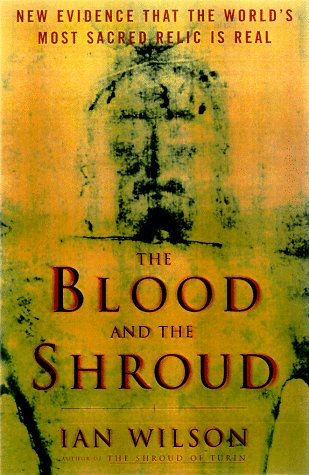
[Left: Ian Wilson's, "The Blood and the Shroud" (1998), Amazon.com. Second only in importance to his, "The Turin Shroud" (1978), in laying out the evidence for and against the Shroud of Turin being the burial sheet of Jesus.]

authors' surnames beginning with "W" of books and journals that I will probably refer to.


THE SHROUD OF TURIN: BURIAL SHEET OF JESUS?
© Stephen E. Jones


CONTENTS

BIBLIOGRAPHY "W"

Walsh, B.J., ed., 2000, "Proceedings of the 1999 Shroud of Turin International Research Conference, Richmond, Virginia," Magisterium Press: Glen Allen VA.
Walsh, J.E., 1963, "The Shroud," Random House: New York NY.
Weaver, K.F., 1980, "Science Seeks to Solve ... The Mystery of the Shroud," National Geographic, Vol. 157, June, pp.730-753.
Whanger, M. & Whanger, A.D., 1998, "The Shroud of Turin: An Adventure of Discovery," Providence House Publishers: Franklin TN.
Whiting, B., 2006, "The Shroud Story," Harbour Publishing: Strathfield NSW, Australia.
Wilcox, R.K., 1977, "Shroud," Macmillan: New York NY.
Wilson, I., 1979, "The Shroud of Turin: The Burial Cloth of Jesus?," [1978], Image Books: New York NY, Revised edition.
Wilson, I., 1986, "The Evidence of the Shroud," Guild Publishing: London.
Wilson, I., 1991, "Holy Faces, Secret Places: An Amazing Quest for the Face of Jesus," Doubleday: New York NY.
Wilson, I., 1998, "The Blood and the Shroud: New Evidence that the World's Most Sacred Relic is Real," Simon & Schuster: New York NY.
Wilson, I. & Schwortz, B., 2000, "The Turin Shroud: The Illustrated Evidence," Michael O'Mara Books Limited: London.
Wuenschel, E.A., 1954, "Self-Portrait of Christ: The Holy Shroud of Turin," Holy Shroud Guild: Esopus NY, Third printing, 1961.

PS: See `tagline' quotes below (bold emphases mine), one from each of the above.

Posted 14 November 2007. Updated 4 May 2025.


"The radiocarbon dating performed on the Shroud of Turin in 1988 by laboratories located in Oxford, Tucson and Zurich concluded with a 95% probability that the linen cloth of the Shroud of Turin dated from between 1260 - 1390 AD. A reanalysis of the data used to derive this range of dates suggests that the statistical tests performed earlier assumed 14C homogeneity in the samples and as a result may have lead to a misleading range of dates. A different series of statistical evaluations has been applied to this radiocarbon date data leading to the conclusion that the Shroud subsamples each contained differing levels of 14C. An evaluation of this conclusion was conducted and found to be statistically supportable. Further analysis revealed that the sample dates observed were directly related to the physical location of the sample on the Shroud linen. This necessarily implies that the linen samples were non-homogeneous as regards 14C and the radiocarbon date derived for the Shroud samples are of questionable validity. The hypothesis of a relationship between the sample location on the Shroud cloth and the date measured was evaluated and found to be statistically significant." (Walsh, B.J., 2000, "The 1988 Shroud of Turin Radiocarbon Tests Reconsidered," in Walsh, B.J., ed., "Proceedings of the 1999 Shroud of Turin International Research Conference, Richmond, Virginia," Magisterium Press: Glen Allen VA, p.326).

"Only this much is certain: The Shroud of Turin is either the most awesome and instructive relic of Jesus Christ in existence-showing us in its dark simplicity how He appeared to men-or it is one of the most ingenious, most unbelievably clever, products of the human mind and hand on record. It is one or the other; there is no middle ground." (Walsh, J.E., 1963, "The Shroud," Random House: New York NY, pp.xi-xii).

"It would not be the shroud's first brush with science. That happened eighty years before, in 1898, with the first photographs of the relic. Those pictures uncovered the most surprising of the shroud's many mysteries. When the photographer, Secondo Pia, examined his first glass-plate negative as it emerged from the developing bath, he almost dropped it in shocked excitement. He was looking not at the usually unrealistic, confusing photographic negative, but at a clear positive image. Highlights and shadows were reversed from those on the cloth and were far more lifelike and realistic. Moreover, they showed details never before seen in the shroud, which was now revealed as a negative image. A negative image? Hundreds of years before the invention of photography? The idea that the shroud was a hoax suddenly seemed less plausible, for how could a medieval artist have produced a negative image, and why would he choose to do so?" (Weaver, K.F., 1980, "Science Seeks to Solve ... The Mystery of the Shroud," National Geographic, Vol. 157, June, pp.730-753, 743. Italics original).

"PRIOR TO RELEASING OUR FINDINGS ON the Pantocrator icon and the Justinian II solidus, we had read about the work of Father Filas on the identification of coins over the eyes of the Man of the Shroud. The possibility of the presence of coins over the eyes was first raised when three scientists, John P Jackson, Eric J. Jumper, and R. W (Bill) Mottern, the instigators of the 1978 Shroud of Turin Research Project, put a photograph of the Shroud face in a VP-8 Image Analyzer (a specialized computer device which converts the density of an image into height) and saw, to their astonishment, an accurate three-dimensional representation rather than the irregular and distorted image resulting from all ordinary photographs and paintings. Two button-like objects, one over each eye, were visible; it was suggested they might be coins which had been used to keep the eyes of the dead closed, a practice common to many peoples for many centuries [Jackson, J.P., Jumper, E.J. Mottern, B. & Stevenson, K.E., ed., "The Three Dimensional Image On Jesus' Burial Cloth," in Stevenson, K.E., ed., "Proceedings of the 1977 United States Conference of Research on The Shroud of Turin," Holy Shroud Guild: Bronx NY, 1977, pp.90-91]. British historian Ian Wilson mentioned several coins from the time of Pontius Pilate which would correspond to the size of the `buttons,' about fifteen millimeters or five-eighths of an inch in diameter. In 1979, more out of curiosity than anything else, Filas re-photographed an enlargement of a photograph which had been made from a second-generation 1931 Enrie print of the face. To his surprise, he noticed something he had not seen before-a sort of design directly over the right eye. He took this photograph to Michael Marx, a numismatist (coin expert) who had earlier volunteered his professional expertise. Marx became excited as he scanned the photograph with a magnifier, for he could identify four curving capital letters, UCAI. There also was something that looked like a shepherd's crook. Filas next obtained a copy of Madden's History of Jewish Coinage, and of Money in the Old and New Testament and a catalog of all Pontius Pilate coins in the British Museum. He found only one coin which had as its main motif a `shepherd's crook,' actually an astrologer's staff or lituus: this was a lepton (small coin) or `widow's mite' of Pontius Pilate, and it was the correct size. Then, also in 1979, numismatist Bill Yarbrough obtained several Pontius Pilate lepta and gave one to each of several Shroud researchers, including Filas, as a souvenir. Filas became convinced that there are indeed images of coins over the eyes. He identified the one over the right eye definitely as a lituus lepton of Pontius Pilate; and on very minimal evidence (three very short curving lines that seemed to spread away from each other from a common source) suggested that the one over the left eye was likely also a Pontius Pilate lepton but of a different design, that of a sheaf of barley, which is found on a Pontius Pilate lepton known as the Joulia (Julia) lepton, which was struck only during a six-month period in A.D. 29 in honor of Julia the mother of Tiberius Caesar. " (Whanger, M. & Whanger, A.D., "The Shroud of Turin: An Adventure of Discovery," Providence House Publishers: Franklin TN, 1998, pp.23-24. Emphasis original).

"Not all the pollens present on the Shroud had been identified previously by Frei, because many were found to be coated in a calcium-rich mineral that made classification difficult. Considering that the underside of Christ's burial shroud had been in hard contact with the limestone burial platform of the cave-tomb, the intriguing question was whether the mineral coating on these pollens had come from rock in the same area. This question was taken up in 1986 by optical crystallographer Dr Joseph Kohlbeck, resident scientist at Hercules Aerospace, Colorado. He gained the support of archaeologist Dr Eugenia Nitowski, an expert in ancient Jewish tombs of Israel, who obtained for him some limestone samples from a first-century tomb in Jerusalem. Dr Kohlbeck closely analysed and compared his samples from the underside of the Shroud with Dr Nitowski's samples. In both instances he identified the calcium component to be of the aragonite variety, and in both he also uncovered traces of strontium and iron. In scientific terms, these points meant a close match. [Kohlbeck, J.A. & Nitowski, E.L., "New evidence may explain image on the Shroud of Turin," Biblical Archaeology Review, Jul/Aug 1986, p.23] There was still more that Dr Kohlbeck could do to test his evidence. He took his mineral-coated pollen samples and the limestone tomb samples to Dr Ricardo Levi-Setti at the Enrico Fermi Institute in the University of Chicago. The two scientists studied the patterns of spectra produced by the comparative samples through a high-resolution scanning ion microprobe. Although they were unable to prove beyond doubt that the Shroud aragonite had come from the Jerusalem area, the samples were found to be an unusually close match. This led Dr Kohlbeck to assess the strong probability that the Shroud limestone is of Jerusalem provenance." (Whiting, B., "The Shroud Story," Harbour Publishing: Strathfield NSW, Australia, 2006, pp.129-130).

"If I had known Stewart would need a profile of the man in the shroud, I would have brought along the photographs made by Leo Vala, a photographer of British royalty and a pioneer in the development of the 3D visual process and cinemascope movie screens. By manipulating light through photo transparencies, he produced an image on a normal screen that enabled sculptors to make a three-dimensional model which could then be photographed in profile or indeed from any other angle. In perfecting the process Vala had selected the shroud face as a subject `because it's such a beautiful image.' After publishing the results of his experimentation in the March 8, 1967 issue of Amateur Photographer, he became an outspoken critic of anyone who thought the image could have been produced by human hands either through artistry or technology. `I've been involved in the invention of many complicated visual processes, and I can tell you that no one could have faked that image. No one could do it today with all the technology we have. It's a perfect negative. It has a photographic quality that is extremely precise.'" (Wilcox, R.K., "Shroud," Macmillan: New York NY, 1977, pp.130-131).

"Even from the limited available information, a hypothetical glimpse of the power operating at the moment of creation of the Shroud's image may be ventured. In the darkness of the Jerusalem tomb the dead body of Jesus lay, unwashed, covered in blood, on a stone slab. Suddenly, there is a burst of mysterious power from it. In that instant the blood dematerializes, dissolved perhaps by the flash, while its image and that of the body becomes indelibly fused onto the cloth, preserving for posterity a literal `snapshot' of the Resurrection. However the image was formed, we may well be entranced by the fourteen-foot length of linen in Turin. For if the author's reconstruction is correct, the Shroud has survived first-century persecution of Christians, repeated Edessan floods, an Edessan earthquake, Byzantine iconoclasm, Moslem invasion, crusader looting, the destruction of the Knights Templars, not to mention the burning incident that caused the triple holes, the 1532 fire, and a serious arson attempt made in 1972. It is ironic that every edifice in which the Shroud was supposedly housed before the fifteenth century has long since vanished through the hazards of time, yet this frail piece of linen has come through almost unscathed. Frustratingly, the Shroud has not yet fully proven itself to us-not uncharacteristic of the gospel Jesus, who at certain times seems almost deliberately to have made his presence obscure, as in his post-Resurrection appearance to Mary Magdalen when she mistook him for a gardener, and in his walking, shortly after, as an unrecognized stranger with the two disciples on the road to Emmaus. But one cannot help feeling that it has its role to play, and that its hour is imminent." (Wilson, I., "The Shroud of Turin: The Burial Cloth of Jesus?," [1978], Image Books: New York NY, Revised edition, 1979, pp.250-251).

"Attempts to simulate some aspects of such a process have been made by Drs. Jackson and Jumper and colleagues in a comprehensive review of the comparative plausibility of every conceivable variety of image-forming process. But although images were produced, as in so many other experiments, these fell far short of the photographic realism of the Shroud. As Jackson and Jumper felt obliged to conclude: `We have examined a variety of image formation processes in a generic sense and found that ... no single hypothesis seems to simultaneously explain them all ...' [Jackson, J.P., Jumper, E.J. & Ercoline, W.R., "Correlation of image intensity on the Turin Shroud with the 3-D structure of a human body shape," Applied Optics, Vol. 23, No. 14, 15 July 1984, pp.2244-2269, 2269] Nonetheless a quite new and in its own way remarkably revelatory achievement has been made in the course of other studies by Jackson, this time working with Bill Ercoline. As has long been recognized, during whatever image forming process occurred the Shroud must have been draped, as opposed to being flat, over the body it wrapped. This should have caused lateral distortions in the image large enough to exceed natural variations in human anatomy. Ercoline and Jackson determined these, then plotted the actual distortions that would occur with the natural drape of a cloth over a body laid out in the manner indicated on the Shroud. They found good correlation. [Jackson, J.P. & Ercoline, W.R., "The Three-Dimensional Characteristics of the Shroud Image," IEEE 1982 Proceedings of the International Conference on Cybernetics and Society, October 1982] The effect of this research is to demand that if the Shroud is the work of an artist, he took account of the effects of cloth drape among his many other intricate calculations. Super artist, or supernormal event, consistently these have proved the only two alternatives in the midst of all the many facets of Shroud research." (Wilson, I., "The Evidence of the Shroud," Guild Publishing: London, 1986, p.126).

"But there is one example that is almost spectacularly different. Out on the Via Portuense, which runs south-westwards out of Rome, there lies one of Rome's least-known catacombs, the Catacomb of S. Ponziano, or St Pontianus. It goes unmentioned even by the authoritative Blue Guide to Rome, and can only be visited by special permission from the Pontificia Commissione di Archeologia Sacra, the Pontifical Commission of Sacred Archaeology. Importantly, since the whole catacomb was closed down after AD 820, any decoration inside it almost inevitably has to be of an earlier date. On one wall, slightly damaged, but its colours still fresh, is to be seen a very fine fresco ... of Christ Pantocrator iconographically so close to that of the coins of Justinian II that its date is almost certainly the same, the end of the seventh century. But its real feature of interest is the one which lies between Christ's eyebrows, and would be well nigh impossible to convey on anything as small as a coin. This is a sharply delineated topless square ... exactly corresponding in shape and positioning to that so unnatural mark between the eyebrows on the shroud. Now there can be no question of this feature perhaps being the result of some later tampering with the fresco. Not only did Vignon feature it in his book of 1939, thus dating it back at least fifty years, there are many indications that it was the work of the original seventh-century artist. Throughout the work, for instance, the artist used only a very limited range of colours, and it can be seen to have been painted in one of these. Furthermore, it has been created in fresco, thereby having been made integral to the original wall plaster, and can be adjudged as such by any expert. And if this originality is accepted, its significance in relation to the shroud's date is difficult to over-estimate. Just as the viewing of a single footprint on fresh sand provided for Robinson Crusoe the conclusive evidence that there was another human being (later revealed as Man Friday) on his island, so the presence of this topless square on an indisputably seventh/eighth-century fresco virtually demands that the shroud must have been around, somewhere, in some form at this early date. Since that form can have been scarcely other than the `holy face' of Edessa, the shroud's history is effectively established at least as far back as the sixth century, with the Abgar story offering a glimmer of how it may have arrived in Edessa back in the first." (Wilson, I., "Holy Faces, Secret Places: The Quest for Jesus' True Likeness," Doubleday: London, 1991, pp.167-168).

"Yet none of this, of course, means that the Shroud cannot be the work of a `cunning' mediaeval forger. Perhaps, whoever he was, this individual enjoyed such power that he could arrange for a six-foot man, possibly some prisoner, to be crucified in the exact manner of Jesus Christ? Perhaps he was able to obtain authentic ancient weaponry for the carrying out of details such as the scourging? Perhaps, given that Jews were well established throughout Europe during the Middle Ages, he knew the special burial requirements that pertained to those of this religion who had died a bloody death and arranged for an all-enveloping cloth accordingly? Of course, even if he had managed all this, how he managed to get the image onto the cloth still remains unexplained. Also is it not rather incredible that this unknown individual should have gone to so much trouble and effort to deceive in an age in which, as twentieth-century journalists have reminded us [Sheridan, M. & Reeves, P., "Turin Shroud shown to be a fake," Independent, 14 October 1988], a large proportion of the populace would have been very easily duped by a feather of the Archangel Gabriel or a phial of the last breath of St Joseph?" (Wilson, I., "The Blood and the Shroud: New Evidence that the World's Most Sacred Relic is Real," Simon & Schuster: New York NY, 1998, pp.58-60) .

"However, as early as 1984, when he was still in good health, Paul Maloney began corresponding with Dr Avinoam Danin of the A. Silberman Institute for Life Sciences at Jerusalem's Hebrew University about the Frei tapes. Danin is an acknowledged world authority on the flora of Israel, and much to Maloney's surprise and satisfaction, he responded with considerable courtesy and lack of dismissiveness, despite his academic eminence and his unswerving Jewishness. This encouraged Alan Whanger, in company with his wife Mary, to call upon Danin (who in the meantime had become Professor) during a visit to Jerusalem in September 1995. As guests at his home they showed him some of their photographs of the portions of the Shroud on which they `see' flowers, whereupon, after less than twenty seconds' perusal Danin exclaimed `Those are the flowers of Jerusalem!' One `flower' that he had no difficulty perceiving (and with regard to which even I can acknowledge a flower-like shape in the relevant sector of the Shroud), was the very first one that Alan Whanger had identified on the Shroud, the crown chrysanthemum or Chrysanthemum coronarium. Danin further noted, to the side of the man of the Shroud's right cheek, several flowers of rock rose or Cistus creticus. Despite having remained oblivious throughout his life to any flower images on the Shroud, Dr Max Frei found this rose represented among the pollens from a sticky tape, 6bd, taken from the centre of this very same area. Two years later, upon visiting the Whangers at their North Carolina home, Danin observed on a Shroud photograph an image that he regarded as most interesting of all - that of a bouquet of bean caper plants, namely Zygophyllum dumosum. As he has remarked: `During rainy winters this species sprouts leaves whose petioles look like sausages with two leaflets at their head. When summer comes, the leaflets drop and only the petiole is left. The petioles shrink slowly during the summer ... The only species of Zygophyllum that exhibits this behaviour is Zygophyllum dumosum'. [Danin, A., "Pressed Flowers." Eretz Magazine, November/December 1997, p.37] The overwhelmingly important feature of this discovery is that Zygophyllum dumosum grows only in Israel, Jordan and the Sinai. The northernmost extent of its distribution in the world coincides with the line between Jericho and the sea-level sign on the road leading from Jerusalem to Jericho. Westwards it does not reach as far as the Suez Canal, southwards it peters out before St Catherine's Monastery in the Sinai desert, and eastwards it extends no further than the longitude line of the Jordanian capital, Amman. ... Then at last there appeared a circular-shaped pollen grain, quite unmistakable, and large as pollen grains go. As was immediately revealed by cross-comparison with images of pollen grains stored in the Whanger computer, this was Gundelia tournefortii, a plant that Max Frei had already identified on the Shroud, and which Danin had reported as present on the Shroud in abundance pollenwise, and also in image form. ? As Danin sums up, particularly from superimposing the known distribution sites of Gundelia tournefortii, Zygophyllum dumosum and Cistus creticus, together with three further specific pollen types confirmed to be on the Shroud, the very narrow geographical region that all these plants share in common is the mere twenty miles between Hebron and Jerusalem. [Danin, A., "Micro-traces of plants on the Shroud of Turin as geographical markers," in Scannerini, S. & Savarino, P., eds, "The Turin Shroud: Past, Present and Future," International scientific symposium, Turin, 2-5 March 2000," Effatà: Cantalupa, 2000, pp. 495-500] So the conclusion is inescapable, in the very teeth of the radiocarbon dating, that at some time in its history the Turin Shroud positively must have been in the same environs in which Jesus of Nazareth lived and died." (Wilson, I. & Schwortz, B., "The Turin Shroud: The Illustrated Evidence," Michael O'Mara Books: London, 2000, pp.85-86, 88, 92. Italics original).

"Most remarkable of all was the fact that Yves Delage took an active part in the investigation. He was an agnostic with a strong prejudice against anything that savored of the miraculous or the supernatural, but he was also a first-rate scientist of international reputation and a member of the French Academy of Sciences. .... After a year and a half the investigation came to an end with a resounding climax. These hard-headed scientists were convinced of the authenticity of the Shroud. ... They decided to bring their findings before the Academy ... What was still more startling, it was Yves Delage who proposed to put the case before his fellow Academicians. ... It was April 21, 1902 ... The Shroud is not a painting at all, said Delage, either of the fourteenth or of any other century. No matter what the documents in question may say, that hypothesis is absurd. Here is the proof before our eyes-the Shroud itself reproduced with perfect fidelity in these two photographs. They show that the two figures are negatives. The idea of a negative was unknown before the era of photography, and se no artist before that time could even have thought of painting a picture like that on the Shroud. Not only that, but these two figures, though outlined by a rather faint stain on the cloth, are as exact as a negative formed by light on a photographic plate. That is why the positive version reveals such a clear and natural portrait, anatomically correct, with true perspective, and with an aesthetic character that one would never have expected. ... In the hypothesis that this is a painting, continued Delage, you must imagine an artist who conceived the idea of a negative centuries before the invention of photography. Then you must imagine that this incredible genius knew how to place the lights and shades so that the photographic inversion of his hand-designed negative reveals this unrivaled portrait with its haunting, complex expression. The artist himself could not have seen this positive image while he did his work, since he would be doing everything in reverse. And he would have to do everything with perfect precision ... There would, of course, be no conceivable reason why the hypothetical artist should want to do a negative. Presumably, he would be painting for his contemporaries, not for the Academy of Sciences or for the parties of the present dispute; nor could he foresee the invention of photography, the only means that could reverse his negative into a positive. He would be taking infinite pains to conceal forever a masterful portrait in an apparently crude sketch. He would also have used materials and applied a technique unknown before the photograph of the Shroud inspired some clumsy imitations. There is not the slightest trace of any pigments here, nor the least sign of any preparation of the cloth to receive the twofold image. There is nothing but the delicate stain completely absorbed by the fabric, and it is of this stain that that perfect negative is formed. Yes, the painting hypothesis is absurd, no matter what any written documents may say to the contrary. In this conclusion the members of the Academy agreed with Delage. After examining the two glass plates provided by Secondo Pia, they admitted that the images on the Shroud could not be the work of any artist." (Wuenschel, E.A., "Self-Portrait of Christ: The Holy Shroud of Turin," [1954], Holy Shroud Guild: Esopus NY, Third printing, 1961, pp.17-20).

Friday, November 9, 2007

TSoT: Bibliography "M"

Here is the Bibliography "M" page of my book outline, "The Shroud of Turin: Burial Sheet of Jesus?"

[Left: Rex Morgan, veteran Australian sindonologist, BSTS]

for authors' surnames beginning with "M" of books and journals which I will probably refer to in my book but will remove later if I don't.


THE SHROUD OF TURIN: BURIAL SHEET OF JESUS?
© Stephen E. Jones

CONTENTS

BIBLIOGRAPHY "M"

Maher, R.W., 1986, "Science, History, and the Shroud of Turin," Vantage Press: New York NY.
Maloney, P.C., 1990, "The Current Status of Pollen Research and Prospects for the Future," ASSIST Newsletter, Vol. 2., No. 1, June, pp.1-7.
Maloney, P.C., 1998, "Researching the Shroud of Turin: 1898 to the Present: A Brief Survey of Findings and Views," in Minor, 2002, pp.16-47.
Maloney, P.C., 1999, "A Contribution toward a History of Botanical Research on the Shroud of Turin," in Walsh, 2000, pp.241-266.
McCrone, W.C., 1999, "Judgment Day for the Shroud of Turin," Prometheus Books: Amherst NY.
McNair, P., 1978, "The Shroud and History: Fantasy, Fake or Fact?," in Jennings, 1978.
Meacham, W., 2005, "The Rape of the Turin Shroud: How Christianity's Most Precious Relic was Wrongly Condemned and Violated," Lulu Press: Morrisville NC.
Minor, M., Adler, A.D. & Piczek, I., eds., 2002, "The Shroud of Turin: Unraveling the Mystery: Proceedings of the 1998 Dallas Symposium," Alexander Books: Alexander NC.
Morgan, R., 1980, "Perpetual Miracle: Secrets of the Holy Shroud of Turin By an Eye Witness," Runciman Press: Manly NSW, Australia.
Morgan, R., 1983, "Shroud Guide," Runciman Press: Manly NSW, Australia.
Moretto, G., 1999, "The Shroud: A Guide," Paulist Press: Mahwah NJ.

PS: See `tagline' quotes below (bolded emphases mine) , from a cross-section of the above books and journals.

Stephen E. Jones, BSc. (Biology).
My other blog: CreationEvolutionDesign


"A fortuitous event, the photographing of the Shroud in 1898, transformed this religious relic into an archaeological artifact that if not a forgery, profoundly affects our knowledge of the last days of Jesus on earth. For the past eighty-five years, this ancient strip of linen has probably been studied and tested to a greater degree than any art object or other archaeological artifact on record. Modern research on the Shroud began after an amateur Italian photographer, Secondo Pia, photographed the 14½ x 3½ foot Shroud of Turin for the first time, around the turn of the century. He made the startling discovery that the complete frontal and dorsal image of the nude man on the cloth is actually a negative image with photographic qualities. ... Since the taking of that first photograph, scientific and historical research have uncovered many facts that support the supposition that the Shroud could be the burial cloth of Jesus Christ" (Maher, R.W., "Science, History, and the Shroud of Turin," Vantage Press: New York NY, 1986, p.1).

"There is no longer any question but that the artist's rendition preserved in the Hungarian Pray Codex [1192- 95 AD] represents the cloth we now recognize as the Shroud of Turin. Moreover, by that rendition we know that this is the earliest firmly documented demonstrable viewpoint that the cloth we know as the Shroud of Turin was the actual burial cloth of Jesus Christ. In color photographs of the Codex even one set of the angular flows of blood down one of the arms is clearly visible-an observation I believe was first made by the Belgian scholar, Jef Leysen (personal communication, Spring, 1998). And here is shown-as already noted-a comparatively accurate portrayal of two different sets of holes that represent the pre-1516 burns at the two ends of the Shroud. Therefore, the pre-1516 burn marks are more accurately termed pre-1192 burn marks. But, most importantly, their existence some 65 years prior to the first bracket of the 1260-1390 radiocarbon date creates a problem for the 95 percent confidence level claimed by the three labs because one must conservatively add at least 100 years onto the above date to allow for the development of a tradition that the cloth portrayed by the artist was in fact the burial cloth of Christ. On the other hand it would be commensurate with a 68 percent level of confidence which expands the window to a 500 year opening that would encompass that date. Still, the labs have insisted that the 95 percent confidence level is the level achieved by their tests." (Maloney, P.C., "Researching the Shroud of Turin: 1898 to the Present: A Brief Survey of Findings and Views," in Minor, M., Adler, A.D. & Piczek, I., eds., "The Shroud of Turin: Unraveling the Mystery: Proceedings of the 1998 Dallas Symposium," Alexander Books: Alexander NC, 2002, pp.33-34).

"On October 13, 1988, the results of the radiocarbon dating of the Shroud were finally announced at press conferences in London and Turin. The age of the cloth was determined to be in the region of 1260-1390 A.D., thus seeming to prove beyond doubt that this object could not be the burial cloth of Jesus. With that announcement the Shroud of Turin morphed in the eyes of most people from being possibly the most important and fascinating archaeological object in the world to a forged medieval relic of little significance. That day back in 1988 is still very fresh in my memory, for it was the culmination of several years of effort, by me and many others, to have the Shroud dated. It was also the sad climax of several years of frustration over the faulty procedures, arrogance, Byzantine intrigues, machiavellian scheming and influence peddling that accompanied the planning of the test. The result was a disaster for the Shroud, and it truly marked the demise of the Shroud in the minds of millions of people who knew something of the fascinating image it held and the puzzle that it posed. The image and its puzzle are still there of course, but only a tiny percentage of those who formerly looked upon the Shroud with a sense of wonder do so today. For the vast majority, the C-14 result was the crowning and defining event in the encounter between the venerable relic and 20th century science. It was found to be medieval, a fake, maybe at best an icon of inexplicable realism, an oddity. But it was medieval, and thus could not possibly be the burial cloth of Christ. The tragedy was that these views were not warranted by the evidence. The dating was a fiasco; the result may well be incorrect. It has not been corroborated by any follow-up testing, which for some inexplicable reason has not been allowed by the Church. Research done in the last ten years has cast grave doubts on the validity of the date as an age for the cloth as a whole. It is quite possible that contamination and/or repair works are responsible for the aberrant age of the single sample selected. The decision to take only one sample, and the location chosen, may well go down in the history of the Shroud as one of the worst single events, behind only the fire of 1532 and the `restoration' of 2002. There is firm evidence available now that the sample taken was not representative of the cloth as a whole, and that it provided what archaeologists and geologists call a `rogue' or `fictitious' date, i.e. one that does not provide a true age of the object or context it purports to date." (Meacham, W., "The Rape of the Turin Shroud: How Christianity's Most Precious Relic was Wrongly Condemned and Violated," Lulu Press: Morrisville NC, 2005, p.53).

"In the real world, anything, including a miracle, is possible but in the realm of science we limit the possible by the use of the highly corroborated working hypotheses of materialism, naturalism, and actualism. We would say that all empirical evidence agrees with the hypothesis (that is, the hypothesis is always corroborated and never falsified) that the material universe exists, therefore its existence in fact is the most reasonable explanation. We would say that all empirical evidence agrees with the hypothesis that an artist produced the Shroud of Turin and that there is no good evidence that it was formed naturally, therefore, its identification as an artifact is the most reasonable explanation. Invariably, the most reasonable explanations are those which agree with most or all of the data and which do not contradict (falsify) other highly corroborated hypotheses or theories. This latter qualification is important; attributing the Shroud of Turin to a miracle (or the origin of life and species to special creation) is a possible explanation which will account for all of the empirical evidence; however, it is not the most reasonable explanation because it conflicts with the highly-corroborated hypothesis of naturalism. In a similar fashion, I will show that Max Frei's pollen data can be most reasonably explained by human fraud because the only other possible explanations are that the Shroud of Turin is authentic, that a miracle occurred, or both. Since we are pretty certain as scientists that the Shroud is not authentic and that miracles don't occur, human deception is the only explanation remaining. Proof is not necessary in this method, the scientific method, at all." (Schafersman, S., in McCrone, W.C., "Judgment Day for the Shroud of Turin," Prometheus Books: Amherst NY, 1999, pp.301-302).

"Another reason why this relic, of all in the world, has been subjected to such unusual debate is, I suspect, because of the awe on the one hand and the fear an the other which it induces. Those who believe in it, like those who believe in God and Christ, are filled with awe at the prospect of the possible truth. Those who profess not to believe in it, who set out to prove its falsity, like those who are atheists and set out to prove the non-existence of God, are filled with an innate tear at the prospect of the possible truth. It is this which has led to the frenetic challenges to its authenticity: that fear by the unbeliever that perhaps the believer is right after all. All cynics and sceptics show that sense of insecurity, no matter what they argue about. When they go against the established tide of human opinion and development, particularly of innate concepts, they display fear. Thus the argument about the Shroud fails into a similar category of insecurity by the doubters and a calm serenity of security and persistent searching by the believers." (Morgan, R., "Perpetual Miracle: Secrets of the Holy Shroud of Turin by an Eye Witness," Runciman Press: Manly NSW, Australia, 1980, pp.30-31).

"Can the Man of the Shroud be identified? (Balance of Probabilities) A number of scholars of critical disposition, intent on solving this mystery, have wondered whether the image imprinted on the Shroud might be that of Jesus Christ. Obviously this enquiry too, for it to be of scientific value, must be based exclusively on objective considerations. Here then is a study on the balance of probabilities, made by Professor Bruno Barberis of the University of Turin, reviving and completing studies by Yves Delage, Paul De Gail and Tino Zeuli. The method of research, while of absolute scientific rigour, is based on extremely simple considerations. The thesis is this: `If you throw a coin up in the air, the odds are two to one (1/2) it will land on the side you have chosen; if you throw a die up in the air, the odds against your getting the face of the die with your selected number on it are six to one (1/6). If you throw coin and die up at the same time, since the two events are independent of each other, the odds of your getting the preselected side of coin and face of die at the same time will be twelve to one (1/2 x 1/6 = 1/12). Now let us examine the seven most significant characteristics common to Jesus of Nazareth (according to the Gospel narrative) and the Man of the Shroud, and see what the odds are against all these characteristics being found at the same time in the same man who had undergone the torment of crucifixion. 1. Both Jesus and the Man of the Shroud were wrapped in winding-sheets after death by crucifixion. Note that not many crucified men can have had a regular burial. (It was the most ignominious of punishments, reserved for slaves, brigands and murderers, and extended after death with contempt for the corpse): one chance in a hundred (1/100). 2. Both Jesus and the Man of the Shroud had a cap of thorns put on his head. No historical document mentions any such usage. Let us limit this very remote probability to one in five thousand (1/5000). 3. The patibulum weighed heavily on the shoulders of the Man of the Shroud as also on Jesus's. Only occasionally was the condemned man made to carry the horizontal beam of the cross to the place of execution: odds of two to one (1/2). 4. Same odds (1/2) on the way the hands and feet were fixed to the wood of the cross. They could be fastened with nails but a simpler and quicker method was to tie them on with ropes. 5. The Shroud displays a wound on the right side of the Man who was wrapped in it. John's Gospel (19:33-34) tells how in Jesus's case `instead of their breaking his legs, one of the soldiers pierced his side with a lance, and immediately out came blood and water.' Odds perhaps of ten to one (1/10). 6. The Man of the Shroud had been wrapped in the sheet as soon as he was lowered from the cross; no washing or anointing of the corpse took place. It was the same with Jesus, since the Jewish Passover was about to begin, during which no manual labour could be performed: odds of twenty to one (1/20). 7. The Shroud bears the imprint of a man's corpse, but no traces of putrefaction. Hence it wrapped a human body for a brief period though long enough for an imprint to be formed on it. And did not the corpse of Jesus rest in the tomb for little more than thirty hours, from Friday evening until dawn on Sunday? This is an extraordinary case of agreement which we may rate at odds of five hundred to one (1/500). From this analysis, Barberis then obtained the aggregate probability; this is given by the aggregate total of the individual probabilities considered, viz: 1/100 x 1/500 x 1/2 x 1/2 x 1/10 x 1/20 x 1/500 = 1/200,000,000,000. In line with the scholars preceding him, he was able to deduce that out of a hypothetical 200 billion victims of crucifixion ONE ALONE could have possessed the same identical characteristics common to Jesus and the Man of the Shroud and the Gospel tells us what his name is: JESUS CHRIST, who suffered under Pontius Pilate, was crucified, died and was buried and who on the third day rose again from the dead." (Moretto, G., "The Shroud: A Guide," Paulist Press: Mahwah NJ, 1999, p.58. Italics & capitals original).

Tuesday, November 6, 2007

TSoT: Bibliography "J"

I have realised that, if I hyperlink inline references (e.g. Wilson, 1979, p.1) to the main Bibliography page of my book outline,

[Above: "Crucifixion," by Anthony van Dyck (1599-1641), Wikipedia. The first representation of the crucifixion of Christ (or indeed any crucifixion) with the nails through the wrist, as in the Shroud, and presumably influenced by it. See `tagline' quote below]

"The Shroud of Turin: Burial Sheet of Jesus?," then if that page became too large and I needed to create sub-pages under it, then I would have to go back and change each in-line reference.

So I am going to create a Bibliography page for the first letter of each authors' surname, as required. Here is the first such Bibliography sub-page for authors' surnames beginning with "J".


THE SHROUD OF TURIN: BURIAL SHEET OF JESUS?
© Stephen E. Jones


CONTENTS

BIBLIOGRAPHY "J"

Jennings, P., ed., 1978, "Face to Face with the Turin Shroud," Mayhew-McCrimmon: Great Wakering UK.

PS: In order to `kill two birds with one stone' on what would otherwise be a boring series of Bibliography posts, I will add interesting `tagline' quotes at the end of them, by author(s) listed. In this case, there is only one book and all the quotes (bolded emphases mine) are from one chapter in it, by a "Professor Philip M. J. McNair, Serena Professor of Italian, Birmingham University" (p.9).

Stephen E. Jones, BSc. (Biology).
My other blog: CreationEvolutionDesign


"This length of ivory-coloured cloth measures 14 feet 3 inches by 3 feet 7 inches, or 4.36 metres by 1.10 metre. ... . From the purely textile angle it can be described as a three-to-one herring-bone twill, the material being linen with a small admixture of cotton (as the Belgian Professor Gilbert Raes reported in 1976 after his microscopic examination of carefully selected and extracted threads of it in his textile laboratory at Ghent University). The presence of cotton fibres in the weave is considered by experts to be conclusive in ruling out a European provenance for the fabric of the Shroud, since cotton was not grown or used in Europe in any possible epoch of the manufacture of this cloth. But it is entirely consonant with a Palestinian provenance, as the fibres are of the Gossypium Herbaceum variety which is cultivated in the Middle East. The total absence of wool in the Shroud's composition is instructive to anyone versed in the Mosaic Law with its prohibition of textile mixture, for Leviticus 19.19 commands: `Thou shalt not let thy cattle gender with a diverse kind: thou shalt not sow thy field with mingled seed: neither shall a garment mingled of linen and woollen come upon thee.' The presence of even one wool fibre would have excluded this cloth from ever having been a Jewish burial shroud." (McNair, P., "The Shroud and History: fantasy, fake or fact?," in Jennings, P., ed., "Face to Face with the Turin Shroud," Mayhew-McCrimmon: Great Wakering UK, 1978, pp.21-22).

"There are marks on the Turin Shroud. Some (the most obvious) are accidental and easily explained. Other are remedial and present no problem. But the central markings seem to be intentional and baffle all natural explanation. The accidental marks are burns and singes caused by molten silver in a fire which broke out in the Sainte-Chapelle at Chambéry on the night of 3-4, December 1532. The remedial marks are triangular linen patches applied to the worst of these burns by the Poor Clares of Sainte-Claire-en-Ville in April 1534. But the marks down the centre of the Shroud's length are mysterious in the extreme. Quite what they are, or how they were caused, no one can honestly say, least of all the scientists who have examined therm. They are not marks caused by paint or any pigment. They have not penetrated the linen fibres, as paint would have done, nor have they insinuated themselves between the fibres, nor do they appear on the back of the cloth. These marks have shape and figure. At first sight they might suggest two ghostly brass-rubbings of some medieval knight bereft of armour. On closer inspection they are seen faintly but perceptibly to represent the naked body - both back and front - of a mature bearded male with long hair who would have stood about 5 feet 11 inches [178 cms] tall and weighed in the region of 12½ stone, or 175 pounds [79.5 kgs]. It appears that he has been laid supine on one half of the cloth, while the other half has been doubled back to cover him from face to feet, so that the two life-size images lie head to head down the centre of the Shroud." (McNair, 1978, pp.22-23).

"This Shroud-Man has seemingly suffered several sorts of physical violence. Apart from the abrasions, bruises and swellings which minute investigation reveals, there are apparent traces of various and distinct blood-flows: from the head, wrist, feet, and (most marked) from the side - from what is evidently an incision between the fifth and sixth rib. His back, from the shoulders down to the ankles, is liberally spattered with more than a hundred dumbbell shaped scores where the skin has apparently been broken by flagellation, consonant with the application of a leaded whip, such as the Roman flagrum." (McNair, 1978, pp.22-23).

"Painstaking scientific examination by ... forensic experts ... detected no trace of any natural or artificial matter which might have been used to simulate blood, such as Hollywood employs in filming a Western. Art has not improved on Nature. Here again there is no pigment, no seepage, no penetration of the linen fibres, and this established fact is one of the most baffling features of the Shroud. Yet the representation of the various bloodflows on the cloth is, from the forensic and physiological points of view, of a quite unusual degree of verisimilitude." (McNair, 1978, pp.22-23).

"Now it seems to me otiose, if not ridiculous, to spend time arguing ... about the identity of the man represented on the Turin Shroud. Whether it is genuine or a fake, the representation is obviously of Jesus Christ. If the figure is a fake, then the craftsman who faked it has represented the body of a man who has been mocked, scourged, executed and pierced in the manner described in the four Gospels - with one significant variant, which we shall discuss later. He has manifestly intended to portray the Jesus of Nazareth who `suffered under Pontius Pilate, was crucified, dead, and buried', and has made an extraordinarily accurate job of it down to the least detail. If, on the other hand, the figure is authentic, it can only be Jesus for three good reasons: first, because it is most unlikely that the shrouds of any other crucified men - mainly slaves, peasants and crooks - would either have been of this quality or have been considered worth preserving; secondly, because of the thousands of victims of crucifixion which history records, only one is known to have suffered both wounds to the head (consonant with a spiky cap being pressed down upon the cranium) and the side (compatible with a deep jab from a Roman lance) as we see represented on the Shroud; and thirdly, because this man although demonstrably crucified - has not suffered the crurifragium, or breaking of the leg-bones with a heavy mallet, which was an almost invariable concomitant of crucifixion. The Shroud-Man is Jesus Christ or nobody." (McNair, 1978, pp.23-24).

"We are left with no viable alternative: if the Shroud-Man is not the self-signature of Christ, then it must be the work of human ingenuity, with either good or evil intent. And yet, strangely enough, the more we examine this third hypothesis - which at first sight seems so much more rational than the direct intervention of God or Devil - the more it proves the most difficult of them all to swallow. Let us spare a thought at this point for the anonymous artist of genius: who was he? What craftsman during the reign of the first two Valois Kings [1328-1364] had the requisite skills to create so exact a representation of the naked human body? Girard d'Orleans? Jean Coste? Jean Petit called Jean de Troyes? What we know of their work would hardly suggest that any of these leading painters at the court of King John II conceived and executed the portrait of Jesus on the Turin Shroud." (McNair, 1978, pp.33-34).

"In the past, learned historians both clerical and lay have been satisfied that this portrait was subtili modo depicta and have championed the fake hypothesis. But what is so special about this relic that, six centuries after Bishop Henri de Poitiers unmasked it for a fraud, both Catholics and Protestants, Jews and Muslims, rationalists, nothingarians, scientists and even Oxbridge dons are busy discussing it this year, and most of them (as far as I can tell) are admitting that there is more in it than meets the eye? If I had to answer in one word, I should choose the Italian polysyllable which is in the mouth of so many sindonologists today: i n f a l s i f i c a b i l e. The more we investigate this fabulous sheet and the ghostly image it bears, the more we doubt whether any fourteenth-century artist could possibly have faked it. The Shroud-Man appears to be intrinsically unfakeable." (McNair, 1978, p.34. Italics original).

"Let us enumerate some of the difficulties which beset the fake hypothesis. First, as we have seen, the admixture of cotton with the linen of the Shroud seems to preclude a European provenance for its fabric, and Dr Max Frei has found that some of the pollen clinging to it came from Asia Minor and the Middle East. But this in itself is not an insuperable difficulty, because a dedicated deceiver might have used a length of cloth brought back by some crusader, or could conceivably have sought the material for his hoax in Palestine himself - although such a quest would appear to be a trifle over-sophisticated for his day and age. Secondly, and much more problematically, how on earth did the fourteenth-century faker project the image of the Shroud-Man on to the cloth? Monsieur le Truqueur painted it on, stated Bishop Pierre d'Arcis in his memorandum of 1389, and that sounds commonsensical enough until we remember that there are no brushstrokes visible on the Shroud, and no vestige of paint or any other known pigment. Another suggestion (by Dr Joseph Blinzler) is that the hoaxer made a life-size statue of a man and pressed it between the upper and nether halves of the folded linen sheet. But this proposed solution bristles with every sort of difficulty. In the first place, is there any record or tradition of sculpture to this degree of stark anatomical realism in mid-fourteenth-century France? (The first Lirey expositions of the Shroud occurred one generation before the birth of Brunelleschi and Donatello in Florence.) In the second place, the mere act of pressing alone, without pigment applied to the statue, would not have left any image on the cloth; and, in the third place, even if it had, it would have produced an image not perfect in proportion but distorted by physical contact, as anyone can confirm by the simple experiment of blacking his face with burnt cork and then pressing his handkerchief all over it. The basic fact remains: we just do not know by what natural means such an image could have been impressed upon the Shroud. Thirdly, we have to account for the mysterious business of the photographic-type negative. We have already seen that it cannot be explained by `reversal' because there is no paint on the Shroud. Yet there must be some natural explanation if the relic is a man-made fake. It would be an unusually clairvoyant and altruistic scoundrel who would perpetrate a hoax so subtle that none of his own generation, nor his children, nor children's children down to the tenth generation could appreciate it with their naked eyes, but which depended for its full impact and effect on the invention of photography five hundred years later." (McNair, 1978, pp.34-35).

"But perhaps the most staggering clue to the genius of this hypothetical artist is that he has depicted Jesus with the nail-wound in his wrist. In France, Italy, Spain and elsewhere I have studied hundreds of paintings, sculptures and carvings of Christ's crucifixion and deposition from the thirteenth to the sixteenth centuries, and not one of them shows the nail-wound anywhere but in the palm of his hand. It is not until we come to Van Dyck in the seventeenth century that we find the first representation of Christ with the nail-wound through the wrist. His painting hangs in the Palazzo Reale in Genoa, a city in which he lived for some time, and it is possible that he may have been influenced in this detail by seeing the Shroud in passing through Turin. Why did our fourteenth-century faker, against all the cultural conditioning of his times, place the nailwound not in the palm but in the wrist? Anatomy and archaeology have since proved that he was perfectly correct. Dr Pierre Barbet, chief surgeon at the Paris hospital of St Joseph in the 1930s, conducted some revealing if macabre experiments with corpses and amputated limbs at that time. He established the fact that the weight of a human body would cause the nail to tear the flesh right up between the fingers if driven through the palm, because no bone would bar its way; whereas wrist-nailing ensured that the body stayed pinned to the patibulum of the cross when it was hoisted on to the stipes, which was already impaled in the ground at the place of execution. It is surely no dishonour to medieval artists that they did not know this gruesome detail, for only in recent times have archaeologists, historians and medical men begun to rediscover the horrific techniques employed in crucifixion - once all too well known in the Roman Empire; but mercifully forgotten after Constantine abolished this form of capital punishment in 315 AD. Knowledge of the precise physical pains which Christ suffered had been lost long before any medieval artist began to depict them. The Gospels say his hands were nailed, so painters and sculptors naturally represented the wound in the palm. How then did the fourteenth-century faker, who lived a thousand years after the abolition of crucifixion, know this telling and authentic detail of wrist-nailing? For authentic it was proved to be just over ten years ago, when the first known remains of a victim of crucifixion came to light in the outskirts of Jerusalem - a man in his mid-twenties called Jehohanan. His heelbones were transfixed by a single nail and he had suffered the usual crurifragium. Although the nails were missing from his wrists, they had left on the radial bone their telltale marks of scratching and levigation. And now for the most amazing detail of them all, which makes the fake hypothesis virtually incredible: if a nail pierces the wrist between radius and ulna, it touches the median nerve, which automatically causes the thumb to flex across the palm, so that it is invisible to anyone looking at the back of the hand. On the Turin Shroud we see the back of both the hands of Jesus Christ, but there is no sign of either thumb." (McNair, 1978, pp.35-36).

"Authenticity is stamped all over this enigmatic relic, which just goes on springing surprise after surprise at its mysterious perfection from year to year. The impressive matching of the scourge-marks with the pattern of two soldiers administering the flogging, one either side, one taller than the other: the angle of the bloodflows on the forearm, mathematically exact for crucifixion: the dimensions of the side-wound, and its emission of both blood and water: the stupendous witness of the wounds (in total verisimilitude) caused by the spiky cap: all these features of the Shroud-Man and many more compel us to admit the harmonious integrity of this unfakeable image. But it is above all the face which rivets our responsive gaze - `an appearance so marred beyond human semblance, a man of sorrows and acquainted with grief' (Isaiah 52.14, 53.3) - yet a face of tranquil dignity, of royal authority, of divine beauty - a countenance in a million million: unique. If the Shroud-Man looked like this in death, how did he appear in life? Toi, qui-es-tu? - asked Paul Claudel, brought face to face with the Turin Shroud and its haunting image. The answer is unavoidable: it is Jesus Christ our Lord. In the astonished words of the centurion who saw him die: `Truly this man was the Son of God!' (Mark 15.39.)" (McNair, 1978, pp.36-37).

"The Shroud is such a remarkable thing that, in the last analysis, there can be only two honest opinions about it. The first (which occurs most readily to the Protestant and rationalist in me) is that it is a piece of fourteenth-century representational art, and therefore probably a fake - an unusual fake, admittedly, well-intentioned possibly, ingenious certainly, but not* the shroud in which the body of Jesus Christ was wrapped; or, if indeed the length of linen was that shroud, then the image on it has been added later by human hand as a pious fraud, by some process which even modern scientists do not understand. And of course if the image is not authentic, then the veneration of it comes perilously close to breaking the First and Second Commandments The alternative opinion is almost too shattering to the equanimity of most of us to entertain for more than a moment or two. It is that in the Turin Shroud we have not only the linen cloth in which the body of the Lord Jesus was wrapped, but also a representation of that body portrayed by other than human hands, by some supernatural process which confounds all explanation. Either way the thing is a marvel - of illusion if it is a fake, or of reality if it is not. But it is my conviction that in this most mysterious thing - embarrassing in its uniqueness, exciting in its challenge - we face the same reality that confronts us in the Incarnation and Resurrection of Christ. In both those central miracles of world history was manifested the splendour of God: could it be that the radiant incandescence of that almighty act of love and power when the Son of God `was raised by the glory of the Father' has scorched his image and likeness on the Shroud, a sign for our scientific century which demands scientific proof?" (McNair, 1978, p.39).

Friday, November 2, 2007

TSoT: 1.1.1. Names of The Shroud of Turin

Here are my outline notes to subsection 1.1.1. Names of The

[Above: The dead body of Christ being laid on the Shroud, "The Trinity," by Jusepe de Ribera (1591-1652), Reprodart.com]

Shroud of Turin, in my book outline, "The Shroud of Turin: Burial Sheet of Jesus?"

THE SHROUD OF TURIN: BURIAL SHEET OF JESUS?
© Stephen E. Jones

CONTENTS

1. INTRODUCTION

1.1. What is The Shroud of Turin?

1.1.1. Names of The Shroud of Turin
Names of "The Shroud of Turin" in English include also "The Turin Shroud," "The Holy Shroud," or simply, "The Shroud" (McNair, 1978, p.21). In Italy the Shroud is commonly called "La Santa Sindone" ("The Holy Shroud") and in France "Le Saint Suaire de Turin" ("The Holy Shroud of Turin") (Wilson, 1979, p.13; Wilson, 1991, pp.161-162).

BIBLIOGRAPHY

Posted 2 November 2007. Updated 16 April 2024


"The subject of this book is a mysterious length of old cloth preserved in Turin Cathedral. It has been called various names in successive ages by different people. When I first felt its fascination more than twenty years ago, we non-Italians usually referred to it by its traditional Latin name of Sudarium Taurinensis, or sweatcloth of Turin; but other names are more popular today. In Turin and the rest of Italy it is known to millions of Catholics as `la Santa Sindone' or just `la Sindone', and to an ever-increasing number of English-speaking people throughout Christendom and beyond it is becoming known as `the Holy Shroud of Turin', `the Turin Shroud' or simply `the Shroud'. There is something apt and familiar about the simplicity of that monosyllable, and an unspoken claim lies in its juxtaposition with the definite article. Other shrouds are preserved in other places, of course, just as there were other dukes alive in the days of Wellington: but this one - paradoxically - is unique. The Shroud." (McNair, P., "The Shroud and History: Fantasy, Fake or Fact?," in Jennings, P., ed., "Face to Face with the Turin Shroud ," Mayhew-McCrimmon: Great Wakering UK, 1978, p.21. Emphasis original).

"On the face of it, the very idea that the linen cloth in which Jesus Christ was wrapped in the tomb should have survived to this day would seem incredible. It demands even more of human credulity that the cloth bears a photographic likeness which would seem to be that of Jesus as he lay in the tomb. Yet it is on the evidence for these two seemingly impossible facts that this book has been written. The cloth in question is known by the Italians as the Santa Sindone, or Holy Shroud. It reposes within Turin's Cathedral of St. John the Baptist, in the circular, black marble Royal Chapel, designed by Guarino Guarini, which was once the place of private worship for the dukes of Savoy, former rulers of Italy." (Wilson, I., "The Shroud of Turin: The Burial Cloth of Jesus?," [1978], Image Books: New York NY, Revised edition, 1979, p.13).

"However, well over half a century before this particular observation by Dubarle and his correspondent, another Frenchman had been fired by the self-same idea that something along these lines was the way to establish that the shroud really was around during the early centuries. This was Paul Vignon, who as early as 1900 had been shown the shroud photograph by Paris anatomy professor, Yves Delage. Although a biologist by training, Vignon became launched into decades of enthusiastic research into every aspect of the shroud. Late in his life, however, the topic that particularly absorbed him was the incidence in early Byzantine portraits of the Christ Enthroned/Christ Pantocrator type of curious facial markings seeming to derive from equivalent features on the shroud. To present his findings, Vignon compiled a beautifully produced book, Le Saint Suaire de Turin devant la Science, l'Archeologie, l'Histoire, l'Iconographie, la Logique (The Holy Shroud of Turin in the light of Science, Archaeology, History, Iconography and Logic). [Masson: Paris, 1939] But the potential impact of this was tragically blunted by the outbreak of the Second World War within a few weeks of its publication. (Wilson, I., "Holy Faces, Secret Places: The Quest for Jesus' True Likeness," Doubleday: London, 1991, pp.161-162).