Monday, December 2, 2013

The Shroud of Turin: 3.6. The man on the Shroud and Jesus were crucified

Here belatedly, is part 24, "3.6. The man on the Shroud and Jesus were crucified," of my series, "The Shroud of Turin." My previous post was part 23, "3.5. The man on the Shroud and Jesus were crowned with thorns." See part 1, "Contents" for more information about this series.


THE SHROUD OF TURIN
3. THE BIBLE AND THE SHROUD
3.6 THE MAN ON THE SHROUD AND JESUS WERE CRUCIFIED
© Stephen E. Jones

Introduction The man on the Shroud was crucified as the New Testament records that Jesus was[1]. The first century BC Roman orator Cicero called crucifixion "the most cruel and atrocious of punishments" and the first century Jewish historian Josephus, described it as "the most pitiable of deaths"[2].

[Above: "G. Ricci, `Crucifixion,' sculpture in wood according to research carried out on the Holy Shroud"[3].]

Both the man on the Shroud and Jesus carried a cross Jesus carried His own cross (Jn 19:17)[4], at least part of the way to the site of His crucifixion (see below)[5]. It was an integral part of Roman crucifixion that the condemned man carried his own cross to the site of his execution (Mt 10:38; Mk 8:34; Lk 9:23; 14:27). Historical sources indicate that it was not the full cross that was carried, as depicted in Christian art, but rather the crossbeam only, called in Latin the patibulum[6], to which the victim's outstretched arms were bound[7]. It was also part of Roman crucifixion that the victim was made to carry his cross naked through the streets to the site of his execution[8], but as a concession to Jewish morality, Jesus was given back his clothes after being scourged (Mt 27:31; Mk 15:20)[9].

Abrasions on the shoulders of the man of the Shroud, particularly on the dorsal image of the right shoulder[10], indicate that he carried a heavy object[11], such as the transverse beam of a cross[12]. This must have occurred after he was scourged because the scourge wounds are underneath the shoulder abrasions[13]. But if the crossbeam had been in direct contact with his scourged shoulders, the lacerations would have widened, but on the Shroud, they have kept their shape[14]. This is consistent with the man on the Shroud carrying his cross under which was a garment protecting his scourge-wounded shoulders[15], as we saw that the gospels of Matthew and Mark recorded of Jesus.

[Above: Abrasions (circled) on the back right shoulder (left because it is a negative photograph) over the scourge marks[16].]

Both the man on the Shroud and Jesus fell. The man on the Shroud has cuts to both knees, especially to his left knee, indicating an unprotected fall onto a hard surface[17]. A Roman crucifixion victim was made to carry the horizontal crossbeam tied to his outstretched arms and placed across the back of his neck[18]. Which meant that when he fell, which would have been often in his scourged-weakened condition under the heavy weight of the crossbeam[19], he could not protect his face from the impact of the fall[20]. This explains why the man on the Shroud's nose is swollen, displaced and had been bleeding[21]. It also explains why the nasal area of the Shroud contain a high concentration of ground particles and dust[22].

The gospels do not record that Jesus fell carrying the crossbeam[23]. However three of the gospels say that that a passerby named Simon of Cyrene was compelled by the Romans to carry Jesus' cross for him (Mt 27:32; Mk 15:21; Lk 23:26)[24], and this implies that Jesus, weakened by his unusually severe scourging (see part 21, "The man on the Shroud and Jesus were scourged"), was unable to carry the crossbeam all the way to the place of His crucifixion[25]. It is therefore very likely that it was Jesus' stumbling and falling under the weight of the crossbeam which prompted his executioners to compel Simon of Cyrene to carry the cross for him[26].

Both the man on the Shroud and Jesus were crucified. The man of the Shroud was nailed to a cross[27]. He has a bloodstain on the back of his left hand, which overlays his right hand, showing that his hands were pierced by nails through his wrists, not through his palms[28]. This is anatomically accurate as French surgeon Dr. Pierre Barbet (1884–1961) demonstrated, that nails through the palms would tear through by the weight of a man's body on a cross[29]. The man's left foot appears to have been forced over his right foot and both fixed to the cross by a single nail driven through the insteps[30].

The skeleton of a first-century crucifixion victim named Jehohanan (or Yehohanan), revealed he was nailed to his cross[31]. His heel bones had been transfixed by a single nail[32] and his legs had been broken[33] There were no nails found in Jehohanan's wrists, but there were marks of scratching on the radial bones of his forearms consistent rubbing against nails[34].

[Above: A heel bone transfixed by a Roman nail discovered in the first-century ossuary of a crucified Jew named Yehohanan[35].]

All four Gospels record that Jesus was crucified (Mt 27:31-38; Mk 15:20-27; Lk 23:24-33; Jn 19:16-20)[36]. There was no need for the Gospel writers to describe details of Jesus' crucifixion[37] since these were common knowledge, as the Romans carried out their crucifixions along public thoroughfares so that the greatest number could watch and be deterred[38]. Like Jehohanan, Jesus was nailed to the cross[39] (tying with rope was an option)[40]. To prove that He had risen bodily from the dead, Jesus showed the disciples (absent the Apostle Thomas) the wounds in "his hands and his side" (Jn 20:20), and later to Thomas to put his finger in the nail wounds of Jesus' hands and side (Jn 20:25,27). Then to two disciples on the road to Emmaus, the risen Jesus said, "See my hands and my feet, that it is I myself" (Lk 24:39-40)[41], which can only mean that Jesus had nail wounds in both hands and both feet[42].

Both the man on the Shroud and Jesus died on a cross The man on the Shroud is dead[43]. He has a swollen abdomen which indicates that he died of asphyxiation, the way crucifixion victims died[44]. Also, the body of the man on the Shroud is in a state of rigor mortis, in which the muscles stiffen, keeping the body in the position it was immediately prior to death[45]. Signs of rigor mortis on the Shroud man include: his head is bent forward, the chest and abdomen are "frozen", and his whole body is rigid and stiff, occupying some of the positions it did on the cross, especially his left leg[46]. Further evidence that the man on the Shroud was dead is the post-mortem blood flows, especially from the chest wound[47]. If the man's heart had been beating the blood would have spurted out onto the cloth, instead of oozing out as it did[48].

All four gospels record that Jesus died on a cross (Mt 27:50; Mk 15:37; Lk 23:46; Jn 19:30)[49]. The gospels of Mark and Luke explicitly state that Jesus "breathed his last" on the cross (Mk 15:37; Lk 23:46)[50]. The Roman centurion in charge of Jesus' crucifixion confirmed to the Roman Governor Pontius Pilate that Jesus, who was then still on the cross, was dead (Mk 15:44-45)[51].

Both the man on the Shroud's and Jesus' legs were not broken The legs of the man on the Shroud are not broken[52].

[Above (enlarge): As can be seen, the legs of the man on the Shroud (left) are straight and unbroken[53]. Compared to the evident results (right) of broken lower legs bones: fibula (calf bone) and tibia (shin bone)[53a].]

This is despite the crurifragium, the breaking of a crucifixion victim's lower leg-bones with a heavy mallet[54], to hasten his death[55], because he then would be unable to use his legs to raise himself up to breathe [56], being the norm in Roman crucifixions[57]. As we saw above, Jehohanan's legs had been broken and the Gospel of John records that the Roman soldiers broke the legs of the two robbers crucified with Jesus, to bring about their immediate deaths (Jn 19:31-32)[58].

The Roman soldiers, having broken the legs of the two robbers crucified with Jesus, when they came to Jesus they saw that he was already dead, and so they did not break His legs(Jn 19:32-33)[59]. Despite breaking of the legs of crucifixion victims was the norm in Roman crucifixions, neither the man on the Shroud nor Jesus had their legs broken, which is further evidence that the man on the Shroud is Jesus[60].

Both the man on the Shroud and Jesus were speared in the side. The man on the Shroud was speared in his right side[61]. Clearly visible on the Shroud is a lance stab wound in the man's right side together with an effusion of blood and clear fluid[62]. The wound is on the left-hand side of the Shroud image but because of mirror reversal it was in the right side of the man of the Shroud[63]. The wound and its bloodstain is immediately adjacent to one of the triangular-shaped burn marks from the fire of 1532[64] (see "part 12"), yet miraculously[65] was not covered by it[66].

[Above: The wound on the right side of the man on the Shroud[67] (on our left because the Shroud is, like a plaster cast, a mirror image[68]). Note the wound (circled in red) which corresponds to the incision of a Roman lancea and the light and dark stains corresponding to blood and lung cavity fluid. The dark border to the right is the remains of a burn from a fire in 1532.]

The origin of the flow of blood and fluid is an elliptical wound at its top edge[69] about 4.4 cm long by 1.1 cm wide (1.75 x 0.44 inches)[70]. The size and shape of the wound in cross-section[71] conforms perfectly to a Roman lancea (Greek λογχη - logche)[72]. The wound is in the intercostal space between the right fifth and sixth ribs[73]. From below this is directly in line with the right auricle of the heart which fills with blood after death[74]. From the angle of flow[75] the body must have been erect and leaning forward when the side was pierced, for the blood and the fluid flowed downwards and frontwards from the wound[76].

There was a second flow of blood and fluid from the wound in the side across the small of the back, evidently from when the body was laid on the Shroud[77].

[Above: the flow of blood across the small of the back from the wound in the side[78.]

As we saw above, the Roman executioners did not break Jesus' legs because they could see that he was dead. But to make absolutely certain that Jesus was dead[79], one of the soldiers speared him in the side with a lance, and immediately there came out blood and water (Jn 19:32-34)[80]. The Greek word logche), for the Roman lancea, was the very word used in John 19:34 to describe the weapon used by the Roman soldier to check that Jesus was dead[81].

This eyewitness testimony of the Apostle John[82] of "blood and water" flowing from the lance-wound in the dead Jesus' side, matches the blood and fluid on the right side, under the heart, of the man on the Shroud[83](see above). Most medical specialists agree that the "water" was probably fluid that had steadily accumulated in Jesus' lung cavity as a result of the unusually brutal scourging (see part 21) He was subjected to[84]. The lance then released this watery type fluid from the lung cavity followed by blood from the perforated heart[85]. A mixture of blood and lung fluid is also the basis of the stains around the nasal area of the Sudarium of Oviedo, which is more evidence that both it and the Shroud once covered the same body[86]. But the Sudarium of Oviedo has been in Spain since the 6th century[87]. This will be covered in more detail in "7. The Sudarium of Oviedo."

More problems for the forgery theory:
• Christian art has consistently depicted Jesus as having been nailed through His palms, even though, as we saw above, medical experiments have shown that nails through the palms could not support the weight of a man's body[88]. But it would be unlikely that a medieval forger would have known this and even if he had, he would have conformed to prevailing Christian tradition and depicted the nail wounds in Jesus' palms[89, §27].

• Crucifixion was outlawed by the Roman Emperor Constantine in 313 and was not practiced since then in the Western world[90]. Yet a forger of the Shroud would have to know a lot about crucifixion to produce such an anatomically and historically accurate representation[91, §28].

• Three dimensional computer processing of Shroud photographs has revealed a slight forward lean of the man on the Shroud's body, consistent with him having been suspended by the arms on a cross, and then that forward lean having been set by rigor mortis[92]. It is highly unlikely (to put it mildly) that a medieval or earlier forger could have encoded light intensity information into his composition which would accurately depict in three-dimensions, the forward lean of a crucified man[93, §29].

• A medieval or earlier forger would have been most unlikely to have gone to the trouble of depicting the man on the Shroud's nose as swollen, displaced and bleeding, let alone added ground particles and dust to his nasal area, consistent with his having fallen on his face while carrying his crossbeam, given that the Gospels do not explicitly mention those (see above)[§30].

• A medieval or earlier forger is unlikely to have been able to depict the convincing medical detail of the lance wound in the side of the man on the Shroud, given that none of the many depictions of that lance wound in Jesus' side in mediaeval or earlier art do so[94, §31].

• The Gospels do not tell us in which side (right or left) Jesus was pierced by a Roman soldier's lance, so a medieval forger would most likely assume it was the left side, as he would be unlikely to realise that the last beat of a heart empties its left ventricle of blood while the right auricle fills with blood after death[95, §32].

• That the Sudarium of Oviedo has blood and lung fluid stains around its nasal area, indicating that both it and the Shroud once covered the same crucifixion victim's body, yet the Sudarium has been in Spain since the 6th century, means that either there were two forgers[96] or a single forger would have had to forge both the Shroud and the Sudarium in or before the 6th century[§33].

Conclusion. There is an amazing correspondence between the details that are observed on the Shroud, and the description of Jesus's crucifixion as narrated in gospels, given that each crucifixion was "personalized" according to the victim executed, the crime committed[97] and the whims of the executioners[98]. The Shroud supplements the Gospels as a photograph supplements a verbal description[99]:

"The Gospels say only that Christ carried His cross. The Shroud depicts Him bent under the transverse beam lying across the shoulders, with His outstretched arms bound to the instrument of His death. And there are the excoriations on the shoulder-blades, the oozing and the aggravated wounds of the scourging. He was crucified, is all the Evangelists say of the awful climax of the drama. The Shroud re-enacts the scene. It raises the arms of Christ to the angle at which they were extended on the cross. It shows the point where the hands were pierced, and how the fingers and thumbs responded to the pressure on the median nerve. It crosses the feet and shows how they were pierced with a single nail through the insteps, how the wounds bled at the beginning of the crucifixion, how they bled again when the nail was extracted. It reconstructs the position in which the body was left by death, because the body grew rigid on the cross and remained so while impressing its image on the Shroud. There is also the final outrage committed upon that sacred Body. The Shroud evokes the vision of the soldier plunging his spear into the right side between the fifth and the sixth rib. It shows us the very wound into which Thomas was invited to thrust his hand, and it almost analyses the issue of blood and water which was such a marvel to John"[100]
In conclusion:
"In summary, the man of the Shroud was crucified the way Jesus was. The comparison of the New Testament and the Shroud image lines up at every point"[101]

NOTES
1. Stevenson, K.E. & Habermas, G.R., 1981, "Verdict on the Shroud: Evidence for the Death and Resurrection of Jesus Christ," Servant Books: Ann Arbor MI, p.44. [return]
2. Wilson, I. & Schwortz, B., 2000, "The Turin Shroud: The Illustrated Evidence," Michael O'Mara Books: London, pp.61-62. [return]
3. Ricci, G., 1978, "The Way of the Cross in the Light of the Holy Shroud," Center for the Study of the Passion of Christ and the Holy Shroud: Milwaukee WI, Second edition, Reprinted, 1982, p.61. [return]
4. Wuenschel, E.A., 1954, "Self-Portrait of Christ: The Holy Shroud of Turin," Holy Shroud Guild: Esopus NY, Third printing, 1961, pp.42-43. [return]
5. Robinson, J.A.T., 1978, "The Shroud and the New Testament," in Jennings, P., ed., 1978, "Face to Face with the Turin Shroud ," Mayhew-McCrimmon: Great Wakering UK, p.78. [return]
6. Wuenschel, 1954, pp.42-43. [return]
7. Wuenschel, 1954, p.42. [return]
8. Bulst, W., 1957, "The Shroud of Turin," McKenna, S. & Galvin, J.J., transl., Bruce Publishing Co: Milwaukee WI, p.45. [return]
9. Bennett, J., 2001, "Sacred Blood, Sacred Image: The Sudarium of Oviedo: New Evidence for the Authenticity of the Shroud of Turin," Ignatius Press: San Francisco CA, p.125. [return]
10. Wilson, I., 1979, "The Shroud of Turin: The Burial Cloth of Jesus?," [1978], Image Books: New York NY, Revised edition, pp.38-39. [return]
11. Stevenson & Habermas, 1981, p.44. [return]
12. Wuenschel, 1954, p.43. [return]
13. Stevenson & Habermas, 1981, p.44. [return]
14. Ricci, G., 1977, "Historical, Medical and Physical Study of the Holy Shroud," in Stevenson, K.E., ed., 1977, "Proceedings of the 1977 United States Conference of Research on The Shroud of Turin," Holy Shroud Guild: Bronx NY, p.69. [return]
15. Ibid. [return]
16. Shroud Scope: Enrie Negative Vertical (inverted). [return]
17. Stevenson & Habermas, 1981, p.45. [return]
18. Guscin, M., 1998, "The Oviedo Cloth," Lutterworth Press: Cambridge UK, p.28. [return]
19. Oxley, M., 2010, "The Challenge of the Shroud: History, Science and the Shroud of Turin," AuthorHouse: Milton Keynes UK, p.165. [return]
20. Guscin, 1998, p.28. [return]
21. Ibid. [return]
22. Ibid. [return]
23. Stevenson, K.E. & Habermas, G.R., 1990, "The Shroud and the Controversy," Thomas Nelson Publishers: Nashville TN, p.86. [return]
24. Stevenson & Habermas, 1981, p.44. [return]
25. Stevenson & Habermas, 1981, p.45. [return]
26. Ibid. [return]
27. Wuenschel, 1954, p.43. [return]
28. Wuenschel, 1954, p.44. [return]
29. Ibid. [return]
30. Wuenschel, 1954, pp.43-44. [return]
31. Stevenson & Habermas, 1990, p.90. [return]
32. McNair, P., 1978, "The Shroud and History: fantasy, fake or fact?," in Jennings, 1978, p.36. [return]
33. Ibid. [return]
34. McNair, 1978, p.36. [return]
35. Friedman, M., 2012, "In a stone box, the only trace of crucifixion," Times of Israel, March 26. [return]
36. Wuenschel, 1954, p.43. [return]
37. Ibid. [return]
38. Wilson & Schwortz, 2000, p.62. [return]
39. Wuenschel, 1954, p.43. [return]
40. Stevenson & Habermas, 1990, p.90. [return]
41. Wuenschel, 1954, p.43. [return]
42. Bulst, 1957, p.48. [return]
43. Stevenson & Habermas, 1981, p.45. [return]
44. Ibid. [return]
45. Stevenson & Habermas, 1990, pp.112-113. [return]
46. Stevenson & Habermas, 1990, p.113. [return]
47. Ibid. [return]
48. Ibid. [return]
49. Stevenson & Habermas, 1981, p.45. [return]
50. Ibid. [return]
51. Wuenschel, 1954, p.45. [return]
52. Stevenson & Habermas, 1981, p.45. [return]
53. Extract from Latendresse, M., 2010, "Shroud Scope: Durante 2002 Vertical," Sindonology.org. [return]
53a. "Lower Leg Fractures (Broken Tibia and Fibula) with Surgical Fixation," Doctor Stock, 2012. [return]
54. McNair, 1978, p.24. [return]
55. Antonacci, 2000, p.120. [return]
56. Wilson, 1979, p.42. [return]
57. McNair, 1978, p.24. [return]
58. Robinson, 1978, p.78. [return]
59. Ibid. [return]
60. Stevenson & Habermas, 1990, pp.90-91. [return]
61. Wilson, 1979, p.43. [return]
62. Robinson, 1978, p.78. [return]
63. Wilson, 1979, p.43. [return]
64. Wilson, I., 1986, "The Evidence of the Shroud," Guild Publishing: London, pp.24,26. [return]
65. Wilson, 1979, p.24. [return]
66. Wilson, 1979, p.43. [return]
67. Shroud Scope: Durante 2002 Vertical. [return]
68. Antonacci, 2000, p.33. [return]
69. Wilson & Schwortz, 2000, p.63 [return]
70. Wilson, 1979, p.48. [return]
71. Wilson, 1986, p.34. [return]
72. Ibid. [return]
73. Wilson, 1986, p.26. [return]
74. Wilson, 1979, p.44. [return]
75. Wilson, I., 1998, "The Blood and the Shroud: New Evidence that the World's Most Sacred Relic is Real," Simon & Schuster: New York NY, p.37. [return]
76. Wuenschel, 1954, p.46. [return]
77. Wilson, 1979, p.44. [return]
78. Shroud Scope: Durante 2002 Vertical (inverted). [return]
79. Ruffin, C.B., 1999, "The Shroud of Turin: The Most Up-To-Date Analysis of All the Facts Regarding the Church's Controversial Relic," Our Sunday Visitor: Huntington IN, p.44. [return]
80. Wuenschel, 1954, p.45. [return]
81. Wilson, 1979, p.49. [return]
82. Wilson, 1996, pp.132,133. [return]
83. Robinson, 1978, p.78. [return]
84. Wilson, 1996, pp.132,133. [return]
85. Bucklin, R., 1997, "An Autopsy on the Man of the Shroud," Third International Scientific Symposium on the Shroud of Turin, Nice, France, 12 May. [return]
86. Wilson & Schwortz, 2000, p.78. [return]
87. Guscin, 1998, p.31. [return]
88. Robinson, 1978, p.77. [return]
89. Ibid. [return]
90. Iannone, J.C., 1998, "The Mystery of the Shroud of Turin: New Scientific Evidence," St Pauls: Staten Island NY, p.69. [return]
91. Culliton, B.J., 1978, "The Mystery of the Shroud of Turin Challenges 20th-Century Science," Science, Vol. 201, 21 July, pp.235-239, p.238. [return]
92. Jackson, J.P., Jumper, E.J., Mottern, R.W. & Stevenson, K.E., ed., 1977, "The Three Dimensional Image On Jesus' Burial Cloth," in Stevenson, 1977, p.92. [return]
93. Ibid. [return]
94. Wilson, 1998, p.38. [return]
95. Oxley, 2010, p.167. [return]
96, Bennett, 2001, p.89. [return]
97. Petrosillo, O. & Marinelli, E., 1996, "The Enigma of the Shroud: A Challenge to Science," Scerri, L.J., transl., Publishers Enterprises Group: Malta, p.229. [return]
98. Bulst, 1957, p.49. [return]
99. Wuenschel, 1954, p.55. [return]
100. Wuenschel, 1954, pp.55-56. [return]
101. Stevenson & Habermas, 1981, p.45. [return]
§27, §28, §29, §30, §31, §32, §33.. To be further examined under "9. Problems of the forgery theory". [return]


Continued in part 25, "3.7. The man on the Shroud and Jesus were buried (1)."

Posted 2 December 2013. Updated 15 June 2025.

Tuesday, November 26, 2013

Pope Francis shows St Peter's bones to public for first time

"Pope Francis Does it Again," Las Vegas Guardian Express, Paul Roy, November 24, 2013. My comments are in bold. I have used the more informative headline in The Telegraph article (see below) but without the single quotation marks because I accept that these probably are the Apostle Peter's bones.

[Above: "Italian archbishop Rino Fisichella holds the bone fragments during a ceremony of Solemnity of Our Lord Jesus Christ the King at St Peter's square, Vatican City": The Telegraph. See also "Pope Francis shows 'St Peter's bones' to public for first time," The Telegraph, 24 November 2013; "Vatican Unveils Bone Fragments Said To Be St. Peter's," The Huffington Post, November 24, 2013; and "Pope venerates apostle's relics, urges people focus on Christ," The Catholic Sun, November 25, 2013.]

Pope Francis Catholic Pope Francis, the leader of the Catholic Church has done it again. In a move which is sure to stir up controversy in the secular world and media today he venerated the bones of Saint Peter, who Catholics believe was the apostle Jesus appointed to lead his church and was the first pope. There is no evidence that the Apostle Peter was even the Bishop of Rome, let alone the first Pope. See "Was Saint Peter the first pope?"

This occurred at the Sunday Mass in St. Peter's Square at the Vatican. The mass was celebrated at the conclusion of the "Year of Faith" as this year was dedicated by Pope Emeritus Benedict XVI. Why will this stir up controversy? As anything the Catholic Church does, the secular media will be sure to jump on this as some kind of stunt by the Pope to get people to convert to Catholicism. Because of the Vatican's duplicity (in the sense of "double dealing," "deception by pretending to entertain one set of intentions while acting under the influence of another"):

"duplicity ... a. Deliberate deceptiveness in behavior or speech. b. An instance of deliberate deceptiveness; double-dealing. 2. The quality or state of being twofold or double. ... [Middle English duplicite, from Old French, from Late Latin duplicits, doubleness, from Latin duplex, duplic-, twofold ... acting in bad faith; deception by pretending to entertain one set of intentions while acting under the influence of another, double-dealing" The Free Dictionary, 15 November 2013).
in refusing to confirm or deny that any of its relics (in particular the Shroud of Turin), are authentic or not, it would not be surprising if the secular media assumes this is merely a stunt to win converts to, or prevent Catholics leaving, Catholicism. It seems two-faced for the Pope and his bishops to mount a huge ceremony featuring these bones and yet refuse to confirm or deny that they really believe them to be authentic.

But on St Paul's principle, that: "Christ is proclaimed, and in that I rejoice" (Php 1:15-18), there may be some secularist who, like extremist atheist Richard Dawkins, believe that "it is even possible ... that Jesus never lived at all" and "the New Testament [is not] ... a reliable record of what actually happened in history":

"It is even possible to mount a serious, though not widely supported, historical case that Jesus never lived at all, as has been done by, among others, Professor G. A. Wells of the University of London in a number of books, including Did Jesus Exist?. Although Jesus probably existed, reputable biblical scholars do not in general regard the New Testament (and obviously not the Old Testament) as a reliable record of what actually happened in history" (Dawkins, R., "The God Delusion," 2006, p.97).
who might be shocked that the bones of St Peter may have been found.

The problem lies in the fact that no one is really sure if these bones belong to St. Peter or not. St. Peter's Basilica was built over what has always been believed was the site of where St. Peter was crucified upside down and was later buried. The site was excavated in 1942 and several bones were found. Unfortunately these bones belonged to several different people. Because there is no DNA evidence of Peter to be found anywhere, it was not able to be determined if any of these bones were Peter's. Even if DNA could be extracted from these bones, there is no way this could be determined to be from St. Peter.

The evidence used to determine this is where Peter lay was an inscription found during the dig, "Peter is within." Catholic tradition

[Above: The inscription, Πετρος ενι (Petros eni), "Peter is within," found under St. Peter's Basilica in 1968: SaintPetersBasilica.org]

states that if a relic, such as these bones, is somehow physically connected to a saint's legacy, they are considered "relics by contact." Since this site has been believed for centuries to be the site where St. Peter rests, this is good enough for Pope Francis. I accept that an inscription which says "Peter is within", if it is first or second century, and if the bones found in that tomb are of a 60-70 year man, as they seem to be:

"It was Pope Paul VI who announced that the bones of St. Peter had been found. The announcement was made during a General Audience on 26 June 1968: `New investigations, most patient and accurate, were subsequently carried out with the results that we, comforted by the judgment of qualified, prudent and competent people, believe are positive. The relics of Saint Peter have been identified in a way we believe convincing." Excavation work under St. Peter's Basilica began in 1939 and was personally funded by Pius XII. No one had dared descend beneath the basilica to see what was there. St. Peter's was built above Constantine's basilica. During the Holy Year proclaimed in 1950, Pope Pius XII announced that the Apostle's tomb had been found. ... The research carried out by Archaeologist Margherita Guarducci led to the discovery of a chapel supported by a wall - covered in precious graffiti which Guarducci managed to decode - that dates back to the year 150. The writing contained invocations to Peter and references to Christ and Mary. One of the messages which dates back to 160, is written in Greek and reads: `Petros eni', `Peter is within'. Professor Guarducci found the bones - which had been collected from a burial recess near where the graffiti was discovered – inside a box inside the Vatican Grottoes. The bones were analysed and it turned out they all came from one man with a robust build, who died at an advanced age. They were encrusted with earth and wrapped inside a piece of purple woollen cloth with golden thread – a particularly opulent burial. Fragments of all bones were found except those of the feet." ("Peter's relics to be officially exhibited for the first time," Vatican Insider, November 11, 2013)
then they probably are St. Peter's. But a "relics by contact" tradition is absurd: that a relic is "somehow physically connected to a saint’s legacy" does not mean it is physically connected to that saint. It is this attempt to make even fake relics seem authentic which has prevented successive Popes from declaring the Shroud to be authentic. Because that would be tacitly acknowledging that almost all other Catholic relics are not authentic.

But like other burial sites from 2,000 years ago, such as that of Saint Paul, and other relics such as the Shroud of Turin, it is hard to know exactly if these are actual relics. But Catholics rely heavily on tradition and tradition says they are. Lumping the Shroud of Turin in with all other relics that tradition says are authentic, like a government printing too much money, only cheapens the real thing.

Through the years however, as new scientific methods are developed to date artifacts and learn more about them, some of these artifacts come closer and closer to being verified as real. The Shroud of Turin for example has long been believed to be the cloth used to bury Jesus in his tomb and from where his resurrection happened. Since its discovery the shroud has been called both real and a fake, yet, each time it has been tested, it is the most tested piece of material in the world, more evidence comes to light showing it is very possible it is authentic and that Jesus, or at least a man was wrapped in it after having been crucified. This is the difference between the Shroud of Turin and other Catholic relics (with the exception of the Sudarium of Oviedo). The Shroud's authenticity has been confirmed Biblically, artistically, historically and scientifically, independent of Catholic tradition, which is why Protestants like me accept it.

Since Pope Francis was elevated to Pope in May, he has managed to stir up all kinds of controversy with remarks he has made and the secular press has jumped on these, taking them out of context, and have claimed Francis will be changing the long standing rules of the Catholic Church such as its stand against same-sex marriage, contraception, abortion and ordaining women as priests. Somehow this will also be spun as the Pope changing things again or more likely it will be seen as some kind of ploy by Catholics to fabricate history to prove their church is the true church, something most non-Catholics don't believe. Devout Catholics however, love their new pope and are glad every time Pope Francis "does it again" because he restores their faith. It will be interesting to see if Pope Francis does declare the Turin Shroud to be authentic in a way that most other Catholic relics are not. However, I don't expect that he will. In his only public comment on the Shroud that I am aware of, Pope Francis has described the image on the Shroud as merely an "icon of a man scourged and crucified":

"How is this possible? How is it that the faithful, like you, pause before this icon of a man scourged and crucified? It is because the Man of the Shroud invites us to contemplate Jesus of Nazareth. This image, impressed upon the cloth, speaks to our heart and moves us to climb the hill of Calvary, to look upon the wood of the Cross, and to immerse ourselves in the eloquent silence of love." ("Turin Shroud: full text of Pope Francis' comments," The Telegraph, 30 Mar 2013).
which, if it was translated correctly, means that Pope Francis thinks the Shroud of Turin is not even a relic, and is tantamount to him declaring it to be a fake!

Posted 26 November 2013. Updated 5 November 2023.

Saturday, November 23, 2013

Off-topic: NetVibes is better than iGoogle!

As one of the estimated 15 million users who had iGoogle as their web browser Home page, when Google closed iGoogle down on 1st November (a prime example of the stupidity of `the smartest guys in the room') I had to find another home page.

[Above: My `plain vanilla' NetVibes web browser Home page, which is very close to, and even better, than my former iGoogle page.]

Before iGoogle shut down I exported my RSS news feeds to a file iGoogle-settings.xml. I then tried a variety of home pages including ‎My Yahoo, igHome, StartMe and BlueG. But they each had their problems in that they did not make it easy to set up a Home page with a Google search window and my news feeds.

I would have been inclined to switch to My Yahoo except for another dumb decision by another bunch of `the smartest guys in the room', My Yahoo insisted on there being a large ad for a weather feed that I did not want and which I could not delete. On a My Yahoo forum there were many complaints about this but Yahoo was ignoring them.

You would think that with ~15 million new ex-iGoogle customers up for the taking, it would not have been rocket science to have provided a Home page that: a) allowed easy import of an iGoogle user's RSS feeds; b) provided a search box which included Google's search engine as an option; and c) did not have any features that iGoogle did not have which could not be removed.

Except NetVibes. I had also initially tried NetVibes and liked that it had a Google search box but it seemed to have too much that I didn't want and the import from the file iGoogle-settings.xml did not work for me. But I found that I could manually add my feeds and delete those that NetVibes had by default which I didn't want, and then also delete the tabs I didn't want, until I arrived at a very close copy of my iGoogle page. Indeed NetVibes is better than iGoogle in that it has a smaller font (maybe iGoogle had that option and I never realised it) and so allows more news headings per page.

My belated recommendation is that if you were a former iGoogle user and still have not found a browser Home page you are happy with, then try NetVibes.

Thursday, November 21, 2013

From St Peter's bones to severed heads: Christian relics on display

"From St Peter's bones to severed heads: Christian relics on display," The Guardian, Jonathan Jones on Art Blog, Jonathan Jones, 19 November 2013 ... My comments are in bold. As the Vatican exhibits the bones of St Peter, here are the top 10 extant Christian

[Above: The claimed bones of St Peter, in the niche where they were found, below St Peter's Basilica, in 1968: "The Lonely Pilgrim," Joseph Richardson]

relics, from holy shroud to sacred head St. Peter's Square. ... Bones said to have belonged to the saint are due to go on display at the Vatican. There is no way to confirm that these are the Apostle Peter's bones, but they probably are. However, as per the Vatican's policy of refusing to confirm or deny that any Catholic relic is authentic (including the Shroud of Turin), "No pope has ever stated categorically that the bones belonged to Saint Peter":

"Fragments of bones said to belong to the first Pope are to go on public display for the first time on Sunday. The remains, believed to belong to Saint Peter, the Christian martyr who died 1,950 years ago, will be shown off at a mass in St Peter's Square in the Vatican. The bones we discovered in a Roman cemetery in the Vatican in June 1968 but to date have not been exhibited. They are kept in an urn which is usually held in a private papal chapel. No pope has ever stated categorically that the bones belonged to Saint Peter" ("'Bones of Saint Peter' to go on public display for the first time," Daily Mirror, Chris Richards, 19 Nov 2013)
... Once, the western world was full of relics. The bones and skin, fingernails and even heads of saints were preserved, bought and sold, stolen and cherished. Relics of holy people and of Jesus Christ were at the heart of medieval Christianity. While religious relics are not confined to Christianity, with even Islam venerating claimed relics of Mohammed:
"THE veneration of relics is practiced by Christians and non-Christians alike. It is in no way restricted to the Catholic religion, but is, to some extent, a primitive instinct with origins that predate Christianity. It is known, for instance, that relics of Buddha, who died in 483 B.C., were distributed soon after his death. Although there remain only a limited number of authentic relics, parts of his body, including teeth and hairs, have been carefully preserved and enshrined in various domed, towerlike shrines that are found in cities and in the countryside throughout the Buddhist world. ... The relics of Confucius have been venerated every year by Chinese and Asian peoples since the year 195 B.C. when Emperor Kao Tsu of the Han Dynasty visited the tomb and offered sacrifices. ... Relics of Mohammed, who died in A.D. 632, are likewise revered, these being two hairs of the prophet which are kept in a reliquary resembling a domed temple that stands several feet high beside the huge rock in a building in Jerusalem called the Dome of the Rock." (Cruz, J.C., "Relics," 1984, p.1)
on the "principle of sufficient reason" the explanation for why Christianity has had such a huge emphasis on relics is that its `Big Bang' was the Shroud.

Today many relics have been discredited. Museums display empty reliquaries, crafted from gold and silver and laden with jewels – but bereft of the body parts that once gave them meaning. The key word is "many". Non-Christian `sceptics' (and even anti-Catholic Christians like the Protestant Reformer John Calvin), commit the logical fallacy that because most relics are fake, therefore all are.

Still, some relics are still cherished. They have survived sceptics, scientists and in some cases detailed exposure, to be revered as holy objects of awe. This is certainly true of the Shroud. As the late biophysicist Dr. John H. Heller pointed out, the Shroud is "the most intensively studied artifact in the history of the world":

"The Shroud of Turin is now the most intensively studied artifact in the history of the world. Somewhere between 100,000 and 150,000 scientific man-hours have been spent on it, with the best analytical tools available. The physical and chemical data fit hand in glove. It is certainly true that if a similar number of data had been found in the funerary linen attributed to Alexander the Great, Genghis Khan, or Socrates, there would be no doubt in anyone's mind that it was, indeed, the shroud of that historical person. But because of the unique position that Jesus holds, such evidence is not enough." (Heller, J.H., "Report on the Shroud of Turin," 1983, p.218)
yet modern science has not been able to show it to be a fake (including the 1988 carbon dating of the Shroud-see below), nor demonstrate how naturalistically its image was formed. As the Vatican puts the bones of St Peter on display, here are the top 10 extant Christian relics, from holy shroud to sacred head.

[The Shroud of Turin from a 1979 file photo. Photograph: Barrie M Schwortz/AP]

Despite being analysed by scientists and discredited as a medieval forgery, this centuries-old cloth bearing the image of a man is still seen by many as the burial shroud of Christ. The Shroud of Turin has not been discredited as a medieval forgery! If the 1988 radiocarbon dating of the Shroud as "medieval ... AD1260-1390" is what this journalist means, then Professor Christopher Ramsey, Director of Oxford's radiocarbon dating laboratory, and involved in the 1988 radiocarbon dating, has admitted:

"There is a lot of other evidence that suggests to many that the Shroud is older than the radiocarbon dates allow and so further research is certainly needed. It is important that we continue to test the accuracy of the original radiocarbon tests as we are already doing. It is equally important that experts assess and reinterpret some of the other evidence. Only by doing this will people be able to arrive at a coherent history of the Shroud which takes into account and explains all of the available scientific and historical information." (Ramsey, C.B., "Shroud of Turin Version 77," Oxford Radiocarbon Accelerator Unit, 23 March, 2008. My emphasis)
And Philip Ball, a former editor of the science journal Nature (the same journal which in 1989 claimed that the Shroud was "mediaeval"), candidly acknowledged:
"And yet, the shroud is a remarkable artefact, one of the few religious relics to have a justifiably mythical status. It is simply not known how the ghostly image of a serene, bearded man was made. It does not seem to have been painted, at least with any known historical pigments." (Ball, P., "To know a veil," Nature news, 28 January 2005. My emphasis)
And again:
"It's fair to say that, despite the seemingly definitive tests in 1988, the status of the Shroud of Turin is murkier than ever. Not least, the nature of the image and how it was fixed on the cloth remain deeply puzzling." (Ball, P., "Material witness: Shrouded in mystery," Nature Materials, Vol. 7, No. 5, May, 2008, p.349. My emphasis).
Its modern fame began when a photographer noticed it looks more detailed in negative, [That was Secondo Pia in 1898] implying the image itself is a reversed "negative" imprint of a body, which

[Above (enlarge): Secondo Pia's 1898 negative photograph of the Shroud face: "1898 - Secondo Pia's photos," Shroud-of-turin.org. Arguably, next to the image on the Shroud itself, the most important photograph ever taken.]

some see as a bit beyond the capacities of medieval forgers. Given that even the concept of a photographic negative was unknown until the 1830s (i.e. ~480 years after the Shroud appeared in undisputed history at Lirey, France in the 1350s), a full-length, front and back, negative photograph of a body, was "beyond the capacities of medieval forgers"! [...]

Posted 21 November 2013. Updated 5 November 2023.

Friday, November 8, 2013

Off-topic: Anand v Carlsen World Chess Championship 2013 match

I have often wondered if any Shroudies are chess-players like me, so with the Anand v Carlsen World Chess Championship match starting tomorrow-Saturday 9 November, I am using this off-topic post to find out.

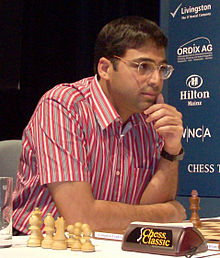
[Above: Magnus Carlsen (centre), the new World Chess Champion, having drawn the 10th game of his match with Viswanathan Anand (right) on 22 November 2013, giving Carlsen 6½ points (3 wins and 7 draws) to Anand's 3½ (0 wins and 7 draws) in the best of 12 games match: YouTube]

I was the second highest rated chess player in Western Australia in 1967, with a rating of 2070, but I gave competitive chess away for ~45 years until August 2012 when I joined the Perth Chess Club. I am gradually regaining my chess `mojo' but my rating now is only 1782 and I doubt that I will ever get back to 2070.

I will try to watch the match live, since the timezone is favourable to me (the games start at 5:30 pm Perth, Western Australia time). But even when I am away from my computer, I have installed the Official App of the FIDE World Championship Match 2013 (Android version-there is also an Apple version) on my smartphone and hope to keep up with the moves in each game as they are played.

I am tipping India's 43 year-old defending World Champion, Viswanathan Anand (the

[Right: Viswanathan Anand, the defending World Chess Champion, 2013: Wikipedia]

underdog) to win against Norway's 22 year-old Magnus Carlsen, the world's highest rated player. World Championship Chess matches are quite different from normal tournament play and Anand is by far the most experienced in

[Left: Magnus Carlsen, World Chess Championship challenger, 2013: Wikipedia]

that format, having played for and won the World Chess Championship in 2000, 2007, 2008, 2010, 2012 and 2013, whereas this is Carlsen's first World Championship match.

I will update this post with my comments on each game and chess-playing Shroudie readers (if any) can comment on the games below this post.


Game 1, Carlsen v Anand, Sat 9-Nov-13, ½-½. This first game

[Above: The final position of game 1, after 16... Nc4, with Carlsen (white) about to play 17.Qb3.]

of the match started off as a Reti Opening and transposed into a Gruenfeld Defence. By move 9 the game had diverged from standard opening theory, each player trying to avoid prepared analysis. After only 16 moves the game was drawn by three-fold repetition of the same position: 13...Na5 14. Qa3 Nc4 15. Qb3 Na5 16. Qa3 Nc4 and Carlsen informed the Arbiter that he was about to play 17. Qb3, which would repeat the same position three times, and hence be a draw under the FIDE Laws of Chess 9.2:

"The game is drawn, upon a correct claim by the player having the move, when the same position, for at least the third time (not necessarily by sequential repetition of moves) a. is about to appear, if he first writes his move on his scoresheet and declares to the arbiter his intention to make this move, or b. has just appeared, and the player claiming the draw has the move."
Anand as black had a slight advantage and it was Carlsen who had to seek the draw, in his own words at the post-match press conference, to "pull the emergency brake." It was therefore an important psychological victory to Anand.


Game 2, Anand v Carlsen, Sun 10-Nov-13, ½-½. The second

[Above: The final position of game 2, after 25...Kg8. The players agreed to a draw since if Anand plays 26. Rg3 the same position would have occurred three times, and hence be a draw as in the first game.]

game of the match was a Caro-Kann Defence. With the white pieces, the 43 year-old Anand carried out his match strategy of seeking sharp tactical play to avoid long drawn-out `boring' positional games which are the 22 year-old Carlsen forte. However Carlsen nullified Anand's king-side attack by exchanging pieces and had started his own attack against Anand's queen-side castled king. Anand therefore found a way to force Carlsen to agreed to a draw by three-fold repetition (as in the first game) or else Carlsen would have a worse position. So the game was agreed drawn after Black's 25...Kg8. Since if the 12-game match is drawn, there will be a series of four rapid tie-break games and as Anand is probably the better rapid player, therefore draws probably put added pressure on Carlsen.


Game 3, Carlsen v Anand, Tue 12-Nov-13, ½-½. This third

[Above: The final position after Anand's 51... Bxg3+ taking Carlsen's last pawn and leaving a position with a king and a bishop each only, which is insufficient material to checkmate.]

game of the match was another draw, but this time after 51 moves and due to insufficient material to checkmate the opponent's king, under the FIDE Laws of Chess, 5.2.b.:

The game is drawn when a position has arisen in which neither player can checkmate the opponent’s king with any series of legal moves. The game is said to end in a ‘dead position’. This immediately ends the game, provided that the move producing the position was legal.
Although with bishops of opposite colours it is not impossible for white to checkmate black, if black creates a self-mate: e.g. black K on a8, black B on b8, white K on a6 and white B on c6. So perhaps they agreed to the draw? Carlsen opened with another Reti, 1.Nf3, but Anand obtained a slight advantage in the early middlegame, which he increased but it never became great enough to win. Even though on move 25, Carlsen was forced by Anand to retreat his Q to h1, where it only controlled two squares: h2 and h3! In the post-game press conference Carlsen described his position at that point as "scary"! So this was another psychological victory for Anand in that, as in the first game, Carlsen failed to obtain an advantage with the white pieces. Carlsen showed his immaturity and lack of respect for the World Champion by refusing Anand's offer of a draw on move 40, when the position was a draw, and he made Anand play on pointlessly for another 11 moves.


Game 4, Anand v Carlsen, Wed 13-Nov-13, ½-½. This was the

[Above: The final drawn position in the fourth game after Anand (White's) 64.Kxb3.]

fourth draw in as many games, but another fighting one. After Anand made what he admitted in his press conference was a miscalculation 18.Ne2, it looked like it was going to be a win by Carlsen who won Anand's a2 pawn by 19...Bxa2. But Anand attacked on the K-side and after I went and played at the chess club, turning my smartphone off so I would not be distracted by checking the "Official app of the FIDE World Championship Match 2013," when I turned it back on after my game four hours later, I fully expected to read that Anand had lost. Instead I even thought that Anand was winning! But after I got home and started watching the YouTube live streaming of the match, and I updated the moves on my computer's Houdini 3 program, I realised that Anand was just hanging in there, still being a pawn down in an endgame, and Carlsen is an acknowledge endgame virtuoso. But according to Houdini, Carlsen's advantage dissipated when Anand played 43.Rc8 and instead of 43...Rxc8 [-0.49] (about half a pawn advantage to Black) Carlsen played 43...Rdd3 with equal chances [=0.00]. The game was eventually drawn by agreement on move 64, when Carlsen (Black) was a lone pawn up in a simple rook and pawn ending (a book draw). Again, although Anand failed to win with the white pieces, I believe this game was more a psychological negative for Carlsen than Anand, since before the match Carlsen had been by expected by many to blow Anand away (as Fischer did to Spassky in 1972), especially if it got to a long-drawn out game.


Game 5, Carlsen v Anand, Fri 15-Nov-13, 1-0. Carlsen won the

[Above: Final position after 58. h4 whereupon Anand resigned.]

fifth game! He now leads the match 3:2. As White Carlsen opened with the English Opening 1.c4 and Anand transposed into his favourite Queen's Gambit Declined, Semi-Slav 1...e6 2. d4 d5 3. Nc3 c6. But then Carlsen sprung what must have been part of his opening preparation against Anand, the little-known, Marshall Gambit, 4. e4. However, Anand played it well, indicating he was aware of the theory and practice of that opening and, according to Houdini, even obtained the advantage on move 12 when Carlsen castled Q-side. However, Anand emerged out of the opening with a position that looked inferior, with a bad B on d7 compared to Carlsen's dominating B on e4, and a pawn formation that was ragged compared to Carlsen's. But Anand's 23...Rb5 gained him sufficient counterplay. Indeed according to Houdini, Anand could have drawn with 45...Ba1 but anything else, including Anand's 45...Rc1+, lost. It will be interesting to see how Anand (and Carlsen) react to this loss by Anand. Now Carlsen only needs to draw the remaining seven games to win the World Championship. However, Anand lost the seventh game to Boris Gelfand in their 2012 World Championship match, but then Anand bounced back and levelled the match with a win in the eighth game when Gelfand became too confident. However, Carlsen is a much stronger opponent than Gelfand, and I now expect Carlsen to win the match and become the sixteenth World Chess Champion.


Game 6, Anand v Carlsen, Sat 16-Nov-13, 0-1. Carlsen won also

[Above: The final position at 67...Rg1 in the sixth game after which Anand resigned.]

the sixth game as Black! He now leads the 12-game match 4:2, and now only needs to draw the remaining six games (or even draw five and lose one) to become the next Chess World Champion. Anand as White opened with the Ruy Lopez, Berlin defence: 1 e4 e5 2 Nf3 Nc6 3 Bb5 Nf6 4 d3 Bc5. Anand opted for a Steinitzian closed centre 5.c3 and a K-side attack. Anand seemed to have the better early middlegame but Carlsen gradually obtained counterplay on the Q-side, giving Anand doubled b-pawns. Anand exchanged one of those but then Carlsen gave Anand doubled e-pawns. Anand, inexplicably, made an elementary positional blunder by 29.Rd1 ceding the a-file for no apparent reason. Then by 38.Qg3 Anand sacrificed his doubled a-pawns for Carlsen's d-pawn to obtain what should a drawn R and P ending. Carlsen made an error by not playing 43... h5 and Anand gave up another pawn by 44.h5, wrecking Carlsen's K-side pawn structure. The position seemed like a draw but Carlsen, who is famous for grinding out wins in what other grandmasters would agreed to as drawn, saw a winning method of sacrificing his doubled h-pawn for Anand's g2 pawn giving Carlsen a passed f-pawn supported by his Ke3. According to Houdini, Anand had only one move, 60.b4, which drew, and all others, including Anand's 60.Ra4, lost. Anand fought on ingeniously but eventually with Carlsen's pawn on f2 about to queen, supported by his Rg1, Anand would soon run out of checks and so after Carlsen's 67...Rg1, Anand resigned. Despite the 43 year-old Anand's physical fitness regime, it is clear that the 22 year-old Carlsen, who is also physically fit, plus his computer-like endgame play, can maintain his concentration longer than Anand and so avoid critical errors. Being two games up, with only six games to play, it is now almost certain that Carlsen will win the match and become the next World Chess Champion.


Game 7, Anand v Carlsen, Mon 18-Nov-13, ½-½. The seventh

[Above: The final position in game 7, which was agreed drawn after Carlsen's 32... Ne6 when Anand was about to play 33.Qf3, which would have repeated the position three times (see game 1 above)]

as drawn. I don't understand why Anand had the white pieces two games in a row. The game was another Ruy Lopez, Berlin Defence, 1.e4 e5 2.Nf3 Nc6 3.Bb5 Nf6 4.d3 Bc5 as in game 7, with Anand diverging from 5.c3 that he played in game 7, with 5.Bxc6. On move 10 Carlsen played g6 to keep Anand's N from occupying f5, and then, after both players had castled Q-side, Anand levered open the h-file with 15.h4, 16.h5 and 18.hxg6. But even though Anand's R penetrated to h7, Carlsen was ready with a counter, bringing his Rs to h8, protected by his Q on f6, and then exchanging them on h7. The game then petered out to a draw with each side having a Q and a N and a weak isolated pawn. A draw was agreed after Carlsen played 32...Ne6 and Anand was about to play 33.Qf3, which would have repeated the same position three times (see game 1). The score is now Anand 2½ : Carlsen 4½ with only 5 games to play.


Game 8, Carlsen v Anand, Tue 19-Nov-13, ½-½. Game 8

[Above: The final position in game 8, after Anand played 33...h5.]

ended in another draw. Carlsen opened with 1.e4, Anand's favourite and a rarity for Carlsen. This was undoubted a psychological ploy by Carlsen, showing Anand that he is confident and unafraid of him. And instead of Anand responding with his favourite Sicilian, he answered 1...e5. Carlsen continued with the Ruy Lopez and Anand played Carlsen's favourite in this match, the solid but drawish Berlin Variation. Anand varied with 4...Nxe4, the Exchange Variation, and obtained a lead in development and his Q2 and Re1 controlled the e-file. But Carlsen's position had no weaknesses and after regrouping his pieces and easing his cramp by exchanges, an exactly symmetrical K and pawn ending was reached on Carlsen's move 28, and the draw was agreed to after Carlsen's 33...h5. Anand showed no fight at all. As I commented below:

"The match is effectively over now with Carlsen two games up with four games to play. Anand seems to think so too, by not playing Sicilians as Black, nor gambits as White. It looks like he has already conceded the match and his goal now is not to be beaten by too much? Unless Anand's desperate plan is to lull Carlsen into a false sense of security, and get to the last two games being still two down, and then throw the kitchen sink at Carlsen, hoping he will lose the second last game. Then Carlsen might be so rattled at the prospect of not winning the World Championship that he thought was already won that he might then lose the last game also?"
Let's hope it is the latter. At the post-game press conference, Anand promised to "liven things up":
"Of course the match situation explains itself and I guess it's my job to liven things up but I guess I will try in the next game," Anand said in the post game conference." ("I will try to liven things up in next game: Anand," The Times of India, November 19, 2013).

For Anand's reputation's sake, he better!


Game 9, Anand v Carlsen, Thu 21-Nov-13, 0-1. Carlsen won the

[Above: The final position in the 9th game, after Carlsen, with 2 queens played 28...Qe1, so that after Anand's 29.Rh4, Carlsen could play 29...Qxh4, leaving Anand with no attack and Carlsen a R up.]

9th game to go three games up (3.0 : 6.0) with three games to go. That is, Carlsen only needs one draw in the remaining three games to win the World Chess Championship. Anand as White opened with 1.d4, the first time either player had done so in the match. Carlsen defended with the Nimzo-Indian 1...Nf6 2. c4 e6 3. Nc3 Bb4 and Anand revealed his aggressive intent by playing 4. f3 the Kmoch Variation according to Chess Opening Explorer, although I thought and Anand said it was in the post-game press conference, the Saemisch Attack. The opening continued 4...d5 5. a3 Bxc3 6. bxc3 after which it definitely is the Saemisch Attack and if the same position is arrived by transposition, Chess Opening Explorer calls it the Nimzo-Indian, Saemisch variation. The game was very exciting with Anand pawn-storming Carlsen's castled K on the K-side and Carlsen pawn-storming Anand's undefended Q-side. But despite Anand's threats on the K-side, Houdini rated Carlsen's position as better, indicating that Anand had no winning line. Indeed at the post-match press conference Carlsen said that he could see no win for White. And the severe time trouble Anand got into indicated that Anand could see no winning line either. The crisis was reached when Anand played 23.Qf4 and Carlsen defended against Anand's threatened mate on g7 after 24.Qh4 and 25.f6 g6 26.Qh6, by 23...Nc7. Anand then played 24.f6 and Carlsen, according to Houdini, missed a win by the safer 24...g6 instead of the scary 24...gxf6. The game continued 25.Qh4 Ne8 26.Qh6 b2 27.Rf4 allowing Carlsen a second queen 27...b1=Q+ and then instead of 28.Bf1 Qd1 29.Rh4 Qh5 30.Nxh5 gxh5 31. Rxh5 Bf5 which drew, Anand blundered by 28.Nf1??. Immediately Carlsen played 28... Qe1, so that if 29.Rh4 Qxh4, and Anand resigned. Anand explained at the press conference that he had seen in previous calculations that 28.Nf1 lost to 28...Qe1, but when the position arrived on the board he forgot that and suddenly thought it won, overlooking that after 28.Nf1 the N was no longer on g3 to prevent Carlsen's second Q on e1 sacrificing itself for Anand's Rh4. At least Anand did "liven things up" and went down fighting. Few would blame him now if he agreed to a draw in the next game, making Carlsen the 16th World Chess Champion.


Game 10, Carlsen v Anand, Fri 22-Nov-13, ½-½. The tenth

[Above: The final position in game 10 and of the match, when Anand had just played 65...Nxc5.]

game was drawn due to insufficient material when Anand took the last pawn on the board by 65...Nxc5 leaving White's K versus Black's K and N, making Magnus Carlsen the new World Chess Championship! Carlsen opened with 1.e4, probably challenging Anand to play his favourite Sicilian Defence, 1...c5. Anand took up Carlsen's challenge and did play 1...c5. Carlsen then steered the game into his favourite for White, the Rossolimo Variation 1.e4 c5 2.Nf3 d6 3.Bb5. After exchanging his KB for Black's QN, 6.Bxd7+ Bxd7 Carlsen established a `Maroczy Bind' by 7.c4. Carlsen had a space advantage but Anand managed to keep his pieces coordinated. After Carlsen's 26.Qd2 Houdini rated the position as a slight advantage to White [0.14]. But then Anand started making mistakes. The first was 26...Nf6 [0.37]. The next was 28...Qg5 [1.28] which in the postgame press conference Anand admitted was a "blunder". Carlsen took advantage of Anand's blunder by 29.e5 [1.49], winning Black's d6 pawn. But then Carlsen too quickly played 30.exd6 [0.22], which allowed Black to regain the pawn, instead of increasing the pressure by 30.Nc3 [1.40] as the d6 pawn was pinned. Anand regained the pawn 30... Rc6, 31...Qd8 and 32...Rcxd6 but that lead to exchanges of Qs and both Rs on d6, leaving a N and pawn ending, with Carlsen holding a slight [0.19] advantage. After 46.Ng8+ Kf8 47. Nf6 Carlsen could have had a draw by threefold repetition (47...Ke7 48.Ng8+ Kf8 49.Nf6 Ke7 50.Ng8+ Kf8) as anything else would lose for Anand but Carlsen, spurned that opportunity to become World Champion and tried to win by 47.Nxh6. Carlsen probably calculated 9 moves ahead to 56.a8=Q f1=Q 57.Qd5 in the game continuation where he had a draw in hand anyway in that Anand would have a Q and N but no pawns versus Carlsen's Q and 3 pawns. Anand won one of Carlsen's pawns but that allowed Carlsen to exchange Qs leaving Carlsen with K and 2 isolated pawns versus Anand's K and N. That position was a draw since Anand's K would take Carlsen's h3 pawn and Anand's N would stop Carlsen c4 pawn from queening. They played on until Carlsen's had only his K and Anand had only K and N, an automatic draw because of insufficient material to mate (see my comments above on the third game). So Carlsen is the 16th World Chess Champion, at 22 the second youngest ever (after Garry Kasparov who was also 22 when he won the title in 1985, but was a few months younger than Carlsen) and so because of his youth Carlsen is likely to remain World Chess Champion for at least the next decade.

Posted: 8 November 2013. Updated: 16 June 2017.

"The Shroud of Turin might have contained genetic material with no Y-chromosomes" (Victor Stenger)

"Testing the God Hypothesis," The Huffington Post,

[Right: "Victor J. Stenger," Wikipedia, 30 October 2013]

November 6, 2013, Victor Stenger. Physicist, PhD, bestselling author "Testing the God Hypothesis ... My comments are in bold. In this article Stenger sets up a series of straw man fallacy tests:

"A straw man or straw person, also known in the UK as an Aunt Sally, is a common type of argument and is an informal fallacy based on misrepresentation of an opponent's position. ... To "attack a straw man" is to create the illusion of having refuted a proposition by replacing it with a superficially similar yet unequivalent proposition (the "straw man"), and to refute it, without ever having actually refuted the original position. This technique has been used throughout history in polemical debate, particularly in arguments about highly charged, emotional issues. In those cases the false victory is often loudly or conspicuously celebrated" ("Straw man," Wikipedia, 30 October 2013)
to prove, and if the test fails, to disprove the existence of God. Because Stenger set up each straw man to fail, surprise, surprise, each does fail - but only in Stenger's true-believing professional skeptic mind.

To keep this post short and on topic, I will only consider Stenger's `scientific proof' of the non-existence of God based on his paragraph about the Shroud of Turin:

•Physical and historical evidence might have been found for the miraculous events and the important narratives of the scriptures.

First, there is "historical evidence ... of the miraculous events and the important narratives of the scriptures." The New Testament is itself such "historical evidence" but skeptics like Stenger, and non-Christians generally, dismiss it out of hand. Yet if they consistently applied the same criteria (assuming charitably that they have any criteria and are not driven by naked prejudice) for dismissing the New Testament, to other ancient documents, there would be little or no ancient history at all.

And if the skeptics demand independent corroborative evidence for the New Testament's major claims, then Christian philosopher Gary Habermas' "Ancient Evidence for the Life of Jesus" 1984), since republished as "The Historical Jesus: Ancient Evidence for the Life of Christ" (1996), sets out the astonishing amount of extrabiblical evidence for "the miraculous events and the important narratives of the scriptures."

And also there is "Physical ... evidence ... for the miraculous events and the important narratives of the scriptures" (ignoring for the moment the Shroud of Turin), namely the Christian Church, which is inexplicable (a major world religion, Christianity, suddenly arises and persists in the very heart, Jerusalem, of another major world religion, Judaism) unless the New Testament is true and Jesus really was God incarnate, who was crucified and arose from the dead.

For example, Roman records might have been found for an earthquake in Judea at the time of a certain crucifixion ordered by Pontius Pilate. If there were such Roman records of an earthquake near Jerusalem at the time of Jesus' crucifixion, then Stenger would probably dismiss them with the claim that the New Testament writers weaved that event into their accounts to make them sound more convincing! It is easy for Stenger to make up a test for Christianity's truth based on evidence that he knows has not been found and is very unlikely to be found in the future, and which no Christian has offered as proof that Christianity is true and therefore God exists. Note: As pointed out in a comment below, according to a 2012 Daily Mail article: "Jesus 'died on Friday, April 3, 33AD' claims study that matches crucifixion to earthquake mentioned in gospel," there actually is scientific evidence that there were earthquakes around Jerusalem "between 26AD and 36AD." But of course Stenger won't change his mind in the light of this evidence and become a Christian. He will either ignore it or attempt to explain it away.

Noah's Ark might have been discovered. Again Stenger knows that Noah's Ark has not been discovered and is unlikely to be discovered in the future. And again, if the remains of a large wooden boat, many thousands of years old, had been discovered on, or near, Mt Ararat, Stenger and his ilk would likely claim that the writer of the flood account in Genesis based his story on that boat! Moreover, only a minority of those Christians, like myself, who believe that there really was a Noah's ark (based ultimately on Jesus, who was God incarnate, stating that there was a Noah, an ark and a flood):

"For as in those days before the flood they were eating and drinking, marrying and giving in marriage, until the day when Noah entered the ark," (Mt 24:38; Lk 17:27)
expect that a wooden structure as Noah's Ark was, would last for many thousands of years. The oldest known wooden structure, the Horyu-ji temple in Japan, was completed in AD 607, and is therefore less than 1500 years old.

The Shroud of Turin might have contained genetic material with no Y-chromosomes.

It is interesting that Stenger tacitly regards the Shroud of Turin as "Physical ... evidence ... for the miraculous events and the important narratives of the scriptures." And Stenger is presumably aware that a gene found only on the male Y-chromosome was found in blood from the Shroud:

"In order to establish the sex of the individual, one can look for the testes-descending gene, which is positive only in the male. If you don't find it, however, you cannot conclude that your sample is from a female: it may be that something went wrong during the testing procedure. Another way to determine the sex is to clone the genes amelogenin-X and amelogenin-Y, and that is what Dr Tryon advised. Again he was right; the PCR technique enabled us to isolate the amelogenin-X gene from chromosome X and the amelogenin-Y gene from chromosome Y." (Garza-Valdes, L.A., "The DNA of God?" 1998, p.42)
Since the image is that of a man with a beard, this would confirm he was not born of a virgin. Stenger shows a lack of thinking through the position (or rather the straw man of it) he is criticising. The Gospels clearly state that Jesus was "conceived in the womb" of the virgin Mary (my emphasis):
Mt 1:20 "But as he considered these things, behold, an angel of the Lord appeared to him in a dream, saying, `Joseph, son of David, do not fear to take Mary as your wife, for that which is conceived in her is from the Holy Spirit.'"

Lk 2:21. And at the end of eight days, when he was circumcised, he was called Jesus, the name given by the angel before he was conceived in the womb.
The same root Greek word for "conceived" (sullambano) is used in Lk 1:24 and 1:36 of the ordinary conception, following sexual intercourse, of John the Baptist. Therefore the virginal conception of Jesus had to be by the Holy Spirit implanting a specially created male sperm cell into one of Mary's ova. Anything else would either not be virginal, or not be conceived.

Or, the genetic material might contain a novel form of coding molecule not found in any other living organism. This would have proven an alien (if not divine) origin of the enshrouded being. Stenger is right, that that would show that Jesus was an "alien," i.e. that Christianity is a hoax played by extraterrestrials on humanity, not that Jesus is God who became man without ceasing to be God (Jn 1:1,14; Php 2:5-7; Heb 2:9). Christian theology has always maintained that Jesus is fully God and fully man:

"It is furthermore necessary for eternal salvation truly to believe that our Lord Jesus Christ also took on human flesh. Now this is the true Christian faith: We believe and confess that our Lord Jesus Christ, God's Son, is both God and man. He is God, eternally begotten from the nature of the Father, and he is man, born in time from the nature of his mother, fully God, fully man ..." ("Athanasian Creed," Wisconsin Evangelical Lutheran Synod).

but if Jesus had "a novel form of coding molecule not found in any other living organism" then He would not have been a man at all, let alone "fully man". So Stenger requires Christianity to be false, before he would accept it as true!

Stenger, like many (if not all) true-believing skeptics pretend they are open to be convinced by the evidence that Christianity is true and therefore that God exists, but their `body language' shows that they are not, because they keep raising the bar ever higher to protect themselves from being touched by Christian evidence and arguments.

Stenger, et al., also make the fundamental mistake in thinking that God would have to provide non-Christians with such overwhelming evidence of his existence such that even the most devout atheist would have no alternative but to believe in Him. But as Blaise Pascal pointed out, God has arranged it such that:

"There is enough light to enlighten the elect and enough obscurity to humiliate them. There is enough obscurity to blind the reprobate and enough light to condemn them and deprive them of excuse." (Pascal, "Pensées," Penguin, 1966, p.73).
That is, God has provided enough evidence of His existence such that those who deny it will have no excuse on the Day of Judgment for not believing in Him. But God has not provided so much evidence that would force those who don't want to believe in him to have to do so.

Posted 8 November 2013. Updated 7 November 2024.