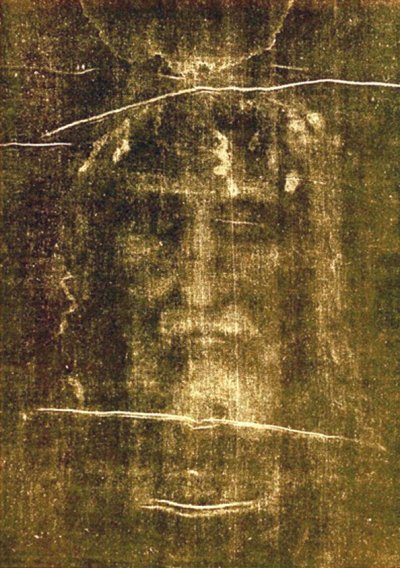
Tuesday, November 8, 2022

Pierre d'Arcis, Turin Shroud Encyclopedia

Turin Shroud Encyclopedia
Copyright © Stephen E. Jones
[1]

Pierre d'Arcis #19

This is "Pierre d'Arcis," part #19 of my Turin Shroud Encyclopedia. It was originally titled "Sceptics and the Shroud," but I have decided to cover each leading Shroud sceptic in a separate post. For more information about this series, see part #1 and part #2. Emphases are mine unless otherwise indicated.

[Index #1] [Previous: History of the Shroud #18] [Next: Ulysse Chevalier #20]


As with my previous posts "Prehistory of the Shroud" #16, #17 and "History of the Shroud" #18, here is my "Sceptics and the Shroud" #19 to help me write the outline of my book, "The Shroud of Turin: The Burial Sheet of Jesus!" in Gmail on my phone. See 06Jul17, 03Jun18, 04Apr22 & 13Jul22. My

[Right (enlarge [SU91]): The planned cover of my book.]

book is progressing but too slowly. So I have recently started writing parts of two chapters a day instead of one. I have also started copy-and-pasting the Gmail outlines into a Microsoft Word document so I can see how long each growing chapter is. Again I am using in-line referencing to save time in adding out-of-order references.

The strength of the case for the Shroud being Jesus' is shown by the weakness of sceptics arguments that it isn't! This is the first of a planned selection of sixteen leading Shroud sceptics (past and present), with a brief consideration of their anti-Shroud arguments. I will conclude each with a refutation of their arguments-in-common against the Shroud being Jesus'.

Pierre d'Arcis (r. 1377-95) Bishop Pierre d'Arcis is the first generally known Shroud sceptic[OM10, 278] and arguably the most important because (as we shall see), most subsequent Shroud sceptics depend directly, or indirectly, on d'Arcis' evidence and arguments[DR84, 24]. So if d'Arcis was wrong, then they are wrong! D'Arcis was the Bishop of Troyes, France, between 1377-95[RCW]. In his diocese was the Lirey church[AF82, 31] at which the Shroud had been exhibited in c. 1355[HT78, 96] and was being exhibited again in 1389[BW57, 6; DR84, 24; GV01, 14]. The 1389 exposition was being presented by Geoffroy II de Charny (1352-98) and his mother Jeanne de Vergy (c. 1332-1428)[AM00, 151; GV01, 12-13; IJ98, 129]. Lirey was a collegiate church, directly responsible to the Pope, not Bishop d'Arcis[CNC]. So Geoffroy II sought and obtained permission from Pope Clement VII (r. 1378-94) and and King Charles VI (r. 1380-1422) to hold the 1389 exposition [BM95, 18; CN88, 43; WI98, 129; RC99, 64; OM10, 55; WI10, 231]. D'Arcis complained to Pope Clement through his nuncio, Cardinal Pierre de Thury (c. 1330-1410) about the Shroud being exhibited again[WI86, 11; WB06, 46]. However, the only record of d'Arcis

[Left (enlarge) [IMD]. One of the only two copies of the d'Arcis Memorandum [WI98, 121; AM00, 151; OM10, 56], both found only in the Bibliothèque Nationale de France (National Library of France)[BB91, 236; AM00, 152]

complaint is in two undated, unaddressed, unsigned, draft, copies of a memorandum on paper[AM00, 152; BB91, 236]. Of which there is no record of the original in either Troyes' or the Papal archives[AM00, 152]. But we know that d'Arcis' complaint reached Pope Clement because he responded to it by letter on 6 January 1390, without referring to the memeorandum[BB91, 236-237], enjoining d'Arcis to "perpetual silence" about the Shroud[WI79, 271; SH81, 29; HJ83, 19; WB06, 48; DT12, 183] and allowing the exposition to continue providing the Shroud was presented as only "a figure" or "representation" of Jesus' Shroud[BW57, 7; WI79, 210; SH81, 29 WB06, 48]. See "1389b". Here are d'Arcis' sceptical arguments against the Shroud (my numbering in square brackets):

"The Lord Henry of Poitiers, of pious memory, then Bishop of Troyes, becoming aware of this, and urged by many prudent persons to take action, as indeed was his duty in the exercise of his ordinary jurisdiction, [1]set himself earnestly to work to fathom the truth of this matter. For many theologians and other wise persons declared that this could not be the real shroud of our Lord having the Saviour's likeness thus imprinted upon it, [2]since the holy Gospel made no mention of any such imprint, while, if it had been true, it was quite unlikely that the holy Evangelists would have omitted to record it, [3]or that the fact should have remained hidden until the present time. [4]Eventually, after diligent inquiry and examination, he discovered the fraud [5]and how the said cloth had been cunningly painted, [6]the truth being attested by the artist who had painted it, [7]to wit, that it was a work of human skill and not miraculously wrought or bestowed. [8]Accordingly, after taking mature counsel with wise theologians and men of the law, seeing that he neither ought nor could allow the matter to pass, he began to institute formal proceedings against the said Dean and his accomplices in order to root out this false persuasion. [9]They, seeing their wickedness discovered, hid away the said cloth so that the Ordinary could not find it, and they kept it hidden afterwards for thirty-four years or thereabouts down to the present year"[WI79, 267].
D'Arcis' sceptical arguments against the Shroud being Jesus' are false:

[1] "Henry of Poitiers ... then Bishop of Troyes ... set himself earnestly to work to fathom the truth of this matter" There is no evidence that Bishop Henri de Poitiers (r. 1354–70) had a problem with the Shroud and much evidence that he didn't. D'Arcis in his memorandum states that "the ... Dean [of Lirey church] and his accomplices ... hid away the said cloth so that the Ordinary [Bishop de Poitiers] could not find it, and they kept it hidden afterwards for thirty-four years or thereabouts down to the present year"[CN88, 40-41; GV01, 13-14; WI79, 267]. That would have been 1389 - 34 = 1355[WI98, 111; GV01, 14; OM10, 52; WI10, 228-229] . But de Poitiers wasn't even in Troyes in 1355, because in a letter, "Given in our palace of Aix of our diocese in the year of Our Lord 1356, Saturday, the 28th of the month of May," when de Poitiers was still in his previous diocese at Aix-en-Othe[WI98, 279; WI10, 229], he wrote as the "confirmed bishop elect of Troyes"[BB91, 242; GV01, 10]. Moreover, in the letter, which is in the Lirey church archives[BB91, 242; GV01, 11], and is the formal ratification by Bishop de Poitiers, instituting the collegiate church of Lirey[WI98, 278; WI10, 224], he wrote: "... we praise, ratify and approve ... a cult which is declared and reported to have been canonically and ritually prescribed ... we give our assent, our authority and our decision"[BB91, 242 WI98, 278; GV01, 11; OM10, 50; WI10, 224]. In Roman Catholic theology, a "cult" is devotion or veneration other than to God[CRW], so Henri can only be referring to the Shroud with approval because the Lirey church didn't have any other "cult"GV01, 11].

[2]"since the holy Gospel made no mention of any such imprint, while, if it had been true, it was quite unlikely that the holy Evangelists would have omitted to record it," This is an "argument from silence" fallacy (`the gospels don't mention an image on Jesus' Shroud, therefore this shroud with Jesus' image can't be Jesus' shroud'). The Apostle John specifically states, in his, the last, gospel written, that the Gospels don't contain everything about Jesus (Jn 21:25). There are many good reasons why the Gospels don't mention the Shroud having Jesus' image on it: • The Shroud isn't mentioned as being in Jesus' empty tomb (the Gospel of the Hebrews preserves a very early account that Jesus had taken the Shroud with him out of the tomb) when Peter and John ("the other disciple") entered it on early on the morning of Jesus' resurrection (Jn 20:3-8). And the Shroud is not mentioned elsewhere in the entire New Testament except immediately after Jesus' death on the cross (Mt 27:59; Mk 15:46; Lk 23:53) . • The image may not have been visible when the Gospels were written before the destruction of Jerusalem in 70[RJ76, 10ff. (Latent Image Theory)[SD89, 70]. • The early Christians were persecuted for their first three centuries by the more numerous and powerful Jews and Romans, who would have demanded they hand over the Shroud to destroy it if they publicly displayed it with its image as proof that Jesus had been raised from the dead[SD89, 70]. • It would lend credence to the Jewish religious leaders' false explanation why Jesus' tomb was empty, that the disciples had stolen Jesus' body (Mt 28:11-15) in its shroud. It does not follow that, even if the disciples did publicly display the Shroud with Jesus' image on it, that it would convince Christianity's enemies that Jesus had risen from the dead. Non-Christians (and even Christians) today are not convinced by that. Even some Shroudies, like agnostic Thomas de Wesselow and presumably non-Christian Jew Barrie Schwortz, believe that the Shroud is Jesus' but not that it is evidence of his resurrection.

"[3]or that the fact should have remained hidden until the present time"[MP78, 30; CN88, 41; DR84, 24; OM10, 55-56; WI86, 11]. This is an "argument from ignorance" fallacy. (`I don't know if Jesus' Shroud has existed to the present time, therefore it hasn't'). And d'Arcis was

[Right (enlarge)[FHP]: The Entombment of Jesus in Jn 19:38-42 (upper) and the Resurrection of Jesus (lower) in Mk 16:1-6, where an angel is telling the three women at the empty tomb, "Jesus ... has risen; he is not here. See the place where they laid him" [GV01, 104; DT12, 178]. This is one of the four pen and ink drawings in the Pray Codex[BI69, 19; GV01, 104], which is dated 1192-95 but the drawings in it are likely to have originated in Constantinople before, or during, the reign of King Bela III of Hungary (r. 1172–96)[DT12, 178]. The images are claimed as one of the evidences against the radiocarbon 14 dating of the Shroud of Turin"[PCW]. There are at least "eight telling correspondences between the Shroud and the drawings on a [this] single page of the Pray Codex"[DT12, 180]. And by my count there are twelve - see 27May12. Actually fourteen - see 04Oct18].]

ignorant that there is evidence that the Shroud existed in Constantinople from 944 to 1204 (see Nicholas Mesarites "1201," Robert de Clari "1216," the 12th Century Madrid Skylitzes "944a" and the pre-1195 Pray Codex "1192-5"). And before that the Shroud, as the Image of Edessa "four-doubled" (tetradiplon), was in Edessa from 544 to 944 (see "544" and "943"). While d'Arcis couldn't have known about the Pray Codex because it was written in Old Hungarian and only discovered in 1770 (see "1770"), d'Arcis's actions show that he knew that the Shroud being co-exhibited in Lirey by Jeanne de Vergy had been in Constantinople in 1204. See 19Oct22 that in August 1389 a letter signed in Paris by King Charles VI ordered the bailli of Troyes to seize the Shroud at the Lirey church and bring it to d'Arcis so that he could relocate it in another church in Troyes[HT78, 98; SH81, 102; WI98, 280; WI10, 303]. This revealed d'Arcis' true motive, that he wanted the Shroud for Troyes Cathedral[AM00, 151; OM10, 58-59]. Indeed d'Arcis admitted in his memorandum that he was being accused of "acting through jealousy and cupidity and to obtain possession of the cloth for myself"[WI79, 269; WI98, 129). And d'Arcis motive for wanting the Shroud for Troyes Cathedral, and its pilgrims' income, was in 1389, the nave (central section) in 1389, of the unfinished Cathedral in Troyes collapsed and it took sixty years to complete the cathedral[AM00, 151]. If d'Arcis truly believed the Shroud was a painted fake, he wouldn't want it for another church in his diocese! Significantly, one of d'Arcis' Bishop of Troyes predecessors, Garnier de Traînel (r. 1193-1205) was with the Fourth Crusade at the Sack of Constantinople in 1204[CN95, 7; GDT; VP02, 56], and he was promised for Troyes Cathedral the relics from the Church of St. Mary of Blachernae, which included the Shroud[BA34, 54; CN95, 8; VP02, 56]. But Jeanne de Vergy's ancestor Othon IV de la Roche (c.1170-1234) took the Shroud instead[BA34, 54-55; RC99, 62-63; SD91, 198; SD98, 67] (see "1204b"). D'Arcis' extraordinary efforts to seize the Shroud from Lirey church and relocate it in Troyes Cathedral shows that he knew the history of the Shroud from Troyes Cathedral's archives[DK90, 10] and so his claim the Shroud was a painted forgery was a lie!

"[4]Eventually, after diligent inquiry and examination, he discovered the fraud" [WI79, 267; CN88, 41; GV01, 13; OM10, 55-56; SH81, 103]. There is no record that Bishop de Poitiers conducted an investigation into the authenticity of the Shroud[SH81, 103]. D'Arcis produced no such evidence in his memorandum to the Pope[SH81, 103]. D'Arcis does not give any details of the investigation[SH81, 103], including exactly when it occurred[BW57, 11], which would have been in Troyes' archives if there had been one[AM00, 152]. One of d'Arcis' successor at Troyes, Bishop Louis Raguier (r. 1450–83), maintained that the Shroud was genuine[SH81, 103-104], in three official documents[MJ88, 50; MJ11, 273].

"[5]and how the said cloth had been cunningly painted,"[WI79, 267; DR84, 24; MR86, 98; AM00, 151; OM10, 56]. But d'Arcis was wrong (and must have been lying since there wouldn't have been another shroud that Bishop de Poitiers investigated in c.1355), because in 1978 STURP proved conclusively that the Shroud image is not painted[MR86, 99; DR84, 26; TF06, 45]! Direct microscopic examination of the Shroud by STURP found no paint or pigment particles at 50X magnification[SH81, 81]. The yellowish color of the Shroud fibres did not saturate the cloth in any image area-even the darkest[SH81, 81]. Nowhere were the cloth fibres cemented together, as a paint or pigment would have done[SH81, 81]. There was no evidence for capillary flow of liquids through the cloth even on a microscopic level[SH81, 81]. But it had already been known since 1931 that the Shroudman's image was not painted. Then Roman Catholic prelate Arthur Stapylton Barnes (1861-1936), during the 1931 Exposition was, along with other experts, allowed to examine the Shroud at close range, with a magnifying glass[BA34, 11]. Barnes pointed out that, "The process of painting on a fabric at that time involved the deposit of solid particles of colouring matter upon the threads, so that these latter would become partially or entirely hidden"[BA34, 14]. But "in the case of the Shroud every thread is visible, and no trace of solid extraneous colouring matter can be detected even by microscopic examination"[BA34, 14]!

"[6]the truth being attested by the artist who had painted it,"[WI79, 267; DR84, 24; MR86, 98; CN88, 41; RC99, 65; GV01, 14]. Significantly d'Arcis did not give the name of the artist who he claimed painted the Shroud[BW57, 11; SH81, 103; AM00, 151; GV01, 14; WB06, 42; WR10, 7]. D'Arcis became Bishop of Troyes in 1377, so the artist could still have been alive then in the Troyes diocese, ~22 years after the 1355 exposition, or his name would be within living memory. For d'Arcis, a former lawyer, not to cite the name of the artist, in addition to the Shroudman's image not being a painting (see above), is further evidence that there was no artist and d'Arcis was lying, to discredit the Shroud, so he could get it for his Troyes Cathedral (see above)!

"[7]to wit, that it was a work of human skill and not miraculously wrought or bestowed"[WI79, 87, 203, 267; WI86, 11; WI91, 15; WI98, 195; OM10, 56; DT12, 15, 182]. D'Arcis did not cite any actual evidence that the Shroud was a painting[SH81, 103] (e.g. the paint had flaked off in some areas, paintbrush strokes could be seen on the cloth, the blood was red ochre powder, etc). Which there would have been if the Shroud was a painting.

"[8]Accordingly, after taking mature counsel with wise theologians and men of the law, seeing that he neither ought nor could allow the matter to pass, he began to institute formal proceedings against the said Dean and his accomplices in order to root out this false persuasion"[WI79, 267; GV01, 14]. D'arcis doesn't mention any documentary evidence of Bishop de Poitiers' investigation and there is none in Troyes' diocesan archives[HT78, 99].The then Dean of Lirey church was a Robert de Caillac[WI98, 126] but there is no record of any formal proceedings against him. It is significant that d'Arcis blamed each then current Dean for both the first, c.1355[WI79, 266], and the second, 1389[WI79, 267], expositions when clearly the then Lord of Lirey, Geoffroy I de Charny (c. 1300-56) and his son, Geoffroy II de Charny (1352-98), would have authorised each exposition.

"[9]They, seeing their wickedness discovered, hid away the said cloth so that the Ordinary [Bishop de Poitiers] could not find it, and they kept it hidden afterwards for thirty-four years or thereabouts down to the present year"[WI79, 267; SH81, 103; WI98, 126; GV01, 14; OM10, 56]. This shows that d'Arcis didn't know what happened to the Shroud and is making it up as he goes along! Obviously Jeanne de Vergy took the Shroud away with her from Lirey, following the death of her husband Geoffroy I de Charny in 1356, since the Shroud reappeared with her at Lirey ~33 years later in 1389. It is an absurd claim of d'Arcis that a succession of Deans (de Caillac died c.1358 and was succeeded by a Simon Fratris[WI98, 279], and the Dean in 1389 was a Nicole Martin[WI98, 120, 280-281; OM10, 55]) conspired to hide the Shroud from Bishop de Poitiers for ~34 years, especially since he died ~15 years later in 1370[CN95, 22]!

Further evidence that d'Arcis' claims about the Shroud in his memorandum are false include:
Bishop Henri de Poitiers (r. 1354–70) didn't have a problem with the Shroud [see 09May15; 11Jul16; 03Jul18; 14Jan19]. As we saw above, in 1356 which was after d'Arcis' claim that in c. 1355 de Poitiers had investigated and found the artist who had painted the Shroud, de Poitiers had written, "... we praise, ratify and approve" Lirey church's "cult" which can only have been veveration of the Shroud. Geoffroy II de Charny married Henri de Poitiers' niece, Marguerite de Poitiers (c. 1362-1418)[WI79, 205; BB91, 245; GV01, 12; WB06, 44]. While this was in c.1392, after Bishop Henri's death in 1370, Marguerite's father, Charles I de Poitiers (c. 1325–1410)[CD90, 44; CN95, 220], Henri's older brother, would never have consented to his daughter marrying into the de Charny family if he thought they had exhibited a painted forgery of Jesus' burial shroud[CD83, 32]. Geoffroy II de Charny and Marguerite de Poitiers had three children, all daughters: Marguerite (c. 1393-1460), Henriette (c. 1395-1460) and Jeanne (c. 1397-1406) de Charny[CN95, 220-221; DH83]. Their eldest child and heir, Marguerite de Charny (c. 1393-1460, in her will left her Lirey lands to her cousin and godchild, Antoine Guerry des Essarts (c. 1408-74)[WI79, 213; CN95, 40; OM10, 70-71; WI98, 283]. He was the son of Guillemette de Poitiers (c. 1370 -1450), who was one of four illegitimate children of Bishop Henri de Poitiers and his nun concubine Jeanne de Chenery (c. 1340-)[CN95, 22; WI98, 130]! A likely (if not the only) explanation of this is that when Geoffroy II died in 1398, his widow Marguerite went with her three young children to live with Guillemette de Poitiers.

• In 1357 twelve bishops at the Papal Court in Avignon granted indulgences to all who visited the church of St Mary at Lirey and its relics[WI79, 193; BB91, 244; WI98, 128; GV01, 12; OM10, 50]. This was only ~2 years after, according to d'Arcis, Bishop de Poitiers discovered the Lirey church was exhibiting a painted forgery of Jesus' burial shroud and the Dean had hidden it from Bishop de Poitiers!

• In conclusion, the d'Arcis memorandum is so at variance with the evidence of the close family relationships between the de Poitiers and de Charny families, that this likely would have been known by Pope Clement VII. As Robert of Geneva, he was appointed Bishop of Thérouanne, France in 1359[PCW], and would surely have heard of the first Shroud exposition in 1355. Also, as a former neighbour of Jeanne de Vergy and her second husband Aymon IV of Geneva, Pope Clement would have been told by Jeanne that her ancestor, Othon de la Roche had looted the Shroud during the 1204 Sack of Constantinople [see 16Feb15, 15Aug17, 03Jul18, 09Nov18]. As we saw above, the d'Arcis memorandum exists only as two unsigned, undated, unaddressed, drafts and there is no evidence that it was ever sent to Pope Clement. But it is on this tottering house of cards that, "the sceptics' case formally rests"!:

"It is this memorandum of Bishop d'Arcis that Chevalier called to the world's attention in 1900 and on which the sceptics' case formally rests"[DR84, 24].

Notes:
1. This post is copyright. I grant permission to extract or quote from any part of it (but not the whole post), provided the extract or quote includes a reference citing my name, its title, its date, and a hyperlink back to this page. [return]

Bibliography
AM00. Antonacci, M., 2000, "Resurrection of the Shroud: New Scientific, Medical, and Archeological Evidence," M. Evans & Co: New York NY.
AF82. Adams, F.O., 1982, "Sindon: A Layman's Guide to the Shroud of Turin," Synergy Books: Tempe AZ.
BA34. Barnes, A.S., 1934, "The Holy Shroud of Turin," Burns Oates & Washbourne: London.
BA91. Berard, A., ed., 1991, "History, Science, Theology and the Shroud," Symposium Proceedings, St. Louis Missouri, June 22-23, 1991, The Man in the Shroud Committee of Amarillo, Texas: Amarillo TX.
BB91. Bonnet-Eymard, B., 1991, "Study of original documents of the archives of the Diocese of Troyes in France with particular reference to the Memorandum of Pierre d'Arcis," in BA91, 233-260, 245.
BI69. Berkovits, I., 1969, "Illuminated Manuscripts in Hungary, XI-XVI Centuries," Horn, Z., transl., West, A., rev., Irish University Press: Shannon, Ireland.
BM95. Borkan, M., 1995, "Ecce Homo?: Science and the Authenticity of the Turin Shroud," Vertices, Duke University, Vol. X, No. 2, Winter, 18-51.
BW57. Bulst, W., 1957, "The Shroud of Turin," McKenna, S. & Galvin, J.J., transl., Bruce Publishing Co: Milwaukee WI.
CD83. Crispino, D.C., in Fossati, L., 1983, "The Lirey Controversy," Shroud Spectrum International, No. 8, September, 24-34.
CD90. Crispino, D.C., 1990, "Kindred Questions," Shroud Spectrum International, #34, March, 43-44, 44.
CN88. Currer-Briggs, N., 1988, "The Shroud and the Grail: A Modern Quest for the True Grail," St. Martin's Press: New York NY.
CN95. Currer-Briggs, N., 1995, "Shroud Mafia: The Creation of a Relic?," Book Guild: Sussex UK.
CNC. "Collegiality in the Catholic Church," Wikipedia, 13 August 2022.
CRW. "Cult (religious practice)," Wikipedia, 21 October 2021.
DH83. Duncan, H., 2013, "The Shroud in Montfort, 1418-?," BSTS Newsletter, No. 77, June.
DK90. Dreisbach, K., 1990, "Correspondence," BSTS Newsletter, No. 25, April/May, 10-12.
DR84. Drews, R., 1984, "In Search of the Shroud of Turin: New Light on Its History and Origins," Rowman & Littlefield: Lanham MD.
DT12. de Wesselow, T., 2012, "The Sign: The Shroud of Turin and the Secret of the Resurrection," Viking: London.
FHP. "File:Hungarianpraymanuscript1192-1195.jpg," Wikimedia Commons, 28 June 2021.
GDT. "Garnier de Traînel," Wikipedia, 30 May 2022.
GV01. Guerrera, V., 2001, "The Shroud of Turin: A Case for Authenticity," TAN: Rockford IL.
HT78. Humber, T., 1978, "The Sacred Shroud," [1974], Pocket Books: New York NY.
HJ83. Heller, J.H., 1983, "Report on the Shroud of Turin," Houghton Mifflin Co: Boston MA.
IJ98. Iannone, J.C., 1998, "The Mystery of the Shroud of Turin: New Scientific Evidence," St Pauls: Staten Island NY.
IMD. "La Sindone di Torino: Il memoriale del vescovo Pierre d'Arcis del 1389," n.d.
MM12. Minor, M., Adler, A.D. & Piczek, I., eds., 2002, "The Shroud of Turin: Unraveling the Mystery: Proceedings of the 1998 Dallas Symposium," Alexander Books: Alexander NC.
MP78. McNair, P., "The Shroud and History: Fantasy, Fake or Fact?," in Jennings, P., ed., 1978, "Face to Face with the Turin Shroud ," Mayhew-McCrimmon: Great Wakering UK.
MR86. Maher, R.W., 1986, "Science, History, and the Shroud of Turin," Vantage Press: New York NY.
MJ88. Marino, J., 1988, "The Shroud, Science and Faith," Shroud News, No 50, December, 50.
MJ11. Marino, J.G., 2011, "Wrapped up in the Shroud: Chronicle of a Passion," Cradle Press: St. Louis MO.
OM10. Oxley, M., 2010, "The Challenge of the Shroud: History, Science and the Shroud of Turin," AuthorHouse: Milton Keynes UK.
PCW. "Pray Codex," Wikipedia, 19 September 2021.
RC99. Ruffin, C.B., 1999, "The Shroud of Turin: The Most Up-To-Date Analysis of All the Facts Regarding the Church's Controversial Relic," Our Sunday Visitor: Huntington IN.
RJ76. Robinson, J.A.T., 1976, "Redating The New Testament," SCM Press: London, Second Impression, 1977.
PCW. "Antipope Clement VII: Biography," Wikipedia, 18 November 2022.
RCW. "Roman Catholic Diocese of Troyes: 1300 to 1500," Wikipedia, 16 March 2022.
RTB. Reference(s) to be provided.
SD89. Scavone, D.C., 1989, "The Shroud of Turin: Opposing Viewpoints," Greenhaven Press: San Diego CA.
SD91. Scavone, D.C., "The History of the Turin Shroud to the 14th C.," in BA91, 171-204.
SD98. Scavone, D.C., 1998, "A Hundred Years of Historical Studies on the Turin Shroud," Paper presented at the Third International Congress on the Shroud of Turin, 6 June 1998, Turin, Italy, in MM12, 58-70.
SH81. Stevenson, K.E. & Habermas, G.R., 1981, "Verdict on the Shroud: Evidence for the Death and Resurrection of Jesus Christ," Servant Books: Ann Arbor MI.
SU91. "Shroud University - Exploring the Mystery Since 33 A.D.," Shroud of Turin Education Project, Inc., Peachtree City, GA.
TF06. Tribbe, F.C., 2006, "Portrait of Jesus: The Illustrated Story of the Shroud of Turin," Paragon House Publishers: St. Paul MN, Second edition.
VP02. Vignon, P., 1902, "The Shroud of Christ," University Books: New York NY, Reprinted, 1970.
WI79. Wilson, I., 1979, "The Shroud of Turin: The Burial Cloth of Jesus Christ?," [1978], Image Books: New York NY, Revised.
WI86. Wilson, I., 1986, "The Evidence of the Shroud," Guild Publishing: London.
WI91. Wilson, I., 1991, "Holy Faces, Secret Places: The Quest for Jesus' True Likeness," Doubleday: London.
WI98. Wilson, I., 1998, "The Blood and the Shroud: New Evidence that the World's Most Sacred Relic is Real," Simon & Schuster: New York NY.
WI10. Wilson, I., 2010, "The Shroud: The 2000-Year-Old Mystery Solved," Bantam Press: London.
WB06. Whiting, B., 2006, "The Shroud Story," Harbour Publishing: Strathfield NSW, Australia.
WR10. Wilcox, R.K., 2010, "The Truth About the Shroud of Turin: Solving the Mystery," [1977], Regnery: Washington DC.

Posted 8 November 2022. Updated 18 April 2026.

Wednesday, October 19, 2022

History of the Shroud (1355-1400). Turin Shroud Encyclopedia

Turin Shroud Encyclopedia
Copyright © Stephen E. Jones
[1]

History of the Shroud #18

This is "History of the Shroud (1355-1400)," part #18 of my Turin Shroud Encyclopedia. For more information about this series, see part #1 and part #2. As explained in my previous part #16, the primary purpose of these "Prehistory" and "History" of the Shroud articles in my Turin Shroud Encyclopedia is to help me write Chapter 9, "Prehistory of the Shroud (AD 29 - 1354)" and Chapter 10, "History of the Shroud (1355-present)" of my book, "The Shroud of Turin: The Burial Sheet of Jesus!" I am using in-line referencing to save time in renumbering out-of-order footnotes. Emphases are mine unless otherwise indicated.

[Index #1] [Previous: Prehistory (701-1000) #17] [Next: Pierre d'Arcis #19]


Fourteenth century (1355-1400)
c. 1355 [13Apr18a] First exposition of the Shroud in undisputed history at Lirey, France by

[Right (enlarge)[CSM]: Rebuilt Church of St. Mary, Lirey, France. It was on these grounds in c. 1355 that the Shroud was first exhibited in undisputed history.]

Geoffroy I de Charny (c. 1300-56) and his wife Jeanne de Vergy (c. 1332-1428)[OM10, 4, 49; WI10, 221-222, 302]. This date is based on the 1389 memorandum of the then Bishop of Troyes, Pierre d'Arcis (r. 1377-95) [see "#1389c">1389c"], to Pope Clement VII (r. 1378-94), which stated that the Shroud had been exhibited in Lirey "thirty-four years or thereabouts" previously[HT78, 96; WI79, 91, 267; SD89, 14; SD91, 17; WI91, 19; SD98, 66; WI98, 111, 120, 122, 126; AM00, 151-152; GV01, 14; WI10, 222], that pilgrims were told it was "the true shroud of Christ" and that "from all parts people came together to view it"[WI79, 268; GV01, 14; OM10, 53; DT12, 14].

c. 1355-6 [13Apr18b] Pilgrim's badge or medallion in the Cluny Museum, Paris

[Left (enlarge): Lead pilgrim's badge or medallion in the Cluny Museum, Paris[LMS] from the first undisputed exposition of the Shroud at Lirey, France from c. 1355-56[WI10, 221-222]. The coats of arms are of Geoffroy I de Charny (left) and his wife Jeanne de Vergy (right)[WI79, 224D; MR86, 96; WI86, 5; WI98, 127; OM10, 150; TF06, 42; WI10, 221]

from the first exposition of the Shroud at Lirey, France, in c. 1355-56. It was found in 1855[AM00, 150; WI98, 126-127] by a French archaeologist, Arthur Forgeais (1822-78) in the mud of the Seine River, Paris[BB91, 233-260, 245; WI91, 194; WI98, 126-127; TF06, 42], under the Pont au Change bridge[WI79, 194; WI86, 5]. Forgeais found hundreds of pilgrim's medallions to various holy places at that location (but only one of the Lirey Shroud exposition), which indicates it was a pilgrim `wishing well' site[FA12]. The badge depicts the actual Lirey exposition[SJ03, 12], with the arms and hands of two clerics (whose heads have broken off[AF82, 31; BB91, 246; WI98, 127; GV01, 103]) holding the Shroud[WI98, 127; WI10] as well as the exposition platform and its support posts (the tops of which have also broken off) are on either side[SJ03, 12]. The clerics are holding a full-length representation of the Shroud[AF82, 30-31], the first known[WI79, 224D; AF82, 30-31; WI86, 5; WI91, 21; WI98, 127; WI10, 303]. The man on the Shroud is depicted front and back, head to head[WI79, 224D; AF82, 31; MR86, 96; WI86, 5; WI98, 127; GV01, 103; TF06, 42; WI10, 302-303] and naked[WI98, 127; GV01, 103]. Despite the small, about 6.2cm. by 4.5cm. (or 2½ in. by 1¾ in.), size of the badge[WI98, 126; SJ03, 12; WI10, 221; FA12], the mold-maker even depicted the Shroud's herringbone weave[GV01, 103; SJ03, 12; FA122; WI10, 221] [see 16Jul15a]. Under the Shroud is a depiction of the reliquary in which the Shroud was then kept[BB91, 246; GV01, 103]. That this is a depiction of the Shroud's reliquary and not a depiction of the de Charny and de Vergy coats of arms themselves, solves the apparent problem of Jeanne's coat of arms seeming to be on the right and Geoffroy's on the left[OM10, 52; WI10, 222]. That the reliquary has Geoffroy I's coat of arms[IJ98, 128; OM10, 49] indicates that he was still alive at the time of the exposition[BB91, 246; AM00, 151; OM10, 49] and therefore the badge (and the exposition) must be dated before his death at the Battle of Poitiers on 19 September 1356[OM10, 49] [see "1356c"]. It is most unlikely that the exposition took place, or continued, after Geoffroy I's death because not only would Jeanne have been grieving the loss of her husband, but King John II (r. 1350-64) had been captured [see "1356d"], the French army had been decimated and roving bands of English "companies" remained behind in France after the Battle of Poitiers [see "1356e"], which would have made it too dangerous for pilgrims to travel, let alone the danger to the Shroud [see "1358a"].

1356a [13Apr18c] In a letter dated 28 May 1356[BW57, 9; WI79, 90, 193, 259; CN84, 65; CN88, 49; SD89, 15-16; WI91, 20; WI98, 128; AM00, 152; GV01, 10; TF06, 42; WI10, 303], the confirmed Bishop of nearby Troyes, Henri de Poitiers (r. 1354-70), writing from his diocese of Aix/Gap-Embrun (r. 1349-53)[WI98, 278; WI10, 224, 229], formally ratified Geoffroy I's letters instituting the Lirey church, and praised, ratifed and approved its "divine cult" (devotion or veneration other than to God), which could only refer to the Shroud[BB91, 242; WI91, 20; WI98, 128, 278; GV01, 11; WI10, 224]

1356b [13Apr18d] On 19 September 1356 the Battle of Poitiers was fought at Nouaillé, near the city of Poitiers in Aquitaine, western France[BPW]. An English army led by Edward, the Black Prince (1330-76)[AF82, 44; CN88, 49; BPW], defeated a much larger French army led by King John II (r. 1350-64)[WI79, 199; AM00, 151; BPW]. The loss included the capture of King John II[WI98, 278; BPW], his son Philip II (1342-1404)), and much of the French nobility[BPW]. The effect of the defeat on France was catastrophic, leaving the country in the hands of the 18 year-old Dauphin, and future King, Charles V (r. 1364-80)[BPW].

1356c [13Apr18e] Death of Geoffroy I de Charny on 19 September 1356 in the Battle of Poitiers[AF82, 44; AM00, 151; GV01, 12; GDC. He died, Oriflamme (battle standard of France) in hand[CN88, 49; WI98, 278; RC99, 64], interposing his body between an English lance and King John II[WI79, 91; CN88, 49; WI91, 21; WI98, 278; RC99, 64]. Geoffroy's body was buried in a nearby graveyard[WI98, 278] but 14 years later, in 1370, his gallantry was publicly recognized when his remains were given a state funeral and reburied in the Abbey of the Celestins in Paris[WI79, 91; CN88, 49; WI91, 21; WI98, 279] [see "1370"].

1356d [13Apr18f] King John II was taken captive in the same Battle of Poitiers[KJW]. The Treaty of Brétigny in 1360 set John's ransom at 3 million crowns, so leaving his son Louis I, Duke of Anjou (1339-84) in English-held Calais as hostage, John returned to France to raise the funds[KJW]. However in 1363 Louis escaped and John for reasons of "good faith and honour" voluntarily returned to England[KJW] where he died in 1364 and his body was returned to France[KJW].

1356e [13Apr18g] Marauding bands of English soldiers, called "companies," after the Battle of Poitiers, began roaming the French countryside looting towns[OM10, 51].

1357 [13Apr18h] In June twelve bishops of the pontifical court at Avignon grant indulgences to all who visit the church of St Mary of Lirey and its relics[WI98, 279; GV01, 12; OM10, 52].

1358a [13Apr18i] A "company" (see "1356e") under English knight Robert Knolles (c. 1325-1407) attempts to capture Troyes but under the leadership of Bishop Henri de Poitiers, the attack failed[OM10, 51]. Lirey is only ~12 miles (~20 km) from Troyes[WI86, 11; CN88, 37; WI98, 129; RC99, 65; AM00, 151; SJ03, 13; OM10, 51] and such a valuable and well-known religious artifact as the Shroud would have been a prime target for one of "the companies" so presumably it had already been taken to a safer region of France [see "c. 1358"].

1358b [13Apr18i] In May there began a short-lived peasants' revolt, known as the Jacquerie[WI98, 279; JQE; JQW], which spread into France's Champagne region, in which were Troyes and Lirey[OM10, 50]. The revolt was directed primarily against the nobility in manors and castles (which included Jeanne) and there was also indiscriminate looting[OM10, 50-51].

c. 1358 [13Apr18j] Due to the threats of the "companies" [see "1356e" and "1358a"] and the peasants' revolt [see "1358b"], presumably the Shroud was taken in c. 1358 by Geoffroy I's widow Jeanne, with her two young children Geoffroy II (1352-98) and Charlotte (c. 1356-98), to a safer region of France[OM10, 51-52]. Such as her castle at Montfort-en-Auxois [Right (enlarge)[CM14] (aka Montfort near Montbard)[PA07] which was ~93 km (~58 mi) south of Lirey. [see 16Feb15a].

c. 1359 [13Apr18k] Jeanne married the wealthy and influential Aymon (Amadeus) IV of Geneva (c. 1324-69)[WI79, 203; AF82, 33; WI91, 18; WI98, 279; GV01, 12-13; OM10, 68; WI10, 229], an uncle of Robert of Geneva (1342-94) who became Pope Clement VII (r. 1378-94)[WI79, 203, 205; AF82, 33; CN88, 43; WI91, 18; CN95, 34; GV01, 13; OM10, 83] [see "1378"]. Then she took her two children Geoffroy II (~7) and Charlotte (~3), and the Shroud, from Montfort to the safety of one of Aymon's estates in High Savoy (that part of France bordering both Switzerland and Italy), probably Anthon[WI79, 18; WI10, 229-230] [see 16Feb15b]. Aymon's domains were close to Annecy where Clement VII had been born and grew up[WI79, 18]. Because of Clement VII's unexpected future siding with Geoffroy II and Jeanne's 1389 exposition of the Shroud against Bishop d'Arcis' objections [see "1389e"], presumably Jeanne had privately shown the Shroud to Robert of Geneva and explained its history: how her ancestor Othon IV de la Roche (c.1170-1234) had brought the Shroud from Constantinople to Burgundy, via Athens [see "c1332"] [OM10, 83]. So Pope Clement VII would have known the true facts about the Shroud's history, how it had come into the possession of the de Charny family and why this must remain a secret [see 15Aug17] [CN88, 43].

1370 [13Apr18l] Geoffroy I was given a hero's reburial at the Abbey of the Celestins in Paris by John II's son, King Charles V (r. 1364-80)[WI79, 203; WI91, 21; WI98, 279; WB06, 43].

1375 [13Apr18m] Archbishop Guillaume (William) de Vergy (r. 1371-91)[BB91, 245; SD91, 199], claimed to have found the original Besançon shroud lost in the 1349 fire [see "1349b"] [SD91, 199-200] and `verified' it by a `miracle' of laying that `shroud' on a dead man who immediately revived[SD91, 200; GV01, 12]! Thus a de Vergy `verified' by this `miracle' that this was the original Shroud[SD91, 200], which fits the theory that the de Vergys arranged the transfer of the Shroud from Besançon in Burgundy to Jeanne de Vergy in Paris[SD91, 200] [see "c1343"]. This painted copy of the Shroud with the frontal image only[SD91, 200; GV01, 12] [see "c1351"] was kept at Besançon until it was destroyed in 1792 during the French Revolution[GV01, 12]. Guillaume was a favourite of John II's older son, King Charles V[HVW] and came into conflict with John II's youngest son Duke Philip II of Burgundy (1342-1404), whom he excommunicated and took refuge at Avignon[GDV]. Where he was in 1391 made Cardinal of Besançon by Avignon Pope Clement VII (r. 1378-94)[HVW].

c. 1375 [13Apr18v] Date of the only known two other examples of

[Left (enlarge)[VAM]: The larger, 18 x 10.5 cm (7.1 x 4.1 in.), fragment of herringbone twill weave in linen (the grey part is a reconstruction), dated the second half of the fourteenth century[WI98, 69], in the Victoria and Albert Museum, London, ref. no. 8615-1863[WI98, 69].]

herringbone twill linen weave (besides the Shroud) in the Victoria and Albert Museum, London[WI98, 69]. They are a coarser weave than the Shroud and were sold to the Victoria and Albert Museum in 1863 by a Franz Bock who attributed it to Italy[WI90, 14]. They are the only known other examples of herringbone twill linen (which the Shroud is - see 16Jul15b]), so how could a medieval forger have obtained a ~4.4 m x 1.1 m [see 16Jul15c] herringbone twill linen sheet?]

1378 [03Jul18a] Robert of Geneva (1342-94), a nephew of Jeanne de Vergy's second husband Aymon of Geneva[WI98, 279; WB06, 44; WI10, 233] [see "c. 1359"], was elected Pope by cardinals opposed to the Italian Pope Urban VI (r. 1378-89)[WI91, 62; WI98, 279], and took the name Clement VII (r. 1378-94)[WI91, 62; WI98, 279; WB06, 44]. The papacy was thus split between Avignon, France and Rome in the Western Schism[WJ63, 54; WI79, 206; WI98, 279; AM00, 151; WB06, 44].

1388 [03Jul18b] Death of Aymon of Geneva [see "c. 1359"], thereby widowing Jeanne de Vergy (c. 1332- 1428) for a second time[WI79, 203, 205; CN88, 43; CN95, 34; WI98, 280; WI10, 230] [see "1356c"].

1389a [03Jul18c] In April the Shroud was exhibited for the second time [see "c. 1355"] at the Lirey collegiate church[SH81, 102; AM00, 122], by Geoffroy II de Charny (1352-98) and his twice-widowed

[Right (enlarge): Drawn copy of the brass effigy which was over the tomb of Geoffroy II de Charny in Froidmont Abbey, Belgium[WI07]. The Abbey was dissolved in 1791 by the French Revolution and it and the tombs within it were destroyed in World War I[WI07; WI10, 235-236].

mother Jeanne de Vergy[WI79, 260; AM00, 151; GV01, 13; WI10, 230]. Lirey being a collegiate church, was not under the control of the Bishop of Troyes, Pierre d'Arcis (r. 1377-95), so Geoffroy II, being a relative by marriage and former neighbour of Pope Clement VII [see "c1359" and "1389e" below] had bypassed d'Arcis and sought and received permission from Clement, through his nuncio, Cardinal Pierre de Thury (c. 1330-1410), to exhibit the Shroud at the Lirey church[HT78, 97; WI79, 206, 260; CN88, 43; IJ98, 129; WI98, 120; RC99, 65; GV01, 13; WB06, 44; OM10, 83]. This was subsequently confirmed in a letter of 28 July 1389 from Clement to Geoffrey II, which formally ratified Cardinal de Thury's permission for Geoffrey II to re-exhibit the "image or representation of the Shroud of our Lord Jesus Christ"[OM10, 82; WI10, 230]. Geoffroy II had also obtained the approval of Charles VI of France (r. 1380-1420) for the exposition[RC99, 64]. The exposition of the Shroud at the Lirey church attracted thousands of pilgrims[WB06, 44]. The Cloth was held by "two priests vested in albs with stoles and maniples and using the greatest possible reverence, with lighted torches and upon a lofty platform constructed for this special purpose"[TH03, in WB06, 44]. Although it had been agreed with Pope Clement that Geoffroy would claim that the Cloth was only a "picture" or "figure"[WI79, 206-207; WI91, 16; WI98, 121] (for why see 15Aug17 and "1389f"), by both unofficial word and actions, Geoffroy and the canons made it clear that it really was the true shroud of Christ[WI79, 206; WI91, 16; WI98, 121]! On some days Geoffroy would hold the Cloth in his own hands before the crowds, his presence giving the impression that it was something far more precious and holy than simply a cloth bearing an 'image' or 'representation'[WI91, 16-17; WI98, 120; WB06, 44, 46].

1389b [03Jul18d] In August a letter signed in Paris by King Charles VI ordered the bailli of Troyes to seize the Shroud at the Lirey church and bring it to the Bishop of Troyes (Pierre d'Arcis) so that he could relocate it in another church in Troyes[HT78, 98; SH81, 102; WI98, 280; WI10, 303]. This reveals d'Arcis' true motive, that he wanted the Shroud for Troyes Cathedral[AM00, 151; OM10, 58-59] (indeed d'Arcis admitted that he was being accused of "acting through jealousy and cupidity and to obtain possession of the cloth for myself"WI79, 269; WI98, 129)!, because if d'Arcis truly believed the Shroud was a painted forgery, he wouldn't want it for another church in his diocese! Significantly, one of d'Arcis' Bishop of Troyes predecessors, Garnier de Traînel (r. 1193-1205) was with the Fourth Crusade (1202–1204) at the Sack of Constantinople in 1204[CN95, 7; GDT; VP02, 56], and he was promised for Troyes Cathedral the relics from the Church of St. Mary of Blachernae, which included the Shroud[BA34, 54; CN95, 8; VP02, 56]. But Jeanne de Vergy's ancestor Othon IV de la Roche (c.1170-1234) took the Shroud instead[BA34, 54-55] (see "1204b"). So it is likely that d'Arcis knew the history of the Shroud from Troyes Cathedral's archives[DK90, 10] and his claim the Shroud was a forged painting [see next] was a lie! But the Dean of Lirey church couldn't hand over the Shroud because it was locked in its reliquary with different keys, one of which was held by Geoffroy II[HT78, 98; SH81, 102; WI98, 280; WI10, 303]. Then when later that month the bailli returned and threatened to break in and remove the Shroud, the Dean informed him that the Shroud was no longer there[WI10, 280]. The Dean and canons then lodged an appeal to the King and in September the bailli of Troyes was told that the Shroud was now "verbally put into the hands of our lord the king" and that was the end of matter[WI98, 280].

1389c [03Jul18e] In October, Bishop d'Arcis appealed to Pope Clement VII about the current exhibition of the Shroud at Lirey, describing it in a memorandum [see next] as bearing the double imprint of a crucified man and that it was being claimed to be the true Shroud in which Jesus's body was wrapped, and was attracting crowds of pilgrims[WI79, 260]. But according to d'Arcis' memorandum it had previously been discovered to be the work of an artist[WI79, 266; DR84, 24; WI98, 281; AM00, 150; GV01, 13-14] [see below].

1389d [03Jul18f] The d'Arcis Memorandum [Left (enlarge) [IMD].] One of two copies [WI98, 121; AM00, 151; OM10, 56] found only in the Bibliothèque Nationale de France (National Library of France)[BB91, 236; AM00, 152], of a draft, unsigned, undated, unaddressed docu-ment[BB91, 236-237; WI91, 17; IJ98, 129; WI98, 121; AM00, 151-152; GV01, 15; WB06, 57; OM10, 56]. Which was in 1900 published in its original Latin by French Roman Catholic Shroud sceptic historian Ulysse Chevalier (1841-1923)[MP78, 28; DR84, 24; WI98, 299; WR10, 7; UCW], who fraudulently added a title and date to make it appear to have been sent by Bishop d'Arcis to Pope Clement VII at the end of 1389[BB91, 236; AM00, 151-152; MJ01; OM10, 58]. Chevalier's fraud was continued by Fr Herbert Thurston (1856-1939)[MJ01; OM10, 58], another leading Roman Catholic opponent of the Shroud, who in 1903 published his translation of Chevalier's Latin into English[WI79, 266; MP78, 28; GV01, 15; OM10, 57-58]. [see also 31Oct14]. There is no evidence in either the Troyes or Papal archives of the d'Arcis memorandum having been sent to Pope Clement[AM00, 152; GV01, 15; OM10, 56]. However since the Pope did reply to d'Arcis' appeal[AF82, 32; WI91, 17] [see future "1389e"] it presumably is a record of d'Arcis verbal complaints to Clement VII through his nuncio, Cardinal de Thury. The value of the d'Arcis memorandum is that it is the earliest undisputed historical reference to the existence of the Shroud in c.1355[SD91, 174].

In the memorandum Bishop d'Arcis stated that "thirty-four years or thereabouts ... to the present year"[WI79, 267; WI98, 111] (i.e. c.1355)[HT78, 96; SD89, 14; PM96, 180; WI98, 111; GV01, 14; OM10, 52; DT12, 182] at the Lirey church, an exhibition was held by its Dean of:

"... a certain cloth cunningly painted, upon which by a clever sleight of hand was depicted the twofold image of one man, that is to say, the back and front, he falsely declaring and pretending that this was the actual shroud in which our Saviour Jesus Christ was enfolded in the tomb, and upon which the whole likeness of the Saviour had remained thus impressed together with the wounds which He bore"[WI79, 267; GV01, 13].

D'Arcis appealed to Pope Clement VII to stop the exposition[WI79, 271; CN88, 42], claiming that one of his predecessors, Bishop Henri de Poitiers (r. 1354-1370) had discovered that the Shroud had been "cunningly painted":
"... Henry of Poitiers ... then Bishop of Troyes ... after diligent inquiry and examination, he discovered the fraud and how the said cloth had been cunningly painted, the truth being attested by the artist who had painted it, to wit, that it was a work of human skill and not miraculously wrought or bestowed"[WI79, 267; AF82, 32; DR84, 23-24; CN88, 40-41; AM00, 151; GV01, 13; DT12, 19].
But d'Arcis provided no evidence in his memorandum to substantiate his claims[AM00, 152, 158; GV01, 14], which as a former lawyer [WI98, 121; WI10, 231], he would have if there had been any[AM00, 152]. D'Arcis did not provide the name of the artist[IJ98, 129; GV01, 14], nor a record of his confession[GV01, 14], nor the source of his allegations[AM00, 152]. d'Arcis became Bishop of Troyes in 1377 [see c. 1355], so the artist could still have been alive in 1389, or else well within living memory. There is also no record of Henri de Poitiers conducting any investigation into the origin of Shroud[AM00, 152] and d'Arcis did not even know its exact date[WI10, 229]! But there is a record of a letter of 28 May 1356[see "1356a"], from Bishop Henri de Poitiers, praising Geoffroy I, ratifying the Lirey church and approving its "divine cult"[WI79, 267; 90; SD89, 16; BB91, 242; AM00, 152; GV01, 14; OM10, 59; WI98, 278], which can only refer to the Shroud[BB91, 247; OM10, 52]! Further evidence that Henri de Poitiers didn't have a problem with the Shroud is that in c. 1392 Geoffroy II married the late Bishop de Poitiers' niece, Marguerite de Poitiers(1362-1418)[WI79, 205; BB91, 245; CN95, 40; GV01, 12; WB06, 44; WI10, 230]! And in 1460 [see "1460"] their daughter Marguerite de Charny (c. 1393–1460) died, leaving her Lirey lands to her godson Antoine-Guerry des Essars (c. 1408-74)[WI79, 213; CN95, 40; WI98, 283; OM10, 70-71; WI10, 240], who was the grandson of Bishop Henri de Poitiers[see " 1460"]! It is also highly unlikely that Geoffrey I de Charny, the owner of the Shroud in the 1350s [see "c.1355"], one of France's most ethical knights, and a devout author of religious poetry, was complicit in forging Jesus' burial shroud[DR84, 24]. The final refutation of the d'Arcis memorandum is that the image of the man on the Shroud is not painted[MP78, 34; SH81, 104-105; MW83, 289; MR86, 99; AM00, 153; ZF05, 204]! [see 11Jul16].

1389e [03Jul18g] Pope Clement VII allowed the expositions of the Shroud to continue as a "figure" and "representation" of Jesus' burial shroud [see above] [BW57, 7; WI79, 210, 260; WJ63, 54; MR80, 43; SD89, 14; SH81, 29; PM96, 181; DT12, 15, 182] and commanded Bishop d'Arcis to "perpetual silence" on this matter[WI79, 209, 260, 271; SH81, 29; HJ83, 19; WI86, 81-83; SH90, 71; WB06, 48; MJ11, 273; DT12, 183]. Initially this was conveyed verbally to d'Arcis through Cardinal de Thury as d'Arcis wrote in his memorandum, "I hear, - for I have not been able to procure a copy of the said Brief, - perpetual silence is enjoined upon myself"[WI79, 271]. See below where Pope Clement put it in writing. This unexpected siding of the Pope with the de Charnys against a senior bishop is explained by Clement, as Robert of Geneva (see above), being not only a nephew of Jeanne de Vergy's second husband Aymon of Geneva, but also having been their neighbour[WI91, 18] [see above and "c1359"]. So Clement presumably had had a private viewing of the Shroud[WI79, 206; WI91] and was told by Jeanne that her ancestor, Othon de la Roche (c.1170-1234) had looted the Shroud in the 1204 sack of Constantinople[WI79, 206; CN88, 43] [see "1204," "c1359" and 25Oct15]. The problem for the Pope was that the Byzantine Empire (c.330-1453) still existed and its Emperor John V Palaiologos (1332-1391) lived in Chambéry, France! So if the de Charny's continued to claim that the Shroud was Jesus' burial Shroud, John V would have known it was the one looted from Constantinople and demanded it be returned to him, creating a diplomatic crisis for the Pope[DT12, 182-183]! [see 15Aug17 & 20Jun18]. It may be no coincidence that the year the Byzantine Empire ended, 1453, was the same year that Geoffroy II's daughter, Marguerite de Charny [see "c1393" below], transferred the Shroud to Duke Louis I of Savoy (1440-1465) [see "1453a"].

1389f [03Jul18h] In December Bishop d'Arcis received a reply "from an authority higher even than Pope Clement"[WI10, 216] in that Troyes cathedral was struck by lightning causing its roof to catch fire[TCW] and the nave of the unfinished cathedral to collapse[WI91, 17; HR98, 47; WI98, 281; AM00, 150; OM10, 59; WI10, 234]. The damage was so significant that it would not be for another 60 years that repairs would be completed[AM00, 150; OM10, 59]. In fact Troyes cathedral is still unfinished as it has only one tower, St. Peter's while its planned second tower, St. Paul's, has never been built[CN95, 8; TCW]. In 1389 Troyes Cathedral had already suffered a loss of revenue due to pilgrims visiting the nearby Lirey exposition and leaving their offerings there[CN95, 8; AM00, 150; OM10, 59]. So presumably Bishop d'Arcis was envious of Lirey's relic and wanted it for his cathedral[HR98, 47; OM10, 58-59] [see above].

1390a [03Jul18i] On 6 January Pope Clement VII sent three letters[WJ63, 56]. One was to Geoffrey II de Charny restating conditions under which expositions could continue: that it would always stated that the cloth was a "figure or representation" [WJ63, 57; WI79, 260; WI91, 17-18; IJ98, 129; GV01, 15; WB06, 48; OM10, 58; WI10, 234, 281]. One was to Bishop d'Arcis threatening him with excommunication if he did not maintain "perpetual silence" about the Shroud[WJ63, 57; WI79, 260; WB06, 48; OM10, 83]. Copies of the other letter was sent to ecclesiastics in the surrounding area requiring them to oversee his decision in the matter[WJ63, 56]

1390c [03Jul18j] Upper limit of the 1260-1390 radiocarbon date of the Shroud[DP89, 611].

c. 1392 Geoffroy II de Charny married Marguerite de Poitiers (1362–1418)[WI10, 230; JSE] a niece of the late Bishop Henri de Poitiers, being the daughter of Henri's brother Charles (1325-1410)[WI79, .88, 205; MR80, 42; CN95, 22; 2; CD90a, 44; CD90b, 20; GV01, 12; WB06, 44; WI10, 230]. Even though Bishop de Poitiers had died ~12 years earlier, it would have been highly unlikely that Marguerite's father Charles would have approved the marriage if his brother Henri had really discovered that Geoffroy II's father and mother, Geoffroy I de Charny and Jeanne de Vergy, had exhibitied in c.1355 a "cunningly painted" forgery of Jesus' burial shroud (see above)[WI79, 205; SH81, 104; Crispino, D.C., in FL83, 32; WB06, 44; WI10, 230]. See also "1460" where Marguerite de Charny left her Lirey lands to her godson, Antoine-Guerry des Essars (c. 1408-74), who was the son of Guillemette de Poitiers (1370–1450), who in turn was one of four illegitimate children of Bishop Henri de Poitiers and his nun concubine, Jeanne de Chenery (1340–) [see 11Jul16]!

c. 1393 Birth of Marguerite de Charny (c. 1393–1460), to Geoffroy II de Charny and Marguerite de Poitiers[CN88, 35; CN95, 16; JSE].

1398 Death of Geoffroy II de Charny on 22 May in the Abbey at Froidmont, Belgium[WI79, 260; CN88, 44; WI98, 281; GV01, 15; OM10, 61; WI10, .235, 303] [see above] from wounds sustained in the 1396 Battle of Nicopolis, near today's Nikopol, Bulgaria, where a combined besieging Crusader force was routed by the Ottoman Turks[WI79, .211; WI10, 235]. Marguerite de Charny, the eldest of three daughters, yet still a child aged ~5, became the owner of the Shroud[WI79, 86; CN88, 44; CN95, 220; BE98, 16; GV01, 15; TF06, 46-47; WI10, 303]. However the Shroud remained in the Lirey church under the control of its canons[MR80, 43-44; WB06, 49; OM10, 61; WI10, 235], who came to believe, falsely, that the Lirey church owned the Shroud [see future "1418]!

1400 Marguerite de Charny marries Jean de Baufremont (c. 1380-1415), who was to die in 1415 in the Battle of Agincourt (see future "1415") [WI79, 260; MR80, 44; GV01, 15; WI10, 236].

Notes:
1. This post is copyright. I grant permission to extract or quote from any part of it (but not the whole post), provided the extract or quote includes a reference citing my name, its title, its date, and a hyperlink back to this page. [return]

Bibliography
AF82. Adams, F.O., 1982, "Sindon: A Layman's Guide to the Shroud of Turin," Synergy Books: Tempe AZ.
AM00. Antonacci, M., 2000, "Resurrection of the Shroud: New Scientific, Medical, and Archeological Evidence," M. Evans & Co: New York NY.
BA34. Barnes, A.S., 1934, "The Holy Shroud of Turin," Burns Oates & Washbourne: London.
BA91. Berard, A., ed., 1991, "History, Science, Theology and the Shroud," Symposium Proceedings, St. Louis Missouri, June 22-23, 1991, The Man in the Shroud Committee of Amarillo, Texas: Amarillo TX.
BB91. Bonnet-Eymard, B., 1991, "Study of original documents of the archives of the Diocese of Troyes in France with particular reference to the Memorandum of Pierre d'Arcis," in BA91, 233-260, 245.
BE98. Brucker, E., 1998, "Thy Holy Face: My 39 Years of Lecturing on the Shroud of Turin," Brucker: Tucson AZ.
BPW. "Battle of Poitiers," Wikipedia, 28 September 2022.
BW57. Bulst, W., 1957, "The Shroud of Turin," McKenna, S. & Galvin, J.J., transl., Bruce Publishing Co: Milwaukee WI.
CD90a.Crispino, D.C., 1990, "Kindred Questions," Shroud Spectrum International, No. 34, March, pp.43-44.
CD90b. Crispino, D.C., 1990, "The Charny Genealogy," Shroud Spectrum International, No. 37, December, pp.19-25.
CM14. "Château de Montfort," Tourisme en Bourgogne, 2014 (no longer online).
CN84. Currer-Briggs, N., 1984, "The Holy Grail and the Shroud of Christ: The Quest Renewed," ARA Publications: Maulden UK.
CN88. Currer-Briggs, N., 1988, "The Shroud and the Grail: A Modern Quest for the True Grail," St. Martin's Press: New York NY.
CN95. Currer-Briggs, N., 1995, "Shroud Mafia: The Creation of a Relic?," Book Guild: Sussex UK.
CSM. "Church of St Mary, Lirey, France," Google Street View, August 2008.
DK90. Dreisbach, K., 1990, "Correspondence," BSTS Newsletter, No. 25, April/May, 10-12.
DP89. Damon, P.E., et al., 1989, "Radiocarbon Dating of the Shroud of Turin," Nature, Vol. 337, 16 February, pp.611-615.
DR84. Drews, R., 1984, "In Search of the Shroud of Turin: New Light on Its History and Origins," Rowman & Littlefield: Lanham MD.
DT12. de Wesselow, T., 2012, "The Sign: The Shroud of Turin and the Secret of the Resurrection," Viking: London.
FA12. Foster, A., 2012, "The Pilgrim's Medallion / Amulet of Lirey," BSTS Newsletter, No. 75, June.
FL83. Fossati, L., 1983, "The Lirey Controversy," Shroud Spectrum International, No. 8, September, pp.24-34.
GDC. "Geoffroi de Charny," Wikipedia, 9 May 2022.
GDT. "Garnier de Traînel," Wikipedia, 30 May 2022.
GDV. "Guillaume de Vergy," Wikipedia, 8 March 2018.
GV01. Guerrera, V., 2001, "The Shroud of Turin: A Case for Authenticity," TAN: Rockford IL.
HJ83. Heller, J.H., 1983, "Report on the Shroud of Turin," Houghton Mifflin Co: Boston MA.
HR98. Hoare, R., 1998, "The Turin Shroud Is Genuine: The Irrefutable Evidence Updated," [1984], Souvenir Press: London.
HT78. Humber, T., 1978, "The Sacred Shroud," [1974], Pocket Books: New York NY.
HTW. "Herbert Thurston," Wikipedia, 1 May 2022.
HVW. "House of Vergy: Notable members," Wikipedia, 31 March 2022.
IMD. "La Sindone di Torino: Il memoriale del vescovo Pierre d'Arcis del 1389," n.d.
JSE. Jones, S.E., 2015, "de Charny Family Tree," Ancestry.com.au (members only).
JQE. "Jacquerie," Encyclopaedia Britannica, 2022.
JQW. "Jacquerie," Wikipedia, 9 March 2022.
KJW. "John II of France," Wikipedia, 3 October 2022.
IJ98. Iannone, J.C., 1998, "The Mystery of the Shroud of Turin: New Scientific Evidence," St Pauls: Staten Island NY.
LMS. Latendresse, M., 2012, "A Souvenir from Lirey," Sindonology.org.
MJ01. Markwardt, J., 2001, "The Conspiracy Against the Shroud," BSTS Newsletter, No. 55, June 2002.
MJ11. Marino, J.G., 2011, "Wrapped up in the Shroud: Chronicle of a Passion," Cradle Press: St. Louis MO.
MR86. Maher, R.W., 1986, "Science, History, and the Shroud of Turin," Vantage Press: New York NY.
MM12. Minor, M., Adler, A.D. & Piczek, I., eds., 2002, "The Shroud of Turin: Unraveling the Mystery: Proceedings of the 1998 Dallas Symposium," Alexander Books: Alexander NC.
MP78. McNair, P., "The Shroud and History: Fantasy, Fake or Fact?," in Jennings, P., ed., 1978, "Face to Face with the Turin Shroud ," Mayhew-McCrimmon: Great Wakering UK.
MR80. Morgan, R., 1980, "Perpetual Miracle: Secrets of the Holy Shroud of Turin by an Eye Witness," Runciman Press: Manly NSW, Australia.
MW83. Meacham, W., 1983, "The Authentication of the Turin Shroud: An Issue in Archaeological Epistemology," Current Anthropology, Vol. 24, No. 3, June, pp.283-311.
OM10. Oxley, M., 2010, "The Challenge of the Shroud: History, Science and the Shroud of Turin," AuthorHouse: Milton Keynes UK.
PM96. Petrosillo, O. & Marinelli, E., 1996, "The Enigma of the Shroud: A Challenge to Science," Scerri, L.J., transl., Publishers Enterprises Group: Malta.
RC99. Ruffin, C.B., 1999, "The Shroud of Turin: The Most Up-To-Date Analysis of All the Facts Regarding the Church's Controversial Relic," Our Sunday Visitor: Huntington IN.
SD89. Scavone, D.C., 1989, "The Shroud of Turin: Opposing Viewpoints," Greenhaven Press: San Diego CA.
SD91. Scavone, D.C., "The History of the Turin Shroud to the 14th C.," in BA91, 171-204.
SD98. Scavone, D.C., 1998, "A Hundred Years of Historical Studies on the Turin Shroud," Paper presented at the Third International Congress on the Shroud of Turin, 6 June 1998, Turin, Italy, in MM12, 58-70.
SH81. Stevenson, K.E. & Habermas, G.R., 1981, "Verdict on the Shroud: Evidence for the Death and Resurrection of Jesus Christ," Servant Books: Ann Arbor MI.
SH90. Stevenson, K.E. & Habermas, G.R., 1990, "The Shroud and the Controversy," Thomas Nelson: Nashville TN.
SJ03. Scott, J.B., 2003, "Architecture for the Shroud: Relic and Ritual in Turin," University of Chicago Press: Chicago & London.
TCW. "Troyes Cathedral: Gothic cathedral," Wikipedia, 8 October 2021
TF06. Tribbe, F.C., 2006, "Portrait of Jesus: The Illustrated Story of the Shroud of Turin," Paragon House Publishers: St. Paul MN, Second edition.
TH03. Thurston, H., 1903, "The Holy Shroud and the verdict of history," The Month, CI, 17-20.
UCW. "Ulysse Chevalier," Wikipedia, 24 January 2022.
VAM. "Printed Linen, ca. 1350-1400 (made), January 1895 (painted)," Victoria and Albert Museum, London, ref. no. 8615-1863, February 7, 2008.
VP02. Vignon, P., 1902, "The Shroud of Christ," University Books: New York NY, Reprinted, 1970.
WB06. Whiting, B., 2006, "The Shroud Story," Harbour Publishing: Strathfield NSW, Australia.
WI07. Wilson, I., 2007, "The Tombstone of Geoffrey II de Charny at Froidmont," BSTS Newsletter, No. 66, December.
WI10. Wilson, I., 2010, "The Shroud: The 2000-Year-Old Mystery Solved," Bantam Press: London.
WI79. Wilson, I., 1979, "The Shroud of Turin: The Burial Cloth of Jesus Christ?," [1978], Image Books: New York NY, Revised.
WI86. Wilson, I., 1986, "The Evidence of the Shroud," Guild Publishing: London.
WI90. Wilson, I., 1990, "Recent Publications," BSTS Newsletter, No. 26, September/October, 11-18.
WI91. Wilson, I., 1991, "Holy Faces, Secret Places: The Quest for Jesus' True Likeness," Doubleday: London.
WI98. Wilson, I., 1998, "The Blood and the Shroud: New Evidence that the World's Most Sacred Relic is Real," Simon & Schuster: New York NY.
WJ63. Walsh, J.E., 1963, "The Shroud," Random House: New York NY.
WR10. Wilcox, R.K., 2010, "The Truth About the Shroud of Turin: Solving the Mystery," [1977], Regnery: Washington DC.
ZF05. Zugibe, F.T., 2005, "The Crucifixion of Jesus: A Forensic Inquiry," M. Evans & Co: New York NY.

Posted 19 October 2022. Updated 3 April 2026.