Copyright © Stephen E. Jones[1]
Antioch #10
This is "Antioch," part #10 of my Turin Shroud Encyclopedia. For more information about this series, see part #1 and part #2. Emphases are mine unless otherwise indicated.
[Index #1] [Previous: AMS #9] [Next: Arculf #11]
Antioch. "Antioch on the Orontes ... was an ancient Greek city on the
[Above (enlarge)[2]: Antioch in the Roman province of Syria in 44BC (effectively first century).]
eastern side of the Orontes River. Its ruins lie near the modern city of Antakya, Turkey, to which the ancient city lends its name ... Antioch was called `the cradle of Christianity' as a result of its longevity and the pivotal role that it played in the emergence of both Hellenistic Judaism and early Christianity. The Christian New Testament asserts that the name `Christian' first emerged in Antioch [Acts 11:26]"[3].
First century The Acts of the Apostles tells how the Church in Jerusalem was persecuted following the martyrdom of Stephen in c. AD 34) (Acts 11:19)[4]. Among the Christians who fled Jerusalem at that time, those from Cyprus and Cyrene, traveled to Antioch and started preaching to the pagans there and a great number were converted to Christianity (Acts 11:20-21)[5]. So Barnabas was sent by the Church in Jerusalem to Antioch (Acts 11:22-24). One hypothesis is that the Shroud was taken from Jerusalem to Antioch at this time by Barnabas or Peter[6]. But more likely the Shroud had been given to its rightful owner, Jesus' next of kin, His mother Mary[7]. Mary and her other children, Jesus' brothers and sisters (Mt 13:55; Mk 6:3), were part of the early Jerusalem church (Acts 1:14) and the Shroud would most likely have remained in Jerusalem with them[8].
However, following the martyrdom in AD 69 of James, Jesus' brother (Mt 13:55; Mk 6:3 & Gal 1:19), and the leader of the Jerusalem church, and before the destruction of Jerusalem by the Romans in AD 70, the Christians in Jerusalem were warned by a prophecy to flee Jerusalem, which they did, initially to Pella beyond the Jordan River[9]. The Shroud would have left Jerusalem with them and likely taken to the relative safety in Antioch[10].
In the fourth century, Athanasius, the Bishop of Alexandria (c. 328-373), affirmed that an "icon of our holy Lord and Savior" had been in Jerusalem up to the year 68, when it was taken "from Judaea to Syria" and was still present in Syria in Athanasius day:
"... but two years before Titus and Vespasian sacked the city [Jerusalem in AD 70], the faithful and disciples of Christ were warned by the Holy Spirit to depart from the city and go to the kingdom of King Agrippa, because at that time Agrippa was a Roman ally. Leaving the city, they went to his regions and carried everything relating to our faith. At that time even the icon with certain other ecclesiastical objects were moved and they today still remain in Syria. I possess this information as handed down to me from my migrating parents and by hereditary right. It is plain and certain why the icon of our holy Lord and Savior came from Judaea to Syria"[11].
This is consistent with my theory that the "servant of the priest" to whom the resurrected Jesus gave his "linen cloth" (Gk sindon)[12], according to the late 1st century/early 2nd century, Gospel of the Hebrews:
"The Gospel that is called `according to the Hebrews,' which I [Jerome] have recently translated into both Greek and Latin, a Gospel that Origen frequently used, records the following after the Savior's resurrection: `But when the Lord had given the linen cloth to the servant of the priest, he went and appeared to James'"[13].was a pseudonym for the Apostle John [see 06Nov14, 15Nov14 & 23Nov14 and future "John" and "Servant of the Priest"]. While the Book of Acts does not say when John (and Mary) left Jerusalem, it does say that John remained in Jerusalem (Acts 8:14) after Saul/Paul's "great persecution against the church in Jerusalem" which caused many to be "scattered throughout the regions of Judea and Samaria" (Acts 8:1-3). And Paul's letter to the Galatians states that John was still in Jerusalem "fourteen years" (Gal 2:1,9) after Paul's first visit to Jerusalem in Galatians 1:18-19, i.e. in AD 48/49[14].
Athanasius' "icon of our holy Lord and Savior" which had been in Jerusalem up to the year 68, can only be the Shroud, for no other "icon" of Jesus would have been acceptable to Jewish Christians in Jerusalem. And therefore it is evidence (if not proof beyond reasonable doubt) that the first-century Jerusalem Shroud still existed in Syria in the fourth century! Likewise, the Gospel of the Hebrews' "linen cloth" (sindon), can only be the Shroud. Because why would a late 1st century/early 2nd century Christian writing mention Jesus' sindon unless it was known among early Christians that Jesus' Shroud existed in their day? So yet again, the 1260-1390 radiocarbon date of the Shroud is wrong!
It may have been in the nearly 40 years that the Shroud was in Jerusalem, when it was in maximum danger of being destroyed by the Jewish religious leaders, that it was kept in an earthenware jar like the first-century Qumran jar [Right (enlarge)[15], which is a perfect fit to the large waterstains on the Shroud [see "Water stains #28"].]
Due to the influx of persecuted Christians fleeing Jerusalem and the conversion to Christianity of its Gentiles, in the first century Antioch became the first major centre of Gentile Christianity[16]. Each of Paul's three missionary journeys to the Gentile world [above (enlarge)[17]] began at Antioch (Acts 13:1-14:27; 15:35-18:22; 18:22-21:16) [18]. Edessa spoke the same Syriac language as Antioch, was only 351 kms (218 miles) to Antioch's north-east (see map above), and was on the same trade route linking Antioch and Jerusalem[19]. So it is highly likely that throughout Christianity's early centuries Edessa was a recipient of missionary activities from Antioch[20].
Second century Under the persecutions of Roman Emperor Trajan (r. 98-117), the church in Antioch produced several martyrs, notably Bishop Ignatius of Antioch (r. 70–111), who was taken captive to Rome and killed by wild beasts in the Colosseum[21]. En route to Rome Ignatius wrote letters to seven churches containing important statements of early Christian theology[22].
Third century Under the Roman Emperor Decius (r. 249-251), the persecution of Christians continued, with Bishop Babylas of Antioch (r. 237–253) dying in prison[23]. The Emperor Valerian (r. 253-260), who was responsible for particularly severe persecutions of Christians, in 257 used Antioch as the base for his military campaigns against Persia[24].
Fourth century The Emperor Diocletian (r. 284 to 305), made Antioch his residence after 299[25]. From 303-305 in his Great Persecution Diocletian ordered that churches be destroyed and banned scriptures and Christian worship[26]. Many Antiochenes were martyred and their bishop, Cyril I (r. 283–303), was condemned to the marble quarries of Pannonia[27] in today's Hungary, Galerius (r. 305-311) continued the Great Persecution, and at Antioch his residence, martyrs were slowly roasted over open fires[28]. Galerius ended the Diocletianic persecution of Christianity (303-311) with his Edict of Toleration which was issued in Serdica (today Sofia, Bulgaria)[Right (enlarge)[29]] a month before his death in 311[30]. When Emperor Constantine I the Great (r. 306-337) defeated co-Emperor Licinius (r. 308-324) in 323, his 313 Edict of Milan, granting Christianity legal status thus ending imperial persecution of Christians[31], was enforced in Antioch[32].
Constantine becoming the first Christian Roman Emperor created a new problem for the hidden Shroud: imperial relic appropriation[33]. Already in about 315 [see "c. 315"] the co-Empress Constantia (c. 293-330) , a half-sister of Constantine and wife of co-Emperor Licinius, wrote to the early church historian, Bishop Eusebius of Caesarea (260-339), asking him to send her an "image of Christ." Constantia's letter is lost but from Eusebius' reply, she was asking him for a specific image of Christ, presumably the Image of Edessa/Shroud. Instead of replying, words to the effect, "Sorry, but I don't have an image of Christ to send to you," Eusebius gave a long-winded and evasive refusal which indicated that Eusebius knew which "image of Christ" Constantia meant, the Image of Edessa/Shroud, and that he knew where it was, but he needed to find a way to refuse Constantine's half-sister's request without actually saying "no" [04Oct16]!
In 325 Macarius, the Bishop of Jerusalem (r. 312-335), at the Council of Nicaea, petitioned Constantine to demolish Hadrian's temple to Venus and uncover the tomb of Christ[34]. From the year 107 there had been an unbroken succession of Jewish and Gentile Christian bishops of Jerusalem [see 08May18a], so Macarius knew from traditional sources, where the visible hill of the site of Jesus' crucifixion, Golgotha, was and therefore where the nearby (Jn 19:41-42) tomb of Jesus was [08May18c] buried under the rubble of Hadrian's leveling of the Jerusalem Temple site in 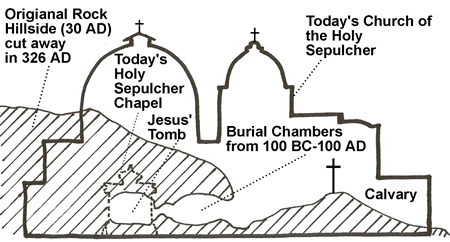
[Above (enlarge)[35]: Cross-section showing that the Church of Holy Sepulchre was built over both the Tomb of Jesus and the site of His crucifixion (L. Calvary, Gk. Golgotha)[36] - see 08May18b]
130[37]. Constantine granted Macarius' petition and in 326 Constantine's mother, Empress Helena (c. 246-c. 330), travelled to Jerusalem and having been told by Macarius the exact location of Golgotha and therefore Christ's tomb[38], ordered the demolition of the temple to Venus built over it[39]. Helena supposedly found in the Tomb, the cross on which Jesus was crucified (the "True Cross"), the inscription affixed to the cross above Jesus' head (Mt 27:37; Mk 15:26; Lk 23:38 & Jn 19:19) ("the Title") and three nails ("the Holy Nails") which had affixed Jesus to the cross[40].
Antioch became one of the four major sees of Orthodox Christianity, the other three being Constantinople the capital of the Byzantine Empire, Jerusalem and Alexandria[41]. However, the heresy of Arius (256–336), who taught that the Son is not eternal as the Father is: "there was a time when the Son was not"[42] had a pronounced effect on Church affairs in Antioch[43]. The opponents of Arianism led by Athanasius of Alexandria pointed out that the Arian doctrine reduced Jesus to a demigod thus restoring polytheism as Jesus would still be worshipped[44]. Further, Arianism undermined redemption as only one who was truly God could reconcile man and God[45]. When the anti-Arian bishop Philogonius of Antioch (r. 314 to 324) died, a synod of orthodox bishops convened by Hosius of Corduba (c. 256–359) met in Antioch and elected the orthodox Eustathius of Antioch (r. 324-330)[46]. But in 330 Eustathius was accused of adultery by the Arian Eusebius of Nicomedia (-341) (not to be confused with the orthodox Eusebius of Caesarea), removed from office and sent into exile[47].
Nevertheless, under Constantine's successor, the pro-Arian Emperor Constantius II (r. 337-361) in 357 the Arian Eudoxius (r. 357-370) was elected Bishop of Antioch[48] and the Arians gained possession of the
[Above (enlarge)[49]: Part of a 5th century mosaic from nearby Daphne that may show the Great Church of Antioch, the Domus Aurea ("Golden House") (right) and the Imperial Palace (left). This is evidently depicted from the Orontes River side, as what appears to be the hippodrome is on the far left (see map below).]
Golden Basilica of Constantine (above), the cathedral in that city[50]. The Shroud may then have come into the possession of the Arian faction in Antioch[51]. The Church in Antioch continued to be divided between Arian and orthodox factions, each with its own bishop, for most of the remaining fourth century[52].
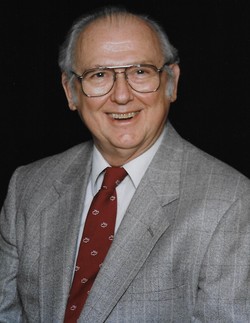
In 361, Constantius died and was succeeded by his cousin, Julian the Apostate (r. 361-363), so called because he rejected Christianity and sought to restore pagan worship[53]. Julian originally intended to be tolerant of all religions[54] but when he was visiting Antioch in 362, the Temple of Apollo in nearby Daphne caught fire and both its roof and an idol of Apollo were damaged[55]. Julian blamed the Christians and ordered that the Great Cathedral be closed and its liturgical vessels and other treasures be confiscated[56]. Julian had made his uncle, also named Julian, the Count of the East, and when he attempted to enforce his nephew's order to confiscate the Cathedral's sacred objects, the Arian treasurer of the cathedral, Theodoretus, refused to deliver them even under torture and execution[57]. Attorney and amateur historian, Jack Markwardt [Right (original)[58].] asks:
"Julian's punitive measures represented the only occasion of his short imperial tenure (361-363) when he closed a religious house of worship, executed a churchman, or appropriated religious objects of veneration. Why would a logical and tolerant emperor, aware both that the cause of the fire was uncertain and that his actions would forever alienate the people of Antioch, pursue such an uncharacteristic course of action unless it was to obtain, and destroy ... the most precious relics of Christianity [including the Shroud]? ... Theodoretus, at the cost of his head, successfully concealed Antioch's Passion relics [including the Shroud] in diverse places located throughout the area occupied by the Golden Basilica" (my words in square brackets)[59].
In 380, the Emperor Theodosius I (r. 379-395), who was the last emperor to rule over both the Eastern and the Western halves of the Roman Empire[60], established orthodoxy as the official religion of the Empire and condemned all heretics to serious penalties[61]. The Arians were expelled from Antioch and custody of the Great Church was returned to the orthodox under Bishop Meletius of Antioch (r. 360-381)[62].
Fifth century Even with Arianism outlawed, basic differences between Syrian and Greek concepts of Christ's divinity remained[63]. In 451, the Council of Chalcedon, based on the Tome of Pope Leo I the Great (r. 440-461), "one of the ablest men who have ever sat on the throne of Peter" [sic - 1 Peter 5:3][64], ruled that Christ had two natures, human and divine, rather than the single divine nature (Monophysitism) ascribed to him by the majority of the Eastern clergy[65]. The Chalcedon "creed ... has ever since been regarded in the Greek, Latin, and most Protestant Churches as the `orthodox' solution to the Christological problem"[66]. In 471, dissenting Monophysites seized control of the Church at Antioch[67]. By the late fifth century, the Patriarch of Antioch was the acknowledged leader of the Monophysite movement and his patriarchate was no longer in communion with Rome or Constantinople[68].
Sixth century In 518, Emperor Justin I (r. 518-527), exiled Severus (r. 512-538), the Patriarch of Antioch, and the orthodox carried out a purge of the Monophysites[69]. A major fire burnt a large part of Antioch in October 525[70]. Then 7 months later, in late May 526 [see "526b"], a major earthquake struck Antioch, killing approximately 250,000 people, including the Patriarch Euphrasius of Antioch (r. 521-526)[71]. The earthquake caused severe damage to many of the buildings in Antioch, including the cathedral[72]. The resulting fire completed the earthquake's destruction of most of the buildings in Antioch including the cathedral[73]. In Constantinople, Emperor Justin I (r. 518-527) arranged for ambassadors to be sent to the city with money for both immediate relief and to start Antioch's reconstruction[74]. The rebuilding of the cathedral and many other buildings was overseen by the new Patriarch Ephraim of Antioch (r. 527-545)[75]. However, many of these buildings erected after the 526 earthquake were destroyed by another major earthquake in November 528, although there were far fewer casualties[76]. Byzantine Emperor Justinian I (r. 527–565), in the period 528-540, rebuilt Antioch, including Constantine's Golden Basilica (see above), and renamed the city Theopolis ("City of God")[77].
In 529 and 531 the Persians under king Kavad I (r. 488–531) threatened to attack Antioch but in 532 Justinian I negotiated a truce[78]. However, the truce ended in 540 [see "540b"] when Kavad I's son King Khosrow I (r. 531–579) invaded Syria and laid siege to Antioch[79]. Prior to the initial assault, many fled the city, including the Emperor's representative and the orthodox Patriarch[80]. In the assault that followed, the Persians captured Antioch and took many of its survivors as hostages and slaves, and after looting of the Golden Basilica, Khosrow I had Antioch burned to the ground[81].
Markwardt's Shroud from Jerusalem to Antioch to Edessa theory It is the theory of Jack Markwardt that, in his own words (his footnotes omitted):
"The author's 1999 hypothesis, that the Shroud was taken, in apostolic times, to the Syrian city of Antioch, concealed and lost in 362, rediscovered in ca. 530, and conveyed to Edessa when Antioch was destroyed in 540, is supported by historical records which evidence the presence of a Christ-icon in both fourth-century Syria and sixth-century Antioch"[82].and
"This paper ["Antioch and the Shroud"] proposes that, in the process of clearing away the debris of the earthquake-ravaged cathedral [from 526], the Monophysites discovered the Shroud in the place where it had been hidden in 362. Persecuted by both Patriarch Ephraemius and Emperor Justinian, the Monophysites could not exhibit the cloth; however, their possession of the Shroud may have been rumored[83] ... that, before the Persian attack, the Monophysites of Antioch fled with the Shroud to a nearby safehaven where the local Christian Church had maintained a long tradition of ecclesiastical independence and where Monophysites constituted the religious majority and had their own bishop. In 540, the city of Edessa was clearly the most logical destination for the Monophysite refugees of Antioch"[84].See also Markwardt's new theory below.
Problems with Markwardt's theory The statement by Athanasius (c. 328-373) that an "icon of our holy Lord and Savior" had been in Jerusalem up to the year 68, when it was taken "from Judaea to Syria," and was still present in Syria in Athanasius day (see above) is good evidence for the first part of Markwardt's theory, that the Shroud was taken from Jerusalem to Antioch immediately prior to the the destruction of Jerusalem by the Romans in AD 70.
However, there are major problems with the second part of Markwardt's theory: 1) That the Shroud was "lost" in Antioch cathedral from 362 to 530 (i.e. ~168 years; and 2) Then the Shroud was taken by monophysites from Antioch to Edessa in 540. As for 1) above , it is
[Left (enlarge)[85]: Plan of the Basilica of San Vitale, Ravenna, "begun ... in 526, when Ravenna was under the rule of the Ostrogoths"[85a] "may indicate the form of [Antioch's] Domus Aurea[86] (this is further evidence for my Ravenna theory [see 07Dec16 and below]). If this was the same size as Antioch's cathedral, then the latter would have had an area of only about 490 (12.52 x π) square metres.]
most implausible (to put it mildly) that the Shroud could have been concealed and then lost inside Antioch cathedral for ~168 years! That would require whoever concealed it, presumably Theodoretus (see above) to not tell anyone where the Shroud was hidden, and then to die still without telling anyone. But even if that were so, in ~168 years, i.e. ~61,320 days, every square centimetre of the cathedral, which cannot have been very large as, "It was built on the island between the two
[Above (enlarge[87]: Map of Roman Antioch, showing "Palatium" = palace and "Circus" = hippodrome. From another map I have seen, the octagonal cathedral was on the west "Thermae," which is only ~250 metres x ~50 metres.]
main branches of the Orontes River, where the Imperial Palace was located"[88], could have been searched hundreds of times over.
And as for 2) above, it is even more implausible that when the Arians were expelled from Antioch in 380 (see above), that they would have left the Shroud behind for the Orthodox (who might have destroyed it as a forbidden image[89]), and who would in turn in 471 leave the Shroud behind in Antioch for the Monophysites (see above)!
Jack Markwardt emailed me yesterday (22 January) that he had changed his theory, and I had asked him for link(s)/PDF(s) of the changes, which I received today (23 January). Here is that part of Markwardt's first email which summarises his changed Antioch theory:
"In 2008, I ... concluded ... that, in 362, Theodoretus, an Arian presbyter, concealed the relics of Antioch, including the Shroud, in the city walls of Antioch above the city's Gate of the Cherubim (not in the cathedral) and that this action served as the basis for the story told about Edessa in the tenth-century Byzantine Narratio de imagine Edessena. I also pointed out that, in about 538 and as the walls of Antioch were being reconstructed, a `very awesome icon bearing the likeness of our Saviour, Jesus Christ' appeared in the `Place of the Cherubim' and its ongoing presence in that area made it the most sacred part of the city. In 2008, it was still my belief that, in 540, the Shroud was taken to Edessa by Antiochenes as the Persian army attacked and ultimately destroyed the city; however ... in 2014, presented a paper at the St. Louis Shroud Conference entitled Modern Scholarship and the History of the Turin Shroud and concluded therein that, in 540, the Shroud was taken to Cilicia, in Anatolia (not to Edessa) by Patriarch Ephraemius and that, thirty-four years later, it was taken to Constantinople where it became known as the Image of God Incarnate, remained in the Byzantine imperial treasury for more than six centuries, and was publicly exhibited in 1203-1204" (his emphases)[90].Here is my critique of Markwardt's changed Antioch theory above:
■ Radical changes to Markward's Antioch theory It is unusual, if not unprecedented, in Shroud scholarship, at least in my experience, for a proponent of a theory to make such radical changes to it. It calls into question Markwardt's methodology of giving to much credence to vague allusions, and it makes me wonder, "will Markwardt radically change his theory yet again when he finds another vague allusion?" And, "how can I believe that Markwardt's current theory is true, when he has effectively admitted that much of what he wrote in the past about his Antioch theory wasn't true"?
■ "... in 362, Theodoretus, an Arian presbyter, concealed the relics of Antioch, including the Shroud, in the city walls of Antioch above the city's Gate of the Cherubim" The Gate of the Cherubim was, as Markwardt himself notes, in the Jewish quarter of Antioch:
"This icon [mentioned by Athanasius (see above)], which goes unmentioned after Antioch's Church treasures are concealed from the pagan plundering of the Golden Basilica, seemingly reappears during the period ca. 526-540, in the Cherubim district of Antioch. In the year 70, Titus, attempting to placate rising anti-Semitic sentiments [sic], placed, atop the city's South gate, figures of cherubim seized from the Jerusalem Temple. This entry thereupon became known as the Gate of the Cherubim, and the adjoining district, which encompassed the old Jewish Quarter, or Kerateion, was called the Cherubim ..."[91]As can be seen in the map below, it was a long way across the city from
[Above (enlarge)[92]: Plan of 1st century Antioch showing the location of the Domus Aurea cathedral (red dot) and the Gate of the Cherubim (blue dot). From the distance key, it would be a ~3.3 kilometers (~2 miles) walk from the cathedral, across Antioch, to the Gate of the Cherubim.]
the cathedral to the Gate of the Cherubim. According to Markwardt's new theory, Theodoretus the cathedral's treasurer, without telling anyone, in 362 (see above) took the cathedral's passion relics, including "the lance [which had speared Jesus' side (Jn 19:33-34)], the chalice [containing or being the cup of the Last Supper (Mt 26:26-29; Mk 14:22-25; Lk 22:17-20)], and the
[Right (enlarge)[93]: A silver chalice found near Antioch in 1910[94]. Markwardt believes that this is a copy of the cup of the Last Supper, the original of which was among the relics carried across Antioch by Theodoretus[95]!]
Shroud" (Mt 27:59; Mk 15:46; Lk 23:53)[96], ~3 kilometres (~2 miles) across Antioch, without being seen, to the Jewish quarter, where he hid the relics in the city wall at the Gates of the Cherubim, again without being seen!
Problems of this part of Markwardt's new theory include: • It would have been stealing by Theodoretus of the cathedral's priceless passion relics, if he did it without telling anyone (otherwise they would not have become lost after Theodoretus' death), which would have been a capital crime. • The relics would surely have soon been noticed missing. How would Theodoretus, who as Treasurer, was responsible for the relic collection, explain their absence? • Why would Theodoretus chose a place, far away from any control by the cathedral, in the Jewish quarter, where if it was discovered, the Shroud would be immediately destroyed? • How could Theodoretus carry a Roman lance (which was 5-7 feet = 1.5-2.1 metres, long), a large and heavy silver chalice and the Shroud ~3 kilometres (~2 miles) through the streets of Antioch and not be noticed or even followed? • How could Theodoretus know that he would not be noticed or followed? • A wall near a gate to a city would presumably have guards. How could Theodoretus hide something (let alone something as large as a lance, that chalice and the Shroud) in that wall without attracting the attention of those guards? • A wall near a gate to a city would be presumably a very public place. Why would these relics not be discovered for 172 (538-326) years? • Markwardt has not provided any evidence that there was a place in Antioch's wall near the Gate of the Cherubim in which these relics could have been hidden (let alone for 172 years).
Why would Markwardt propose such an implausible theory? Has he any evidence that the Shroud (and the other relics) were discovered "in about 538 and as the walls of Antioch were being reconstructed" (see above)? The answer is no! All that Markwardt bases his theory on is a reported vision of St. Symeon Stylites the Younger (521-592) who supposedly "witnessed the appearance of Christ" ["a `very awesome icon bearing the likeness of our Saviour, Jesus Christ"] - on the old wall of the Cherubim":
"St. Symeon Stylites the Younger, born in 521 and just prior to the onset of the several calamities which destroyed the city's walls, spent his boyhood in the Cherubim where, in an incident datable to ca. 527-533 and reported in his late sixth-century biography, he witnessed the appearance of Christ ["a `very awesome icon bearing the likeness of our Saviour, Jesus Christ"] - on the old wall of the Cherubim"[97].But as can be seen, this does not even mention the Shroud! It is therefore of zero evidential value for Markwardt's theory that the Shroud was hidden in the city wall near the Gate of the Cherubim in Antioch!
"... in 2014 ... [I] concluded ... that, in 540, the Shroud was taken to Cilicia, in Anatolia (not to Edessa) by Patriarch Ephraemius ..." This second part of Markwardt's new theory is also of no relevance to the Shroud:
"... in 540, the Shroud was taken to Cilicia, in Anatolia (not to Edessa) by Patriarch Ephraemius [r. 527-545] and that, thirty-four years later, it was taken to Constantinople where it became known as the Image of God Incarnate, remained in the Byzantine imperial treasury for more than six centuries, and was publicly exhibited in 1203-1204"(see above)Here is Markwardt's evidence for the second part of his theory:
"The Patriarch of Antioch, at that time [538], was Ephraemius of Amida, one of the sixth-century's great "warrior bishops" who, while previously serving as comes Orientis, or Count of the East, had `demonstrated his competence at some of the most important qualities required of a patriarch.' In 540, an army commanded by the Persian king, Chosroes I [531-579], ruler of the Sassanid Empire invaded Byzantine-ruled Syria and marched west to Antioch ... The city's leaders, after consultation with imperial authorities, deputized the bishop of Berea to parlay with Chosroes, who demanded ten centenaria of gold for withdrawing from Roman territory. When this demand was rejected, the Persian army attacked and destroyed Antioch, and the awesome image of Jesus was never again seen in that city ... [speculative padding omitted] ... The only possible logical conclusion is that Ephraemius left Antioch in order to take the awesome image of Jesus to a safe haven ..."[98].But the only mention of "awesome image" (indeed "image" at all) in the evidence that Markwardt cites, are his own words:
"To paraphrase Robert de Clari [1170-1216], a crusader knight who, some six and a half centuries later, would recount the eerily-similar disappearance of an awesome image of Jesus during the Fourth Crusade's sack of Constantinople"[99].That is because Robert de Clari did not mention "awesome image" in his account of the syndoines (Old French for sindon = shroud) which he saw in Constantinople in 1204, as translated by Old French language specialist Peter Dembowski:
"Here is the (literal) translation of this passage:So the first part Markwardt's Shroud from Jerusalem to Antioch theory is most likely correct, being based on: 1) the historical fact that many, if not most, of Jerusalem's Christians fled to Antioch before the destruction of Jerusalem by the Roman's in AD 70 (see above); and 2) The fourth century statement by Athanasius (c. 328-373) that an "icon of our holy Lord and Savior" had been in Jerusalem up to "two years before" the year 68, when it was taken "from Judaea to Syria," and was still present in Syria in Athanasius day (see above). Also the second part of Markwardt's theory that the Shroud came under the control of the Arian faction in Antioch when in 357 it gained control of Constantine's Golden Basilica (the Domus Aurea), Antioch's cathedral (see above), is also most likely correct.`... And among those other there was another church [lit. another of the churches] which was called My Lady Saint Mary of Blachernae, where there was the SYDOINES in which, [lit. where] Our Lord had been wrapped, which every Friday, raised itself upright, so that one could see the form of our Lord on it [lit. there], and no one, either Greek or French, ever knew what became of this SYNDOINES when the city was taken.'" (capitals original)[100].
But Markwardt's claim that in 362, the Arian Treasurer of the the cathedral, Theodoretus, carried the cathedral's passion relics, including the 5-7 feet (1.5-2.1 metre) long Roman lance, a large and heavy silver chalice and the Shroud, ~3 kilometres or ~2 miles across Antioch into its Jewish quarter (see map above), and hid it in the wall near the Gate of the Cherubim without being seen, where they lay undiscovered for 172 years, simply beggars belief!
And finally, Markwardt's claim that in 540, the Shroud was taken to Cilicia by Patriarch Ephraemius, is so lacking in evidence that Markwardt had to insert his own words, "awesome image," into the description by a crusader knight Robert de Clari, when de Clari did not use those words, and then Markwardt used those words "awesome image," in his claim that "Ephraemius left Antioch in order to take the awesome image of Jesus to a safe haven" (see above)!
"... and that, thirty-four years later, it [the Shroud] was taken to Constantinople where it became known as the Image of God Incarnate, remained in the Byzantine imperial treasury for more than six centuries, and was publicly exhibited in 1203-1204" Markwardt is here claiming (see above) that 34 years after 540, i.e. in ~574, the Shroud was taken from Cilicia to Constantinople, it never having been to Edessa! But this ignores the eyewitness account in the Narratio de imagine Edessena ("Story of the Image of Edessa"), written in 945 at the direction of Byzantine Emperor Constantine VII Porphyrogenitus (r. 913-959)[101], of the arrival in Constantinople from Edessa on 15 August 944 of the Image of Edessa/Shroud:
"On August 15 [944], while the kings were celebrating the customary Feast of the Assumption of the Ever-Virgin Mother of God in the church sacred to her at Blachernae, the bearers of these sacred items arrived during the late evening, and the casket containing the image and letter was deposited within the upper oratory of this holy church. The kings drew near and hailed it from outside with reverent adoration. Then with the honor of an armed escort and many lights they took it aboard the royal galley and reached the palace with it. They set it up there in the holy chapel which is called Pharos ... The next day, which was the sixteenth of the month, having again hailed it and done reverence to it with pious reverence, the priests and the younger kings ... with psalms and hymns and ample lights traversed the road down to the sea, and when they had placed it in the royal galley, they sailed along close to the city, so that in some way it might give protection to the city by its sea voyage, and anchored outside the west wall of the city. The kings, the elder statesmen, the patriarch, and the whole assembly of the church all disembarked and, continuing on foot with a suitable escort, escorted the vessel guarding the most holy and precious relics like a second ark, or even more precious than that. They walked round the outside of the walls as far as the Golden Gate, and then entered the city with high psalmody, hymns, and spiritual songs and boundless light from torches, and, gathering together a procession of the whole people, they completed their journey through the city center; they thought that because of this the city would receive holiness and greater strength and would thus be kept safe and remain impregnable forever"[102].In 945 Constantine VII established 16 August, the anniversary of the exposition of the Image of Edessa/Shroud in Constantinople's Hagia Sophia cathedral, as the Feast of the Holy Mandylion in the Orthodox Church[103]
Moreover, secular history accepts that the Mandylion/Image of Edessa (Shroud) arrived in Constantinople from Edessa on 15 August 944:
"944 ... August 15 – The "Holy Mandylion" (a cloth with the face of Jesus) is conveyed to Constantinople, where it arrives on the feast of the Dormition of the Theotokos. A triumphal entry is staged for the relic in the capital"[104].
"... the Byzantines ... invested Edessa in the summer of 943. Here their prize was not military conquest but the portrait of Jesus, the mandylion ... the Byzantines ... `requested the inhabitants [of Edessa] to deliver to them the holy portrait of the mandylion kept in the church of Edessa on which our Saviour Jesus Christ had wiped his countenance and on which the features of his face had remained imprinted'. The Byzantine general proposed the exchange of Moslem prisoners for the portrait and this unusual bargain was referred to the Caliph at Baghdad ... Negotiations were protracted. The Edessans were evidently reluctant to part with their treasure ... Finally, two hundred Moslem captives were handed to the Caliph's officers. The Byzantines paid the Edessans 12,000 pieces of silver and granted an undertaking of perpetual peace between the Empire and Edessa ... The Bishop of Samosata on the edge of Byzantine territory was deputed to take possession of the portrait, accompanied by the Bishop of Edessa ... The relics were escorted with reverence, and reached the capital [Constantinople] on 15 August 944 ..."[105].So that part of Markwardt's theory summarised by him in his email to me of 22 January 2020 (see above) is, I regret to say, completely and utterly false!
My Ravenna theory My Shroud from Jerusalem to Antioch to 
[Above (enlarge): Face of the "Christ Enthroned" mosaic [see c.526] in the Sant'Apollinare Nuovo church, Ravenna, Italy[106] compared to the Vignon markings (see 11Feb12)[107]. According to Maher, this "early (sixth-century) ... mosaic of Christ enthroned" has "eight Vignon markings"[108], which is proof beyond reasonable doubt that it was based on the Shroud, over 700 years before its earliest 1260 radiocarbon dating[109]! But by my count, it has thirteen of the fifteen Vignon markings [see 08Oct16, 16Feb12, 07Dec16 and 08Jan19]. And since this is a mosaic, created in situ, not a portable painting, it is evidence that the Shroud was in Ravenna, Italy, in the early sixth century!]
Ravenna to Edessa theory [see again 07Dec16], incorporates those parts of Markwardt's Jerusalem to Antioch and Wilson's Jerusalem to Edessa theories which are not incorrect [see above on the multiple implausibilities of parts of Markwardt's theory and at "60" and "525" on those of Wilson's theory.]
■ Jerusalem to Antioch (AD 68-380) On the basis of: 1) the statement of Athanasius (c. 328-373), that an "icon of our holy Lord and Savior" had been in Jerusalem "two years before" the destruction of Jerusalem by the Romans in AD 70, i.e. the year 68, when it was taken "from Judaea to Syria" and was still present in Syria in Athanasius' time (see above); and 2) the historical fact that many, if not most, Christians in Jerusalem had fled to Antioch since the persecution beginning with the martyrdom of Stephen in c. AD 34 (see above), I agree with that part of Jack Markwardt's theory that the Shroud was taken from Jerusalem to Antioch in c.68 (see above). And I agree with Markwardt that in 357 the Arian faction gained possession of Antioch cathedral (see above) and therefore its relics, including the Shroud. But I disagree with Markwardt that the Shroud was "lost in 362" (see above).
■ Antioch to Ravenna (380-c.540) My theory continues that in 380, when the Emperor Theodosius I (r. 379-395) expelled the Arians from Antioch (see above)[110], they took the Shroud with them, eventually to Ravenna, the former capital of the Western Roman Empire (402-476)[111], and the capital of the Ostrogothic Kingdom of Italy (493-540)[112], ruled by Theodoric the Great (r. 493-526), an Arian[113]. Then just before Ravenna was "re-conquered in 540 by the Byzantine Empire"[114], the Arians fled to Edessa in which in the 4th century Arianism had flourished[115], and presumbly still existed under the city's dominant Monophysitism[116]. Then in 544 [see "544"], the Image of Edessa/Shroud miraculously saved Edessa from the siege of the Persian king King Khosrow I (r. 531–579).
Evidence for my Ravenna theory includes: 1) When the Arians, who had gained control of the Shroud in 357 (see above), were expelled from Antioch in 380 (see above), they would not have left the Shroud behind for the Orthodox to destroy as a forbidden image[117], but would have taken it with them, possibly joining with the followers of the exiled Arian bishop Demophilus of Constantinople (-386) and eventually to the Ostrogothic Kingdom of Italy (493-540), ruled by the[Above (enlarge)[118]: "The Ostrogothic Kingdom at its greatest extent" in the reign of the Arian king Theodoric the Great (493-526)[119].]
Arian king Theodoric the Great (r. 493-526), the capital of which was Ravenna.
2) The face of Jesus in the "Christ Enthroned" mosaic in the Sant'
[Above ([enlarge)[120]: The "Christ enthroned" mosaic in the Sant'Apollinare Nuovo church, Ravenna, Italy. This church was built between 505-526[121] and being a mosaic this icon had to have been created in situ during that time. This is within the timeframe 493-c.540 that my theory proposes that the Shroud was in Ravenna.]
Apollinare Nuovo church, Ravenna, Italy, as mentioned above, has by my count 13 of the 15 Vignon markings, which means the artist must have worked directly from the Shroud, not from a copy of it. The alternative is that there existed in the early sixth century a copy of the Shroud with at least 13 of the 15 Vignon markings, which the artist who created this Ravenna "Christ enthroned" mosaic worked from, but which copy has since disappeared. Either way this is fatal to both Wilson's theory that the Shroud was hidden in Edessa city wall above its main gate from c. 57–525 [see "525"]; and Markwardt's theory that the Shroud was lost from 362-538 in Antioch's city wall above its Gate of the Cherubim (see above).3) The coincidence that Ravenna's Basilica of San Vitale (see above) was "begun ... in 526, when Ravenna was under the rule of the Ostrogoths" and "may indicate the [octagonal] form of [Antioch's] Domus Aurea," is evidence that some of Antioch's Arians (or their descendants, given the ~493-380 = ~113 year gap between the Arian exile from Antioch in 380 [see above ] and the foundation of the Ostrogoth kingdom in Ravenna in 493 [see above ]) had migrated to Ravenna, bringing the Domus Aurea's relics with them, including the Shroud.
4) The coincidence of Ravenna having been "re-conquered in 540 by the Byzantine Empire" and then in 544 the Image of Edessa/Shroud surfacing in Edessa, where it miraculously saved the city from the siege of Khosrow I (r. 531–579) [see above].
I had originally intended to cover the entire history of Antioch, century by century, but this post has grown too long. So I will refer the reader to the Wikipedia article on Antioch and end this post.
Notes1. This post is copyright. I grant permission to quote from any part of this post (but not the whole post), provided it includes a reference citing my name, its subject heading, its date and a hyperlink back to this page. [return]
2. Extract from Pfeiffer, C.F., ed., 1962, "Baker's Bible Atlas," [1961], Oliver & Boyd: London, p.122. [return]
3. "Antioch," Wikipedia, 13 January 2020. [return]
4. Oxley, M., 2010, "The Challenge of the Shroud: History, Science and the Shroud of Turin," AuthorHouse: Milton Keynes UK, p.17. [return]
5. Oxley, 2010, p.17. [return]
6. Ibid. [return]
7. Oxley, 2010, pp.17-18. [return]
8. Oxley, 2010, p.18. [return]
9. Eusebius, "The Ecclesiastical History of Eusebius Pamphilus," Book III:V.3; Cruse, C.F., transl., [1955], Baker: Grand Rapids MI, 1966, Fourth printing, p.86; Oxley, 2010, p.18. [return]
10. Oxley, 2010, p.19. [return]
11. Von Dobschütz, E., 1899, Christusbilder: Leipzig, Vol. 3 p.15, in Markwardt, J.J., 2008, "Ancient Edessa and the Shroud: History Concealed by the Discipline of the Secret," in Fanti, G., ed., "The Shroud of Turin: Perspectives on a Multifaceted Enigma," Proceedings of the 2008 Columbus Ohio International Conference, August 14-17, 2008, Progetto Libreria: Padua, Italy, pp.382-407, 382, 393 n.14. [return]
12. Beecher, P.A., 1928, "The Holy Shroud: Reply to the Rev. Herbert Thurston, S.J.," M.H. Gill & Son: Dublin, p.17; Bulst, W., 1957, "The Shroud of Turin," McKenna, S. & Galvin, J.J., transl., Bruce Publishing Co: Milwaukee WI, p.87; Robinson, J.A.T., "The Shroud and the New Testament," in Jennings, P., ed., 1978, "Face to Face with the Turin Shroud ," Mayhew-McCrimmon: Great Wakering UK, pp.69-81, 75; Tribbe, F.C., 2006, "Portrait of Jesus: The Illustrated Story of the Shroud of Turin," Paragon House Publishers: St. Paul MN, Second edition, p.14. [return]
13. Jerome, Illustrious Men, 2, in Ehrman B.D., 2003, "Lost Scriptures: Books that Did not Make It into the New Testament," Oxford University Press: New York NY, p.16. [return]
14. Finegan, J., 1964, "Handbook of Biblical Chronology: Principles of Time Reckoning in the Ancient World and Problems of Chronology in the Bible," Princeton University Press: Princeton NJ, p.321. [return]
15. Guerreschi, A. & Salcito, M., 2002, "Photographic and computer studies concerning the burn and water stains visible on the Shroud and their historical consequences," IV Symposium Scientifique International du CIELT, April 25-26, 2002, Paris, France, pp.1-14, 12. [return]
16. Foakes Jackson, F.J., "The History of the Christian Church from the Earliest Times to AD 461," [1891], George Allen & Unwin: London, Sixth edition, 1914, Reprinted, 1957, p.34; Latourette, K.S., 1953, "A History of Christianity: Volume 1: to A.D. 1500," Harper & Row: New York NY, Reprinted, 1975, p.68; Walker, W., 1959, "A History of the Christian Church," [1918], T. & T. Clark: Edinburgh, Revised, Reprinted, 1963, p.24; Bruce, F.F., 1966, "The Spreading Flame: The Rise and Progress of Christianity from its First Beginnings to the Conversion of the English," Paternoster: Exeter UK, pp.90-91; Markwardt, J.J., 1999, "Antioch and the Shroud," in Walsh, B.J., ed., 2000, "Proceedings of the 1999 Shroud of Turin International Research Conference, Richmond, Virginia," Magisterium Press: Glen Allen VA, pp.94-108, 94-95; "Antioch," Wikipedia, 13 January 2020. [return]
17. "Paul's Missionary Journeys Map," Conforming To Jesus Ministry, Carrollton TX, 5 September 2019. [return]
18. Douglas, J.D., et al., eds., 1982, "New Bible Dictionary," [1962], Inter-Varsity Press, Leicester UK, Second edition, Reprinted, 1988, pp.51-52; Wilson, I., 2010, "The Shroud: The 2000-Year-Old Mystery Solved," Bantam Press: London, p.122. [return]
19. Wilson, 2010, p.122. [return]
20. Ibid. [return]
21. Markwardt, 1999, p.96. [return]
22. "Ignatius of Antioch," Wikipedia, 23 December 2019. [return]
23. Markwardt, 1999, p.96. [return]
24. Ibid. [return]
25. "Diocletian," Wikipedia, 3 January 2020. [return]
26. Markwardt, 1999, p.96. [return]
27. Ibid. [return]
28. Ibid. [return]
29. "Diocletian," Wikipedia, 3 January 2020. [return]
30. Markwardt, 1999, p.96. [return]
31. "Edict of Milan," Wikipedia, 2 August 2019. [return]
32. Markwardt, 1999, p.96. [return]
33. Markwardt, 1999, p.97. [return]
34. "The Church of the Holy Sepulcher," Jerusalem 101, 2 December 2014. [return]
35. "Church of the Holy Sepulchre - Jerusalem, Israel," Steemit, 2017. [return]
36. "The Church of the Holy Sepulcher," Jerusalem 101, 2 December 2014. [return]
37. Perkins, P., "Sepulchre, Church of the Holy," in Achtemeier, P.J., et al., eds, 1985, "Harper's Bible Dictionary," Harper & Row: San Francisco CA, pp.925-926. [return]
38. "The Church of the Holy Sepulcher," Jerusalem 101, 2 December 2014. [return]
39. "Helena (empress): The `True Cross' and the Church of the Holy Sepulchre," Wikipedia, 12 May 2018. [return]
40. Markwardt, 1999, p.97. [return]
41. Bennett, J., 2001, "Sacred Blood, Sacred Image: The Sudarium of Oviedo: New Evidence for the Authenticity of the Shroud of Turin," Ignatius Press: San Francisco CA, p.30. [return]
42. "Arius," Wikipedia, 20 November 2019. [return]
43. Oxley, 2010, p.20. [return]
44. "Councils of Sirmium," Wikipedia, 11 August 2019. [return]
45. Ibid. [return]
46. Markwardt, 1999, p.97. [return]
47. Markwardt, 1999, p.98; "Eustathius of Antioch," Wikipedia, 31 December 2019. [return]
48. Markwardt, 1999, p.98. [return]
49. "File:Megalopsychia mosaic border Great Church.jpg," Wikimedia Commons, 26 November 2016. [return]
50. Markwardt, 1999, p.98; Oxley, 2010, p.20. [return]
51. Markwardt, 1999, pp.97-98; Oxley, 2010, p.20. [return]
52. Oxley, 2010, p.20. [return]
53. Markwardt, 1999, p.99; Oxley, 2010, p.22. [return]
54. Markwardt, 1999, p.99. [return]
55. Ibid. [return]
56. Chadwick, H., 1993, "Penguin History of the Early Church," [1967], Penguin: London, Revised edition, pp.156; Markwardt, 1999, p.99. [return]
57. Markwardt, 1999, p.100; Oxley, 2010, p.21. [return]
58. Markwardt, J., 2014, "The Full-Length History of the Turin Shroud" in "Shroud of Turin: The Controversial Intersection of Faith and Science Conference," October 9-12, 2014, Drury Plaza Hotel, St. Louis, Missouri. [return]
59. Markwardt, 1999, p.100. [return]
60. "Theodosius I," Wikipedia, 12 January 2020. [return]
61. Markwardt, 1999, p.100. [return]
62. Ibid. [return]
63. Ibid. [return]
64. Latourette, 1953, p.171. [return]
65. Markwardt, 1999, p.100. [return]
66. Walker, 1959, p.139. [return]
67. Markwardt, 1999, p.100. [return]
68. Ibid. [return]
69. Ibid. [return]
70. Markwardt, 1999, p.100. [return]
71. Markwardt, 1999, pp.100-101; "526 Antioch earthquake," Wikipedia, 18 September 2019. [return]
72. Markwardt, 1999, pp.100-101; "526 Antioch earthquake," Wikipedia, 18 September 2019. [return]
73. Markwardt, 1999, p.101; "526 Antioch earthquake," Wikipedia, 18 September 2019. [return]
74. "526 Antioch earthquake," Wikipedia, 18 September 2019. [return]
75. Ibid. [return]
76. Ibid. [return]
77. Markwardt, 1999, p.101; "Antioch: Theodosius and after," Wikipedia, 13 January 2020. [return]
78. Markwardt, 1999, p.101; "Kavad I: Iberian war," Wikipedia, 14 January 2020. [return]
79. Markwardt, 1999, p.101; "Khosrow I: War with the Byzantine Empire, 540–562," Wikipedia, 1 January 2020. [return]
80. Markwardt, 1999, p.101. [return]
81. Ibid. [return]
82. Markwardt, 2008, p.382. [return]
83. Ibid. [return]
84. Ibid. [return]
85. "File:Byggnadskonsten, San Vitale i Ravenna, Nordisk familjebok.png," Wikimedia Commons, 23 May 2015. [return]
85a. "Basilica of San Vitale: History," Wikipedia, 28 January 2020,. [return]
86. "Domus Aurea (Antioch): Construction," Wikipedia, 12 June 2019. [return]
87. "File:Antiochia su Oronte.PNG," Wikimedia Commons, 4 January 2019. [return]
88. Ibid. [return]
89. Markwardt, 1999, p.96. [return]
90. Markwardt, J.J., "The Shroud in Antioch," Email 22/01/2020, 12:43 pm to S.E. Jones. [return]
91. Markwardt, 2008, p.382. [return]
92. "Antioch," in Douglas, 1982, "New Bible Dictionary," p.52 [return]
93. "File:Antioch chalice Met 50.4.jpg," Wikimedia Commons, 9 May 2018. [return]
94. "Antioch chalice," Wikipedia, 20 December 2019. [return]
95. Markwardt, 1999, p.96. [return]
96. Markwardt, 1999, pp.95-96. [return]
97. Markwardt, 2008, p.383 (footnotes omitted). [return]
98. Markwardt, 2014 (footnotes omitted). [return]
99. Ibid [return]
100. Ibid [return]
101. Wilson, I., 1979, "The Shroud of Turin: The Burial Cloth of Jesus?," [1978], Image Books: New York NY, Revised edition, pp.163, 272; Maher, R.W., 1986, "Science, History, and the Shroud of Turin," Vantage Press: New York NY, p.92; Currer-Briggs, N., 1988, "The Shroud and the Grail: A Modern Quest for the True Grail," St. Martin's Press: New York NY, p.58; Wilson, I., 1998, "The Blood and the Shroud: New Evidence that the World's Most Sacred Relic is Real," Simon & Schuster: New York NY, p.268; Whanger, M. & Whanger, A.D., 1998, "The Shroud of Turin: An Adventure of Discovery," Providence House Publishers: Franklin TN, p.6. [return]
102. Wilson, 1979, pp.288-289. [return]
103. Wilson, 1979, pp.288-289; Scavone, D.C., 1989, "The Shroud of Turin: Opposing Viewpoints," Greenhaven Press: San Diego CA, p.85; Wilson, 1998, pp.148-149; Guerrera, V., 2001, "The Shroud of Turin: A Case for Authenticity," TAN: Rockford IL, p.6. [return]
104. "944: Byzantine Empire," Wikipedia, 11 August 2019. [return]
105. Segal, J.B., 2001, "Edessa: The Blessed City," [1970], Gorgias Press: Piscataway NJ, Second edition, Reprinted, 2005, pp.215-216. [return]
106. Extract from "File:Christus Ravenna Mosaic.jpg," Wikimedia Commons, 22 August 2019. [return]
107. Wilson, I., 1978, "The Turin Shroud," Book Club Associates: London, p.82E. [return]
108. Maher, R.W., 1986, "Science, History, and the Shroud of Turin," Vantage Press: New York NY, p.77. [return]
109. Wilson, I., 1991, "Holy Faces, Secret Places: The Quest for Jesus' True Likeness," Doubleday: London, p.3; Wilson, 1998, pp.125, 140-141; Wilson, I., 2010, "The Shroud: The 2000-Year-Old Mystery Solved," Bantam Press: London, p.108. [return]
110. "Theodosius I: Definition of orthodoxy," Wikipedia, 29 January 2020. [return]
111. "Ravenna," Wikipedia, 28 December 2019. [return]
112. Ibid. [return]
113. "Theodoric the Great," Wikipedia, 8 January 2020. [return]
114. "Ravenna," Wikipedia, 28 December 2019. [return]
115. Segal, 2001, p.90. [return]
116. Segal, 2001, p.95. [return]
117. Markwardt, 1999, p.96. [return]
118. "File:Ostrogothic Kingdom.png," Wikimedia Commons, 3 October 2019. [return]
119. "Ostrogothic Kingdom," Wikipedia, 27 January 2020. [return]
120. "File:Christus Ravenna Mosaic.jpg," Wikimedia Commons, 22 August 2019. [return]
121. "Basilica of Sant'Apollinare Nuovo," Wikipedia, 29 December 2019. [return]
Posted 1 January 2020. Updated 11 March 2026.






 Posts
Posts

